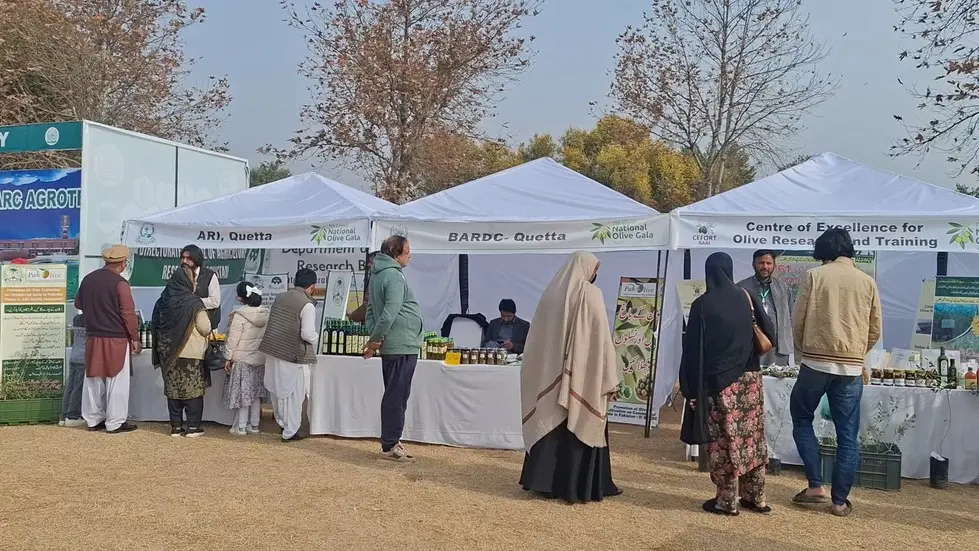
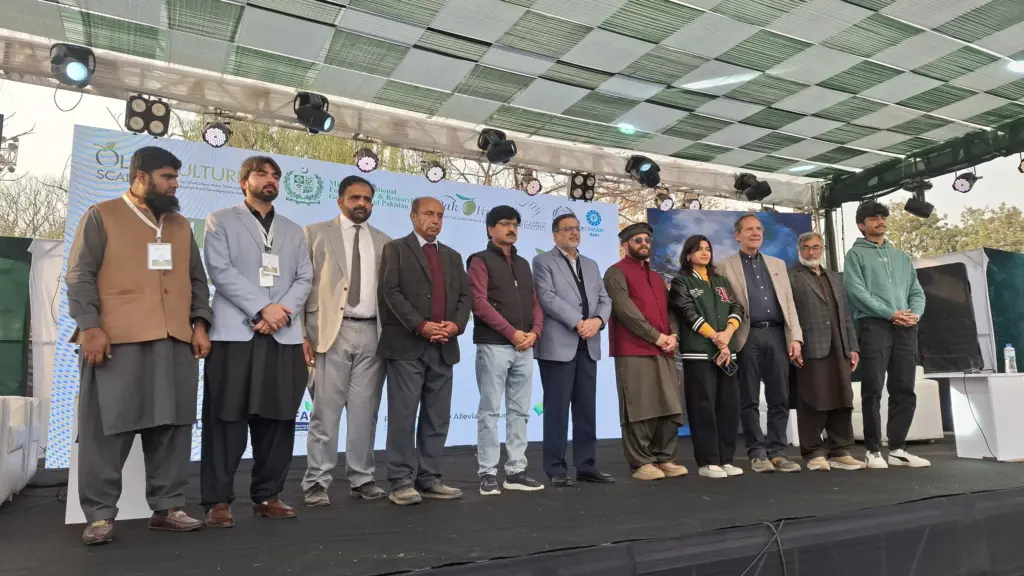
From 12 to 14 December 2025, Islamabad witnessed a vibrant and encouraging celebration of Pakistan’s olive industry at the National Olive Festival. The three day event attracted olive growers, farmers, producers, researchers, entrepreneurs, and visitors from across the country.
The festival was jointly organized by the Pak Olive Project under the Ministry of National Food Security and Research, Government of Pakistan, and the Italian funded Olive Culture Project. Over the years, this collaboration has played a key role in developing Pakistan’s olive sector, and the festival reflected the progress achieved so far.
Venue and Scale of the Event
The 7th National Olive Festival was held at Fatima Jinnah Park in Islamabad’s F-9 sector, one of the largest and most scenic public parks in the federal capital. This year’s festival surpassed previous editions in almost every aspect, including the number of stalls, participating growers, and public turnout. The event was largely coordinated by the Olive Culture Project team, which has been actively supporting olive cultivation, processing, and capacity building in Pakistan for many years with backing from the Italian government.

Government Support and Policy Direction
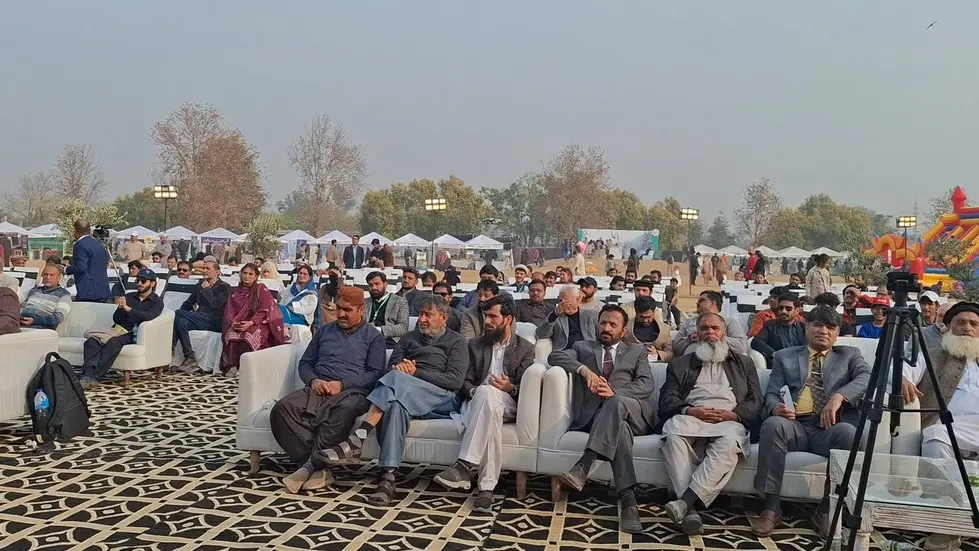
Speaking at the inaugural session, Federal Minister for National Food Security Rana Tanvir Hussain praised the rapid growth of the olive sector. He highlighted the federal government’s ongoing initiatives to support olive growers, improve processing facilities, and encourage private investment.
One of the most significant announcements made during the opening session was that Pakistan is expected to soon become a member of the International Olive Council. This step is likely to strengthen Pakistan’s global presence in the olive industry and open new opportunities for exports and international cooperation.
Strong Public Interest and Market Potential
The festival recorded a high number of visitors from Islamabad and Rawalpindi throughout the three days. Visitors showed keen interest in tasting and purchasing locally produced olive oils, table olives, and value added products.
As the federal capital, Islamabad hosts a large segment of consumers with strong purchasing power. Olive oil, being a premium product, finds a receptive market in cities like Islamabad, Rawalpindi, and other major urban centers. The event also attracted foreign diplomats, embassy staff, and expatriates who live in or were visiting Islamabad, adding to the diversity of the audience.
Diversity of Stalls and Participants
I visited the stalls one by one and was impressed by the passion, dedication, and professionalism of olive growers and young entrepreneurs. The festival brought together participants from across Pakistan, making it a truly national event.

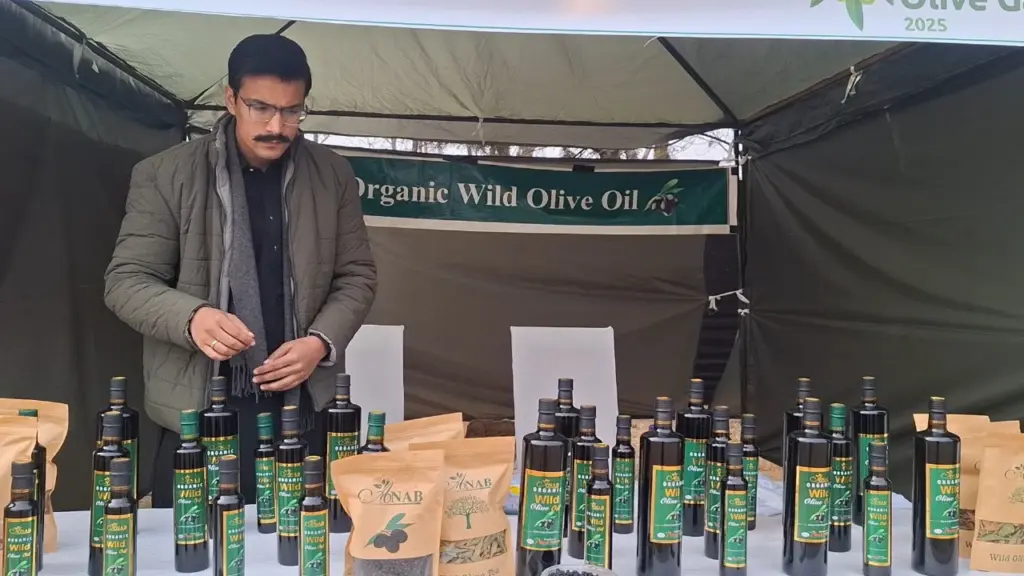
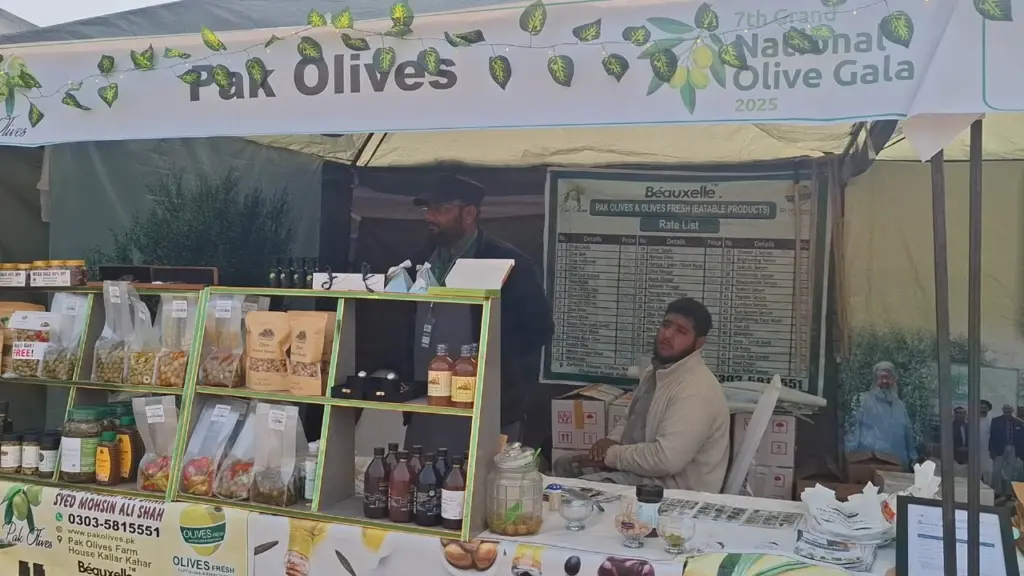
The stalls were broadly divided into several categories. One section was dedicated to olive startups, growers, processors, and sellers. Another featured government research organizations, universities, agricultural institutions, and banks offering financial services and support to farmers. This mix allowed visitors to understand the olive value chain from cultivation to marketing.
Balochistan’s Rising Presence in Olive Farming
One of the most notable aspects of this year’s festival was the strong participation from Balochistan. For the first time, a record number of olive farmers from the province showcased their products and shared their experiences.
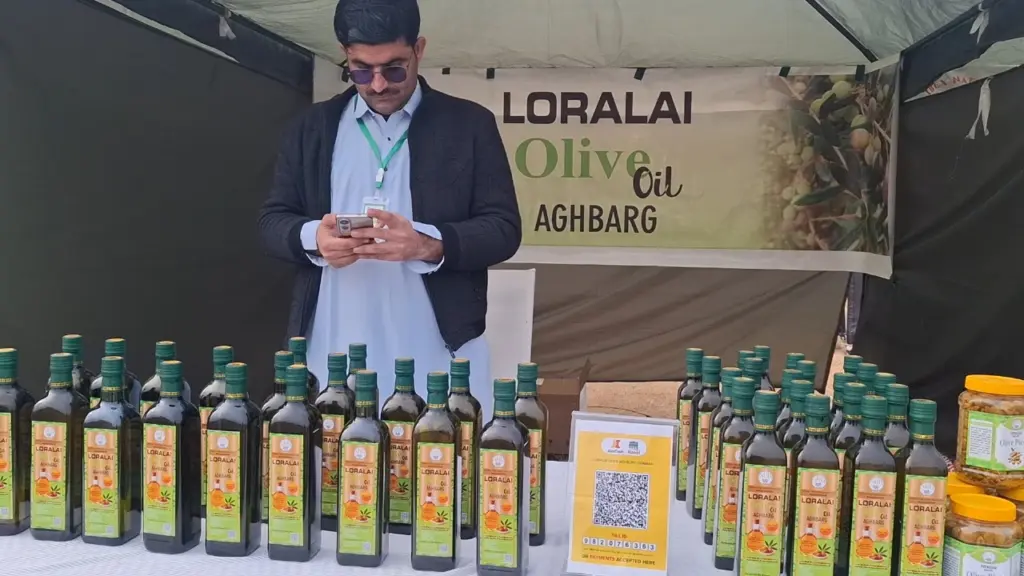
Balochistan holds immense potential for olive cultivation. It is Pakistan’s largest province by area, with vast tracts of unused land, suitable soil, and favorable climatic conditions. Farmers from Balochistan shared that hundreds of successful olive farms are already operating in the province, producing high quality olive oil.
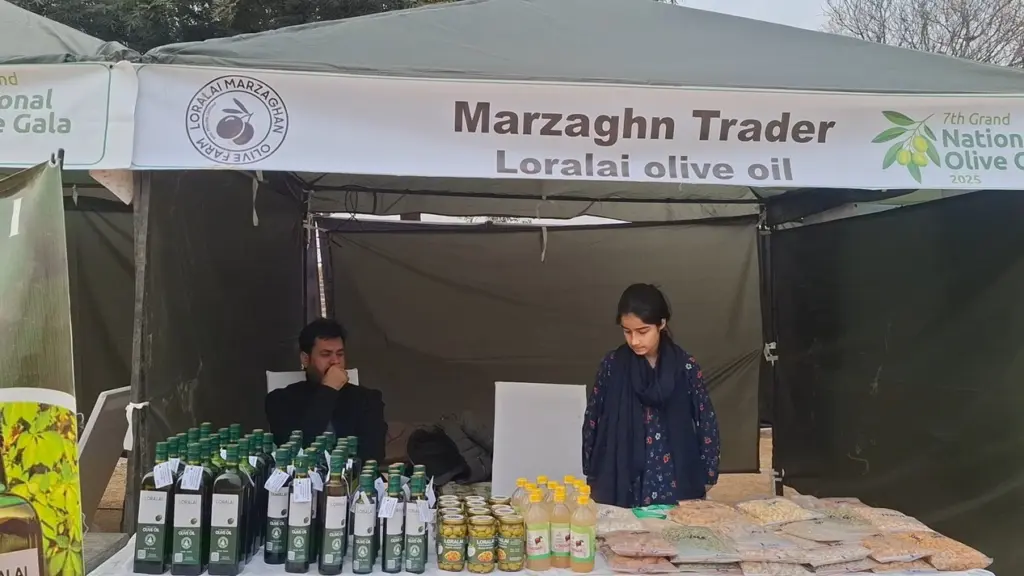
International Recognition for Balochistan Brands
Among the standout brands from Balochistan was LO, also known as Loralai Olives. The brand won a silver award at an international olive competition in New York, marking a historic achievement. LO became the first Pakistani olive oil brand to receive such high level recognition on the global stage.
Based in Loralai, which is widely considered the hub of olive cultivation in Balochistan, the brand represents the growing maturity of Pakistan’s olive industry. Besides Loralai, several other regions of Balochistan are suitable for olive cultivation. Both the provincial and federal governments are making concerted efforts to support expansion in this sector.
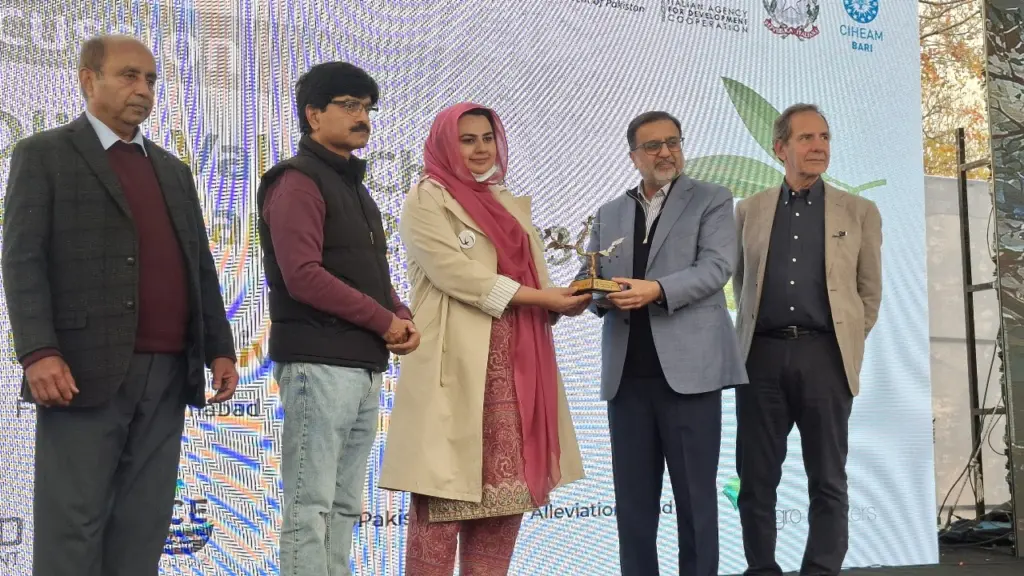
The role of the Balochistan Agriculture Department has been particularly important. The department provides training, milling facilities, and sampling services to farmers, significantly strengthening the local olive value chain.
Punjab’s Olive Valley and Research Excellence
The festival also featured dozens of stalls from Kallar Kahar and the Chakwal region in Punjab. Chakwal has been officially named Pakistan’s Olive Valley and is home to the country’s leading olive research institution, the Barani Agricultural Research Institute, commonly known as BARI.
Scientists at BARI work closely with farmers, providing hands on research support, technical guidance, and improved plant varieties. As a result, Chakwal hosts many successful olive farms.
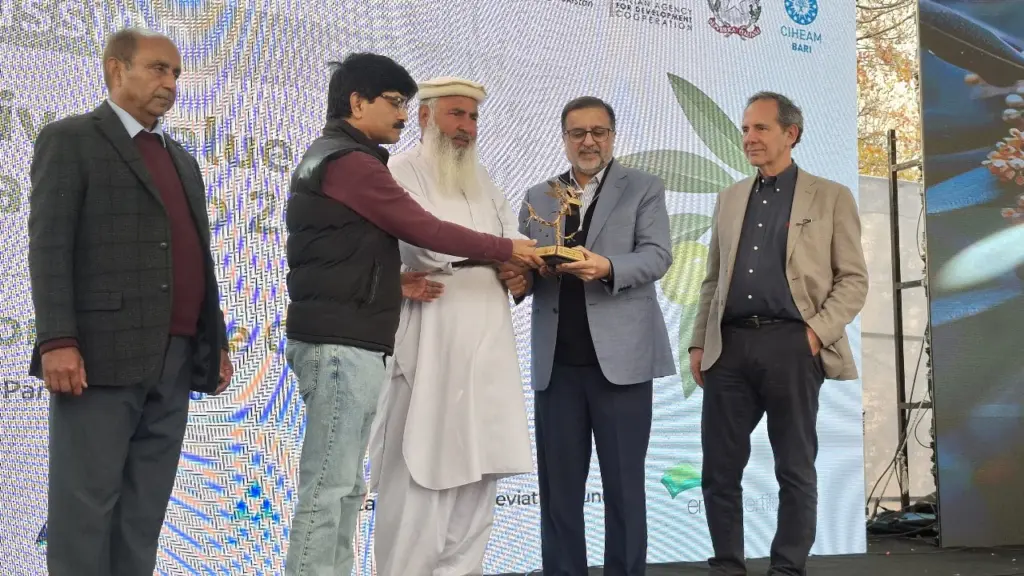
One of the leading farms in the region is Izhar Olive Farm, which spans hundreds of acres and hosts thousands of olive plants. The farm supplies olive plants to both the government and private farmers. Thanks to local nurseries like Izhar, Pakistan no longer needs to import olive plants from abroad.
Knowledge Sharing Through Panel Discussions
In addition to exhibitions, the festival featured several panel discussions. Participants included local scientists, senior members of the Italian Olive Culture Project, government officials, provincial agriculture heads, startup founders, and farmers.
The speakers expressed satisfaction with the sector’s growth while also discussing existing challenges. Growers shared their success stories and highlighted the support they receive from government departments and development organizations.
During one panel session, Federal Secretary for National Food Security & Research Mr. Amir Mohyuddin urged the vegetable oil industry to support local olive growers. He emphasized government efforts to improve processing infrastructure, develop international market linkages, and open export avenues for Pakistani olive products.
Looking ahead
The National Olive Festival 2025 proved to be an important platform for olive growers, startups, researchers, and policymakers. It allowed stakeholders to showcase their products, exchange knowledge, and raise awareness about locally produced olive oil.
The response from visitors was highly encouraging. Many consumers pledged to prefer local olive oil over imported brands due to its freshness, quality, and competitive pricing. Pakistan’s olive industry is still in its early stages, but the momentum is clearly building.
If this growth continues, it will not be long before Pakistani olive oil finds its place on shelves in European and North American markets. The journey has begun, and the future looks promising.
About the author:
Mohsin Rasheed is a co-founder of EverymanSci.com, where he writes on science, technology, and culture. As chief editor, he sets the editorial direction, shapes content strategy, mentors contributors, edits features, commissions stories, and makes sure curiosity never gets buried under jargon.