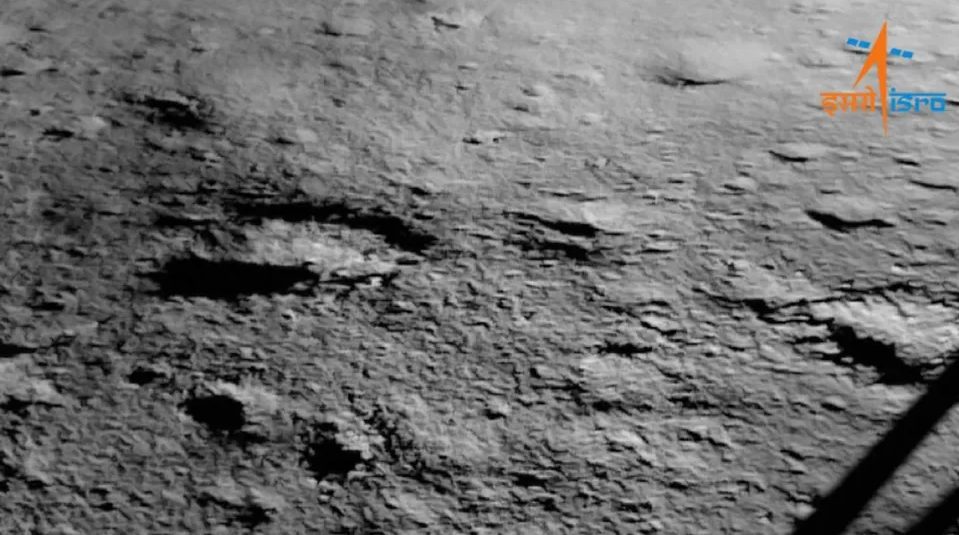
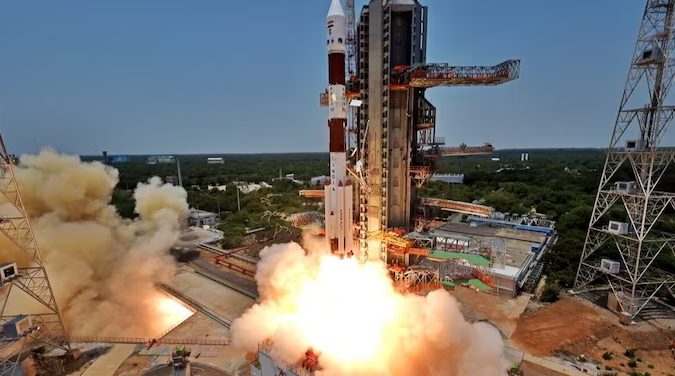
India successfully launches a spacecraft towards the sun following its landmark moon landing mission. The launch of the Aditya L1 spacecraft took place on Saturday from Sriharikota on India’s eastern coast. Just ten days after becoming the first country to land a spacecraft on the moon’s southern side, India has embarked on its first mission to study the sun.
The Indian Space Research Organisation (ISRO) confirmed the successful launch of Aditya-L1, stating that the satellite had been placed in its intended orbit. Aditya L1 will travel a distance of 1.5 million km over the course of approximately four months before positioning itself in a halo orbit around the Lagrange point (L1) of the sun-Earth system. This orbit will be maintained due to the balancing gravitational forces.
Aditya L1 Objectives
The Aditya-L1 mission is India’s first space-based observatory-class solar mission, with a focus on studying the sun’s atmosphere. Equipped with seven specialized payloads, it delves into the sun’s deepest layers, such as the photosphere, chromosphere (400 km to 2,100 km above the photosphere), and the outermost corona. Using electromagnetic, particle, and magnetic field detectors, the mission aims to analyze solar winds, which can disrupt Earth and trigger auroras. This data promises to enhance our comprehension of the sun’s influence on Earth’s climate patterns.
Orbit for Uninterrupted Observation
Aditya L1’s Unique Position:
The Aditya L1’s primary payload, the Visible Emission Line Coronagraph (VELC), plays a pivotal role by constantly transmitting substantial spectral line data. This translates into a remarkable daily delivery of 1,440 sun images to ground stations. These images undergo rigorous analysis, processing, and global dissemination to scientists.
The strategic choice of Aditya L1’s orbit holds immense significance for solar observation. Positioned in the halo orbit around the sun-Earth system’s L1 point, it provides uninterrupted views of the sun. This remarkable location ensures that any solar storms directed towards Earth must pass through this orbit, enabling real-time monitoring of solar activities and their impact on space weather.
Global Recognition
India’s Space Triumphs:
During the BRICS summit in South Africa, India’s Prime Minister, Narendra Modi, earned praise from global leaders for Chandrayaan-3’s historic moon landing, marking India’s debut on the moon’s southern region. Modi emphasized that this success was a victory for all humanity. Coincidentally, this recent launch precedes the G20 Summit in New Delhi, providing Modi with an opportunity to showcase India’s achievements in its cost-effective space endeavors.
India’s Cost-Effective Space Program
It is worth noting that the Chandrayaan-3 moon mission had a budget of approximately $74 million, making it more economical than Hollywood movies like Gravity and The Martian, which had budgets exceeding $100 million. With each successful launch, India solidifies its position as a prominent player in the global space exploration community.
Related: India made History with Successful Moon Landing

Co-Founder & Chief Editor of Everyman Science. I view science not just as a collection of facts, but as the ultimate guide for human survival. From medical breakthroughs to the logistics of space exploration, I am dedicated to documenting how scientific reasoning uplifts the human spirit and provides the blueprints to save our planet. I believe that by unleashing the power of nature through disciplined inquiry, we can secure a sustainable future for humanity.