New Moon Discovered Orbiting Uranus with NASA’s Webb Telescope

This image shows the moon, designated S/2025 U1, as well as 13 of the 28 other known moons orbiting the planet. Photo: NASA, ESA, CSA, STScI, M. El Moutamid (SwRI), M. Hedman (University of Idaho)

NASA’s James Webb Space Telescope (JWST) has uncovered an exciting new member of Uranus’ family of satellites. A team of scientists led by the Southwest Research Institute (SwRI) has identified a previously unknown moon orbiting the ice giant, raising the total number of known Uranian moons to 29. The discovery was made on February 2, … Read more

NASA’s Webb Telescope Detects Carbon Dioxide in Alien Worlds

Webb’s infrared image of the HR 8799 system reveals four young gas giants orbiting their star, with distances ranging from 1.5 to 6.3 billion miles.

The James Webb Space Telescope (JWST) has once again revolutionized our understanding of the universe by capturing breathtaking images of distant exoplanets. This time, the spotlight is on HR 8799, a young planetary system located 130 light-years away from Earth. Scientists have long studied HR 8799 to understand how giant planets form, and Webb’s latest … Read more

The James Webb Space Telescope: Achievements and Challenges

JWST image of Neptune

The James Webb Space Telescope (JWST) has been a beacon of astronomical discovery since its launch. As of September 2024, this marvel of engineering has expanded our understanding of the universe in ways previously unimaginable. Let’s delve into the state of the JWST, exploring its remarkable achievements and the challenges it has faced along the … Read more

After Moon Triumph, India Targets Sun with Aditya L1 Launch

The Aditya L1 spacecraft lifts off from Sriharikota atop the PSLV-C57 rocket. (Photo: ISRO)

India successfully launches a spacecraft towards the sun following its landmark moon landing mission. The launch of the Aditya L1 spacecraft took place on Saturday from Sriharikota on India’s eastern coast. Just ten days after becoming the first country to land a spacecraft on the moon’s southern side, India has embarked on its first mission to study the sun.

The Indian Space Research Organisation (ISRO) confirmed the successful launch of Aditya-L1, stating that the satellite had been placed in its intended orbit. Aditya L1 will travel a distance of 1.5 million km over the course of approximately four months before positioning itself in a halo orbit around the Lagrange point (L1) of the sun-Earth system. This orbit will be maintained due to the balancing gravitational forces.

Video: The Indian Express

Aditya L1 Objectives

The Aditya-L1 mission is India’s first space-based observatory-class solar mission, with a focus on studying the sun’s atmosphere. Equipped with seven specialized payloads, it delves into the sun’s deepest layers, such as the photosphere, chromosphere (400 km to 2,100 km above the photosphere), and the outermost corona. Using electromagnetic, particle, and magnetic field detectors, the mission aims to analyze solar winds, which can disrupt Earth and trigger auroras. This data promises to enhance our comprehension of the sun’s influence on Earth’s climate patterns.

Orbit for Uninterrupted Observation

Aditya L1’s Unique Position:

The Aditya L1’s primary payload, the Visible Emission Line Coronagraph (VELC), plays a pivotal role by constantly transmitting substantial spectral line data. This translates into a remarkable daily delivery of 1,440 sun images to ground stations. These images undergo rigorous analysis, processing, and global dissemination to scientists.

The strategic choice of Aditya L1’s orbit holds immense significance for solar observation. Positioned in the halo orbit around the sun-Earth system’s L1 point, it provides uninterrupted views of the sun. This remarkable location ensures that any solar storms directed towards Earth must pass through this orbit, enabling real-time monitoring of solar activities and their impact on space weather.

Global Recognition

India’s Space Triumphs:

During the BRICS summit in South Africa, India’s Prime Minister, Narendra Modi, earned praise from global leaders for Chandrayaan-3’s historic moon landing, marking India’s debut on the moon’s southern region. Modi emphasized that this success was a victory for all humanity. Coincidentally, this recent launch precedes the G20 Summit in New Delhi, providing Modi with an opportunity to showcase India’s achievements in its cost-effective space endeavors.

India’s Cost-Effective Space Program

It is worth noting that the Chandrayaan-3 moon mission had a budget of approximately $74 million, making it more economical than Hollywood movies like Gravity and The Martian, which had budgets exceeding $100 million. With each successful launch, India solidifies its position as a prominent player in the global space exploration community.

Related: India made History with Successful Moon Landing

Read more

Chandrayan-3 Detects Multitude of Elements Near Lunar South Pole

India’s Chandrayan-3 lunar mission has achieved significant scientific and technical advancements. The Pragyan rover has successfully analyzed the composition of the Moon’s surface near the lunar south pole, an area of great interest for future lunar bases. The mission has already made valuable discoveries, although it has not yet found water ice, the ultimate objective. … Read more

JWST Captures All 4 Giant Planets including Saturn

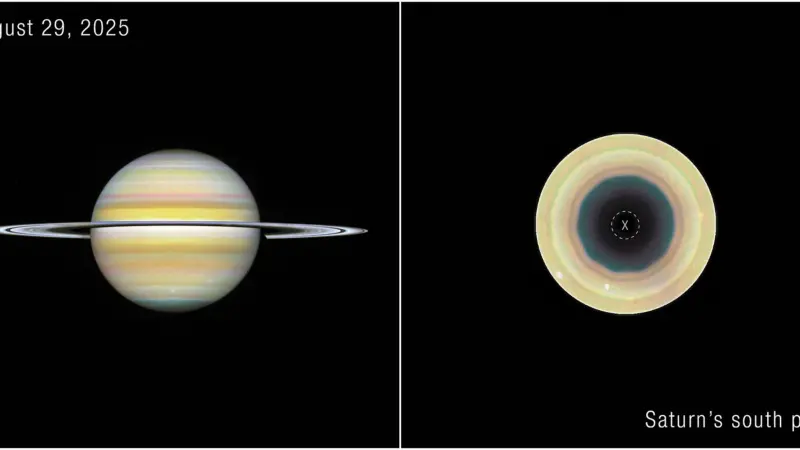
The James Webb Space Telescope (JWST) has recently achieved a remarkable milestone by capturing images of all four giant planets in our Solar System. With its advanced technology, JWST provides us with a stunning view of Saturn’s magnificent rings, shedding light on the hidden secrets of these celestial wonders. Saturn: A Closer Look at the … Read more

Saturn’s Moon Enceladus: Closer to Life Than Ever Before

Enceladus: Ocean Moon

The moon Enceladus, part of Saturn’s system, has intrigued scientists since 2008. NASA’s Cassini probe discovered jets of water vapor, gases, and organic material erupting from its south pole. New research now suggests that the briny sea on Enceladus could potentially support life, making it even more fascinating. New Insights from Cassini’s Plunge Christopher Glein, … Read more

What is the multiverse — and does it exist?

Deepest Infrared Image of Universe Yet

Have you ever wondered what lies beyond the edges of the observable universe? Is it possible that our universe is just one of many in a much larger multiverse? These are questions that have captivated the minds of physicists and cosmologists alike, and even made their way into popular culture through movies like Everything Everywhere … Read more

Behind the Billions: A Closer Look at NASA’s Webb Budget

NASA's James Webb Space Telecope

Have you ever wondered how much it costs to launch a telescope into space? Brace yourself, because the James Webb Space Telescope’s development process came with a jaw-dropping price tag of $10 billion dollars over a span of 17 years. But was it worth it? On July 12, NASA released breathtaking images captured by the … Read more

The Ultimate Guide to Choosing the Best Telescope in 2023

Night sky and Telescope

If you’ve ever gazed at the night sky and wondered about the mysteries of the universe, you’re not alone. Every day, thousands of amateur astronomers take out their telescopes and explore the cosmos. Despite the enormity of space, with over 100 billion stars in the Milky Way alone, telescopes can help us discover intricate details … Read more