Tijuana River pollution rode the ocean 22 miles to La Jolla’s air
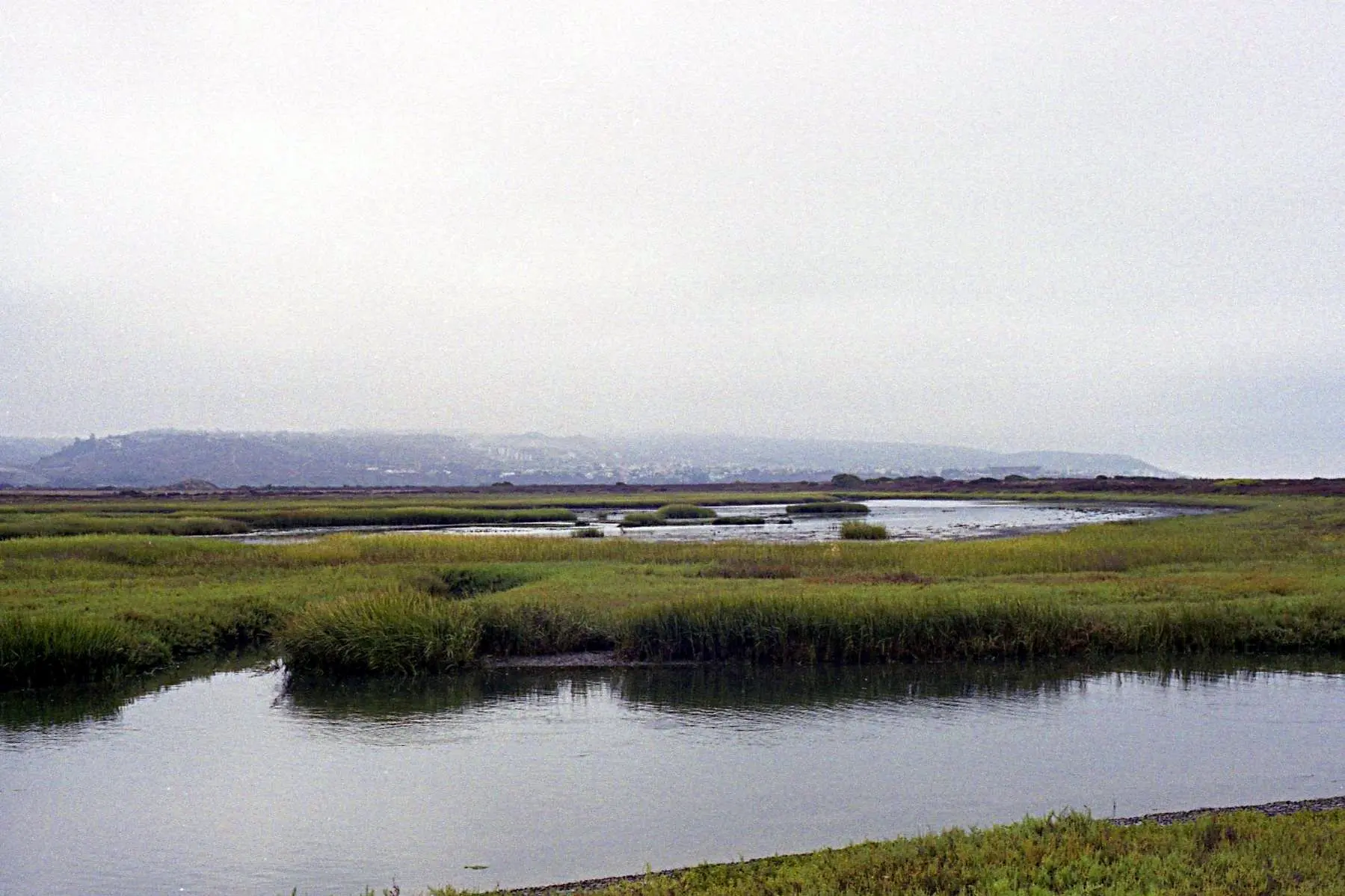
On a clear day in La Jolla, the air can carry a trace from much farther south than the breeze suggests. New UC Riverside research, reported via Phys.org, ties airborne pollution there to the Tijuana River—roughly 22 miles (35 kilometers) from the river mouth.
The surprise isn’t that sewage-tainted water can put chemicals into the air. It’s how far those chemicals can travel underwater first. Waste dumped into the Tijuana River can influence San Diego’s air at least 20 miles (32 kilometers) from its source—seven times farther than expected—before the compounds emerge and go airborne.
When water pollution becomes air pollution
Researchers tracked dimethyl trisulfide, a volatile sulfur compound associated with decomposing organic matter and wastewater, and identified the river as a strong regional source. They detected the compound even at the most distant site in La Jolla, roughly 22 miles (35 kilometers) from the river mouth.
Here’s the catch: dimethyl trisulfide doesn’t last long in air. UC Riverside’s team concluded the ocean itself served as a storage and transport lane. Compounds persisted long enough in seawater to be ferried north along the coast before finally crossing into the atmosphere and showing up downwind.
How far is ‘far’? The distances and survival rates
The work, as reported via Phys.org, sets a new scale for cross-media transport: at least 20 miles (32 kilometers) from the source (seven times farther than expected) and roughly 22 miles (35 kilometers) from the river mouth to the detection site in La Jolla. Modeling indicated that at about 10 meters (33 feet) below the surface, up to 76% of dimethyl trisulfide could survive the 35-kilometer (22-mile) northward journey under the conditions examined.
Those two numbers—the distance and the survival fraction—explain the punchline. Air measurements far from the river can register wastewater-linked compounds not because wind carried them intact the whole way, but because seawater did the hard part first.
A dry-season deluge, by the numbers
The observations came during an extraordinary dry-season event: roughly 160 million to 207 million liters per day—42 million to 55 million gallons per day—were entering the Pacific. That is every day, during a period when flows are normally low.
The researchers caution that this sustained wastewater discharge makes the episode unusual. It’s a key caveat when interpreting how general these distances and survival rates might be.
The telltale drop that fingered the source
When a pump diversion sharply reduced wastewater entering the Tijuana River, levels of dimethyl trisulfide measured in La Jolla fell by 86%. Some of the compound lingered for about two days, consistent with the idea that pollutants had been stored in seawater before escaping to the air.
That on–off signal—large inflows upcoast, then a rapid plunge after diversion—helped isolate the river as the driver of the far-field air signal.
Why this redraws exposure maps
Traditional air-quality thinking often starts the clock when a pollutant meets the sky. This work emphasizes a different clock: the time pollutants spend in water before they surface. As reported via Phys.org, the findings reinforce that water and air pollution shouldn’t be treated as separate problems, in William Porter’s words.
The implications are practical. The analysis reported via Phys.org projects that this line of evidence could change how scientists determine where people might come into contact with pollution—expanding the zone of concern far beyond the shoreline nearest the outfall.
What we don’t know yet
Two important limits apply. First, the team emphasized that their observations occurred during an extraordinary stretch of sustained dry-season wastewater discharge; no one has yet shown how far pollutants travel under more typical seasonal and ocean-current conditions.
Second, the analysis reported via Phys.org did not examine whether the detected concentrations pose a risk to human health. The numbers here locate pollution in space and time; they do not, on their own, say if it is dangerous.
The deeper cut
Air–sea exchange sets the clock
Dimethyl trisulfide (DMTS) has a short atmospheric lifetime under oxidizing coastal conditions, which is why purely airborne transport from the Tijuana River to La Jolla should have left little to detect. The persistence reported via Phys.org arises because the rate-limiting step shifts from gas-phase oxidation to air–sea transfer. At roughly 10 m depth, the model result that up to 76% of DMTS survives a 35 km coastal transit implies that aqueous-phase loss processes (hydrolysis, biological uptake, or oxidation by dissolved species) were slow compared to advection timescales. In that regime, the net flux to air is governed by the water-side transfer velocity and the solubility-driven gradient at the interface. The ocean thus acts as a buffered conveyor: pollutants are advected north while protected from rapid gas-phase decay, then released where and when mixing or upwelling brings them toward the surface. The 86% drop in La Jolla after wastewater diversion is consistent with this picture: cut the source, and as the preloaded coastal water mass passes, the air signal collapses on a timescale of a day or two—the time needed for stored compounds to ventilate from the near-surface layer.
Because numbers matter here
Seven times farther than expected; at least 20 miles (32 kilometers) from the source; roughly 22 miles (35 kilometers) from the river mouth; 160–207 million liters (42–55 million gallons) per day into the Pacific; an 86% drop after diversion; up to 76% survival at 10 meters over 35 kilometers. Each figure does a different job, together telling one story: coastal water can carry pollution a long way, then hand it off to the air where people breathe.
Related research: Persistence of organic compounds extended through ocean transport and air–sea exchange (Scientific Reports, 2026)
Sources: Tijuana River pollution doesn't stay put—it can travel seven times farther than expected (phys.org)
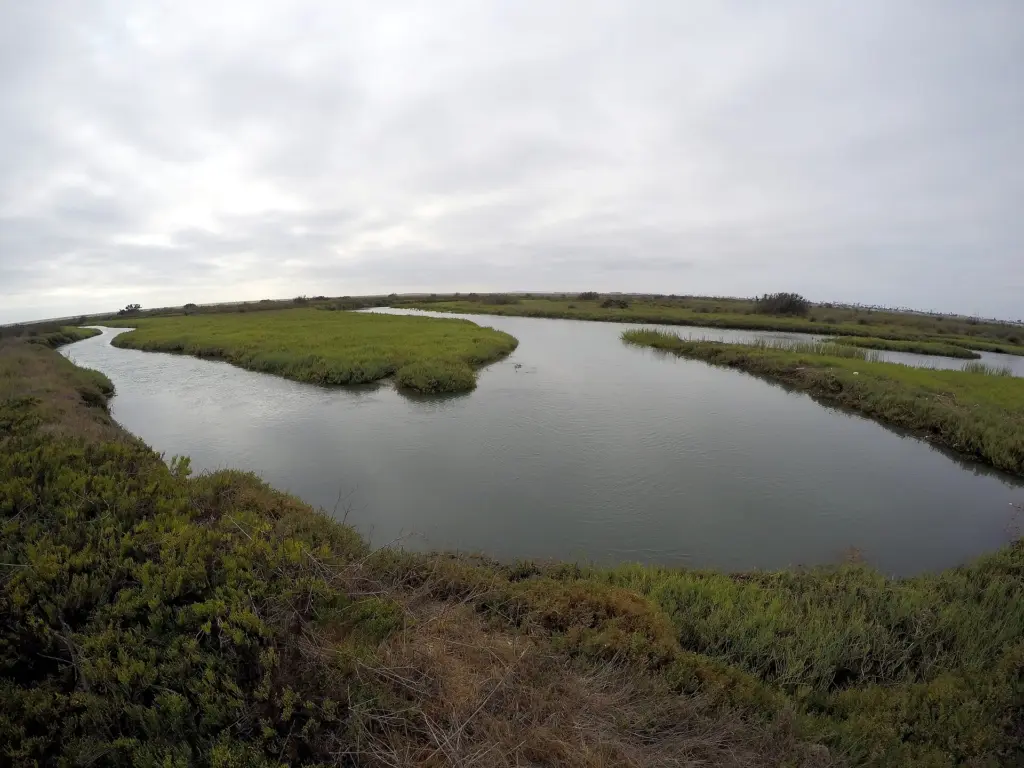
Images: Cover: Osbomb / Wikimedia Commons (CC BY 2.0); Figure 1: Wasquewhat / Wikimedia Commons (CC BY-SA 4.0)
How this article was made: Everyman Science uses AI tools to structure, format and optimise its articles, and occasionally to produce illustrations where no free photograph exists. The reporting these articles are based on is human-produced and cited above. Spotted an error? Write to [email protected] and we will correct it. — The editors How we work.





Science desk team of Everyman Science, curating and reporting on the day’s most significant developments in research, space exploration, and technology.