When the extra groceries stopped, another number rose
The change didn’t come as a siren-blaring spike. In county after county where the extra grocery money faded out, case files quietly shifted: more investigations ended with maltreatment confirmed. Not more calls to hotlines. More findings that something had gone wrong at home.
That pattern is what researchers reported in the American Journal of Preventive Medicine after the end of pandemic‑era food assistance in parts of the United States. They linked the timing of those rollbacks to a rise in child maltreatment—a finding that lands squarely in the debate over what food security policies do beyond the checkout line.
What changed in the grocery budget—and when
To shore up family budgets early in the pandemic, the U.S. Department of Agriculture authorized Supplemental Nutrition Assistance Program (SNAP) Emergency Allotments starting in early 2020. States began discontinuing those extra allotments on their own timelines between 2021 and 2023.
By the time of the latest reporting, millions of people had lost SNAP assistance over the past year. In practical terms, that meant less cash-equivalent support for food, precisely as prices and rents were still biting in many places.
How the researchers took the measure
The analysis drew on nationwide child welfare data spanning 1,153 U.S. counties between January 2021 and February 2022. Over that window, 10 states ended the expanded SNAP Emergency Allotments, while others did not, creating a natural contrast in timing that could be tracked across counties.
The study period closed in February 2022. That was before a second wave of states ended the emergency allotments between March and August 2022, so any later shifts fall outside the data the researchers examined.
What moved—and what didn’t—in the child welfare numbers
Child maltreatment rates went up in the places where the pandemic‑era extra SNAP benefits ended. The increases showed up in substantiated cases—the ones where investigators concluded maltreatment occurred—rather than in the volume of reports coming in.
Those increases didn’t burst into the statistics all at once. According to lead investigator Liwei Zhang, Ph.D., they appeared gradually over time after the benefits ended, consistent with pressure building as households adjusted to a thinner margin.
The timeline matters beyond the headline
Between March and August 2022, more states rolled back their emergency allotments—but that second wave began after the analytic window closed. The clearest take‑away is therefore anchored to the first phase of rollbacks, not to the nationwide end of emergency allotments that unfolded later.
That boundary matters for interpretation: it pins the finding to a defined period, and it limits what anyone can confidently say about what happened next without fresh data.
The deeper cut
Why “substantiated” rising without more reports is a red flag
In child welfare data, a report is an allegation; substantiation is the administrative decision, after investigation, that abuse or neglect occurred under statutory definitions. A rise in substantiations without a corresponding rise in reports points away from surveillance artifacts (like more hotline calls) and toward changes in underlying conditions, case mix, or investigative thresholds. It also lines up with a temporal lag: families can often buffer an income shock briefly—by drawing down savings, borrowing, or skipping bills—before stress accumulates enough to degrade caregiving or trigger neglect (for instance, food neglect tied to an emptier pantry). In administrative time series, that lag shows up as a slope rather than a step. Interpreting it still requires caution—substantiation standards can drift—but when hotline volume is flat, the simplest reading is that more investigations are finding real harm. In a policy context, that’s why staggered program rollbacks are analytically useful: they let observers watch whether the slope changes in places where a benefit vanishes while it stays steady elsewhere. Here, that is exactly what the researchers reported.
What we don’t know yet
The publicly reported results do not quantify by how much substantiated maltreatment rose, nor do they cover outcomes after February 2022. They also don’t specify which types of maltreatment accounted for most of the increase in the summarized findings released so far.
Answering those questions would require updated datasets and disaggregated breakdowns. Until then, the topline remains: substantiated maltreatment rose after the extra SNAP benefits ended, and the number of reports did not significantly increase.
Policy stakes, in plain numbers and dates
SNAP’s emergency boost began in early 2020 and was pulled back on a state‑by‑state schedule from 2021 through 2023. During January 2021 to February 2022—when some states ended the added allotments—child maltreatment rates rose in the counties tracked, with increases building over time and not driven by more reports.
Even without precise effect sizes, that chain of timing and outcome is enough to place child protection squarely in the conversation whenever nutrition assistance is scaled up—or pared back.
A quieter kind of warning
There’s no single alarm bell in these data—no instant spike that settles every argument. Instead, there’s a line that tilts upward as the extra support falls away, across 1,153 counties and a defined slice of time.
It’s an uncomfortable kind of evidence: the absence of a surge in reports, paired with a rise in what investigators confirm. Quiet often, in public health, is the sound a real problem makes.
Sources: End of COVID-era SNAP emergency food assistance linked to increased child maltreatment rates (phys.org)
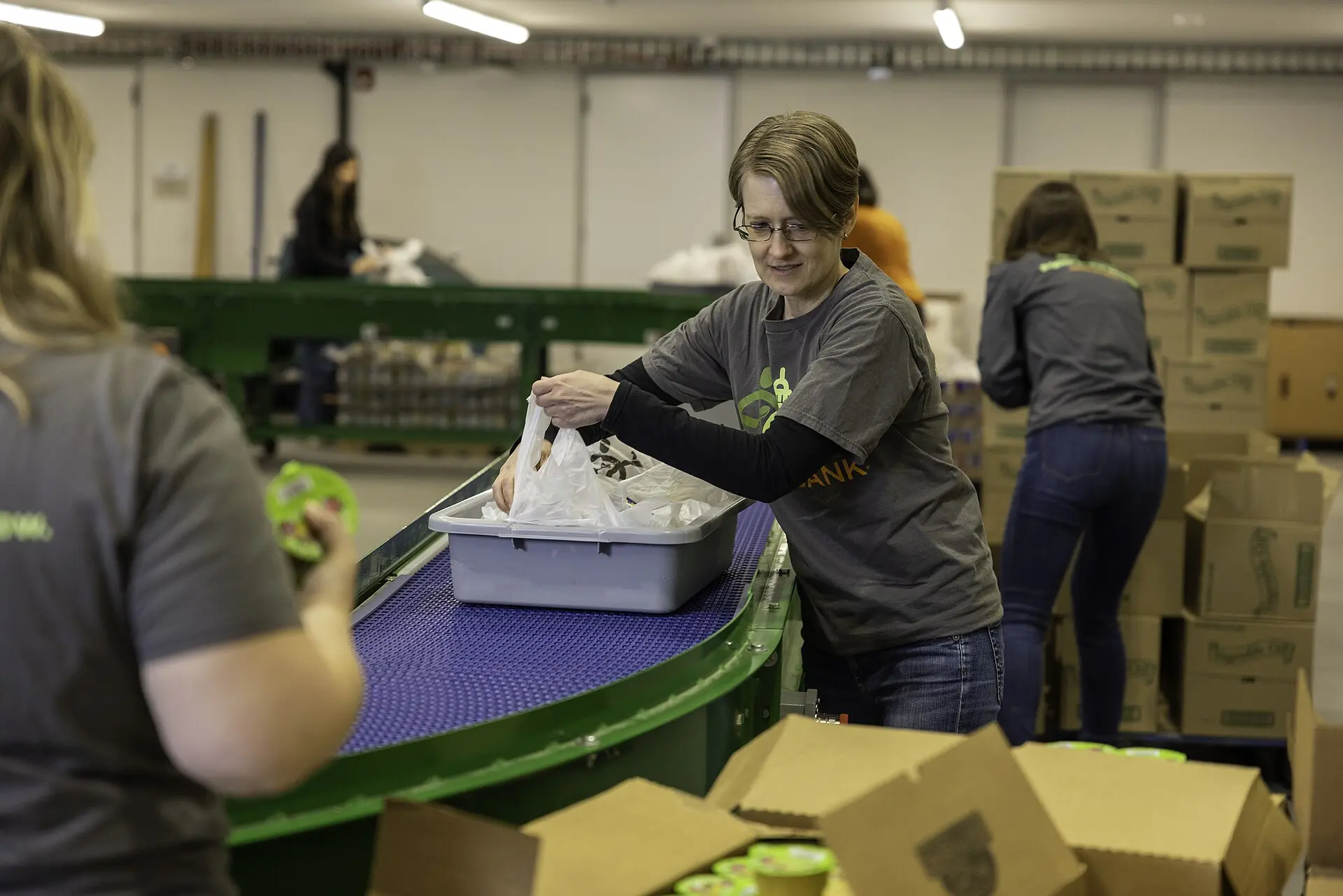
Images: Cover: USDAgov / Wikimedia Commons
How this article was made: Everyman Science uses AI tools to structure, format and optimise its articles, and occasionally to produce illustrations where no free photograph exists. The reporting these articles are based on is human-produced and cited above. Spotted an error? Write to [email protected] and we will correct it. — The editors How we work.





Science desk team of Everyman Science, curating and reporting on the day’s most significant developments in research, space exploration, and technology.