Soft rock wins the race as shale erodes three times faster—and mountains may breathe out more CO2
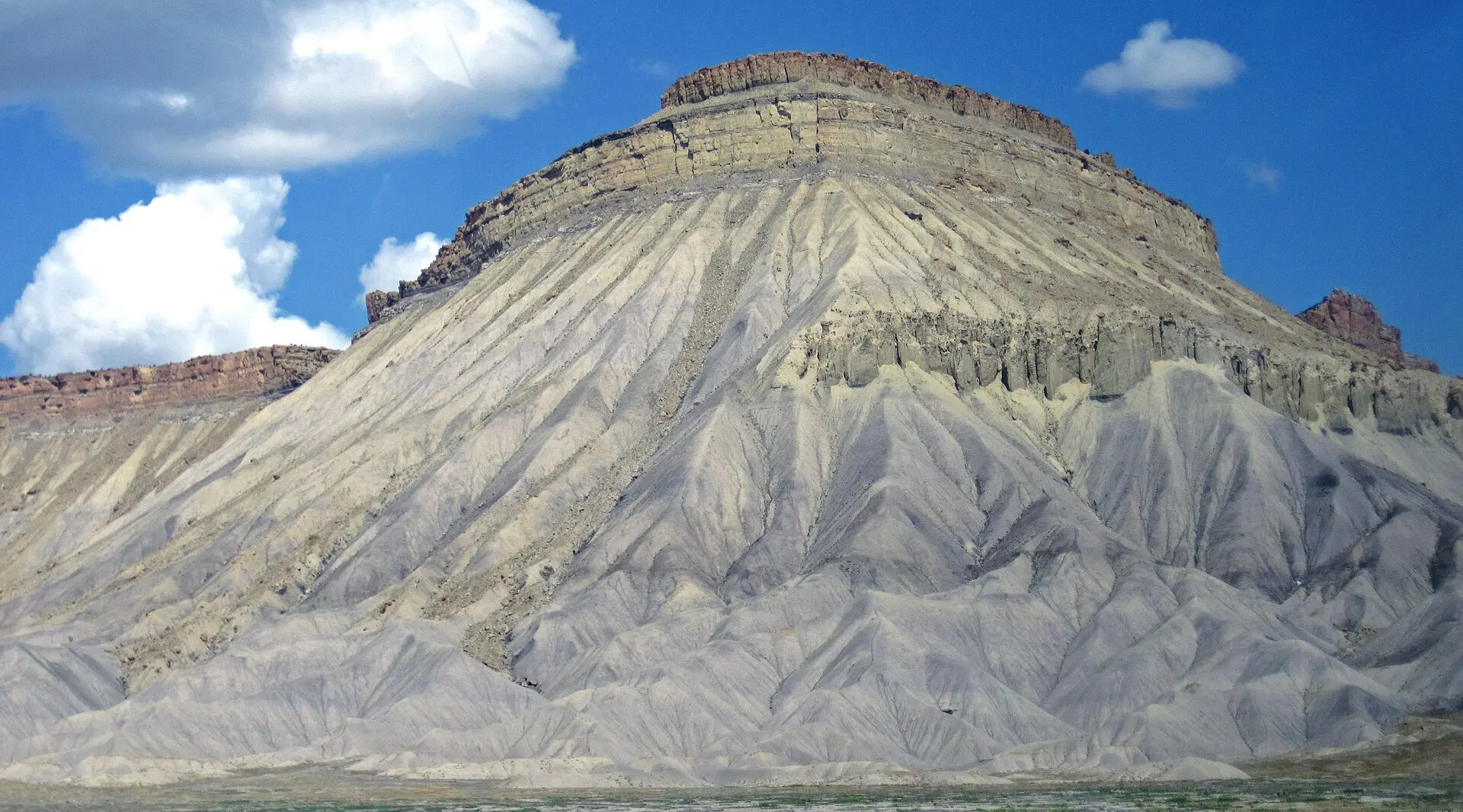
In a stream draining the East River Watershed, the sand looks ordinary—flecks of quartz tumbling along as they always have. Hidden in those grains is a record of how fast the land upstream is wearing down, and, it turns out, a clue to how much carbon dioxide the mountains might be sending back to the air.
A University of Massachusetts Amherst–led team used that record to make a stark claim: in mountain landscapes, weaker rock erodes about three times faster than harder rock, even on gentler slopes. That reshuffles how geologists read a landscape’s shape and how climate modelers tally carbon from the planet’s stony places.
A threefold gap that flips the map
The team reports that weaker rock in mountain terrain erodes three times faster than harder rock. In their measurements, shale’s erodibility was three times that of the harder rocks they compared against. That contrast is big enough that the fastest erosion may happen not in the steepest, most rugged reaches, but in the lower, rounder sedimentary parts. Those points come from research recently published in Science Advances.
If that sounds intuitive—soft stuff goes first—the size of the gap matters. A threefold difference changes which hillslopes dominate long‑term sediment supply and how long a mountain range takes to wear down. It also changes which rock types are feeding the rivers, and that has a carbon consequence.
Why quartz grains can stand in for time
The study relies on a method that uses common quartz and the rare isotope beryllium‑10, known as 10Be. By measuring 10Be in sediments, researchers can estimate erosion rates across a watershed. Until now, that approach worked best in rocks like granite and sandstone, where quartz grains are comparatively large.
The snag has been shale: its grains are too fine for the conventional 10Be technique. The UMass Amherst–led team developed a way to harvest the isotope from such fine‑grained rocks. That opened up the East River Watershed—about 465 square kilometers—as a natural testbed mixing incredibly durable igneous rock with much weaker shale.
Mountains as sources and sinks of CO₂
Geologists recognize that when surface minerals break down, some reactions release CO₂ while others absorb it. The team points out a mismatch with climate relevance: in mountainous landscapes, shale—which releases CO₂ to the atmosphere—appears to be eroding faster and at a larger magnitude than intrusive rocks, which can absorb CO₂ from the atmosphere. That suggests geologists and atmospheric scientists may have been underestimating the CO₂ contributions coming from the Earth’s rocky places.
Eyal Marder, the paper’s lead author, argues that getting erosion rates and their equivalent impact on CO₂ release right has a marked impact on how we understand global biogeochemical cycles and climate change. Scale that logic beyond one watershed, and the balance sheet of rocks and climate starts to look different.
Rethinking what ‘equilibrium’ looks like
Field geologists often judge whether a landscape has reached equilibrium—wearing down as fast as it’s being uplifted—by eye, reading the steepness of slopes. The team argues the better test is in the sediment. Estimating erosion rates from the amounts of 10Be in stream‑carried sediment, they say, is a sounder way to tell whether a landscape is in balance.
That reframes familiar vistas. A gentle, shale‑mantled valley may be the busy place in the long erosion ledger, while a crag of hard rock looms as a slow spender.
The deeper cut
How 10Be turns sand into a stopwatch
Cosmogenic 10Be forms in situ within quartz at Earth’s surface; integrated over time, its concentration in detrital quartz inversely tracks catchment‑average erosion rate. The classic calibration assumes steady production near the surface and efficient mixing of grains sourced across hillslopes. Historically, this favored coarse‑grained lithologies (granite, sandstone) where quartz is abundant and separable; fine‑grained sedimentary rocks (shales) complicated quartz isolation and risked matrix contamination, biasing concentrations high or low. By developing a protocol that isolates sufficient quartz from these fine matrices, the authors remove a lithologic blind spot: erodibility contrasts can now be estimated directly rather than inferred from topography.
Interpreting 10Be in mixed‑lithology basins hinges on sediment routing: if weak units shed disproportionately more sediment, the composite 10Be signal skews toward their erosion rates. That is precisely the point here—measured 10Be implies higher catchment‑average erosion when weak shale dominates export. The practical worry isn’t the physics of 10Be formation so much as representativeness: grain‑size fractionation along channels, transient pulses from landslides, and variable quartz content all modulate the detrital signal. The authors’ emphasis on “give us the type of rock and enough quartz” is methodological: quantifying quartz availability and lithologic proportions is as central as the isotope chemistry.
What the study does—and does not—settle
The work shows that rock type, not just slope, can govern where erosion is fastest, and that shale’s rapid wear likely tilts mountainous regions toward net CO₂ release rather than uptake. But the exact global contribution remains unquantified here. How much total CO₂ mountains add depends on how widespread weak, quartz‑bearing shales are, how their erosion rates vary from range to range, and how models convert those rates to carbon flux.
Those are tractable questions, the authors argue, if two inputs are known. “Give us the type of rock and enough quartz for our 10Be measurements,” Marder says, “and we can estimate” the effect.
A new baseline for rocks-and-climate math
The headline finding—that weaker rock erodes three times faster than harder rock—forces a recalibration. It implies that the most climate‑relevant parts of a mountain range may be the least dramatic to the eye. It also gives modelers a clearer rule of thumb: put bedrock type on the first line of the erosion‑and‑carbon worksheet, not the second.
And it offers a practical path forward. The combination of quartz, 10Be and careful sediment sampling gives scientists a way to compare landscapes on the same terms. From there, the accounting of carbon bound up in rocks—and sent back to the air—can only get more honest.
The study behind the claims
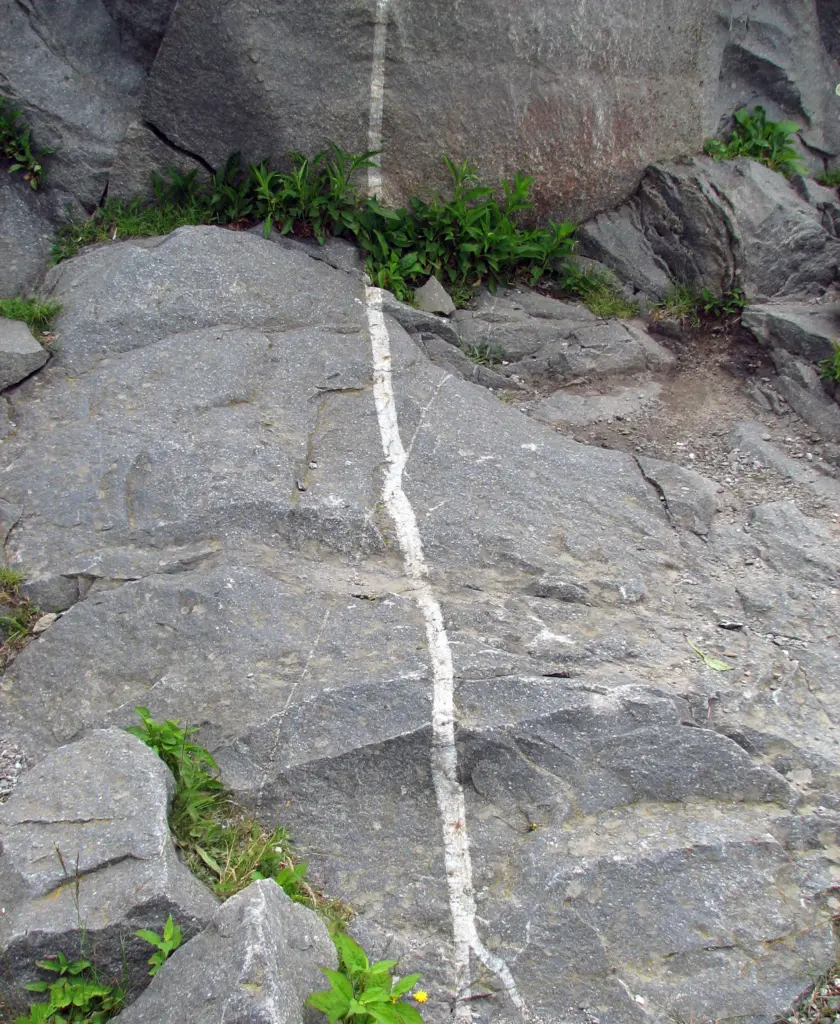
The findings come from a University of Massachusetts Amherst–led research team and are reported via phys.org. The research was recently published in Science Advances. The study’s title—Bedrock erodibility governs transient erosion and CO₂ release in alpine landscapes—is a plain statement of the link they set out to test.
It is a link with stakes. If mountains are, on balance, sources of CO₂ because their weak rocks win the race to the sea, then the planet’s ancient carbon trade with stone is running a slightly different ledger than many have assumed.
The paper: Bedrock erodibility governs transient erosion and CO
<sub>2</sub>
release in alpine landscapes (Science Advances, 2026)
Sources: Hidden erosion: Study reveals soft mountain rock erodes three times faster than hard rock—with climate implications (phys.org)
Images: Cover: James St. John / Wikimedia Commons (CC BY 2.0); Figure 1: James St. John / Wikimedia Commons (CC BY 2.0)
How this article was made: Everyman Science uses AI tools to structure, format and optimise its articles, and occasionally to produce illustrations where no free photograph exists. The reporting these articles are based on is human-produced and cited above. Spotted an error? Write to [email protected] and we will correct it. — The editors How we work.





Science desk team of Everyman Science, curating and reporting on the day’s most significant developments in research, space exploration, and technology.