In 68 alfalfa lines, roots built bacteria-free nodules—pushed by a cytokinin jolt to NIN
Can a legume start building a root nodule even when no friendly bacteria are around—and if so, what flips that developmental switch? This study set out to identify the control module that lets alfalfa initiate nodules without its usual rhizobial partners.
A research team led by professor Feng Jian at the Institute of Genetics and Developmental Biology of the Chinese Academy of Sciences reports a cytokinin–NODULE INCEPTION (NIN) module associated with spontaneous nodule formation in alfalfa (Medicago sativa), published in the Journal of Integrative Plant Biology on Sept. 29. The paper asks how far the plant’s own program can go toward nodule organogenesis in the absence of infection—and what signals and genes are doing the pushing.
What they actually did, in plants and in cells
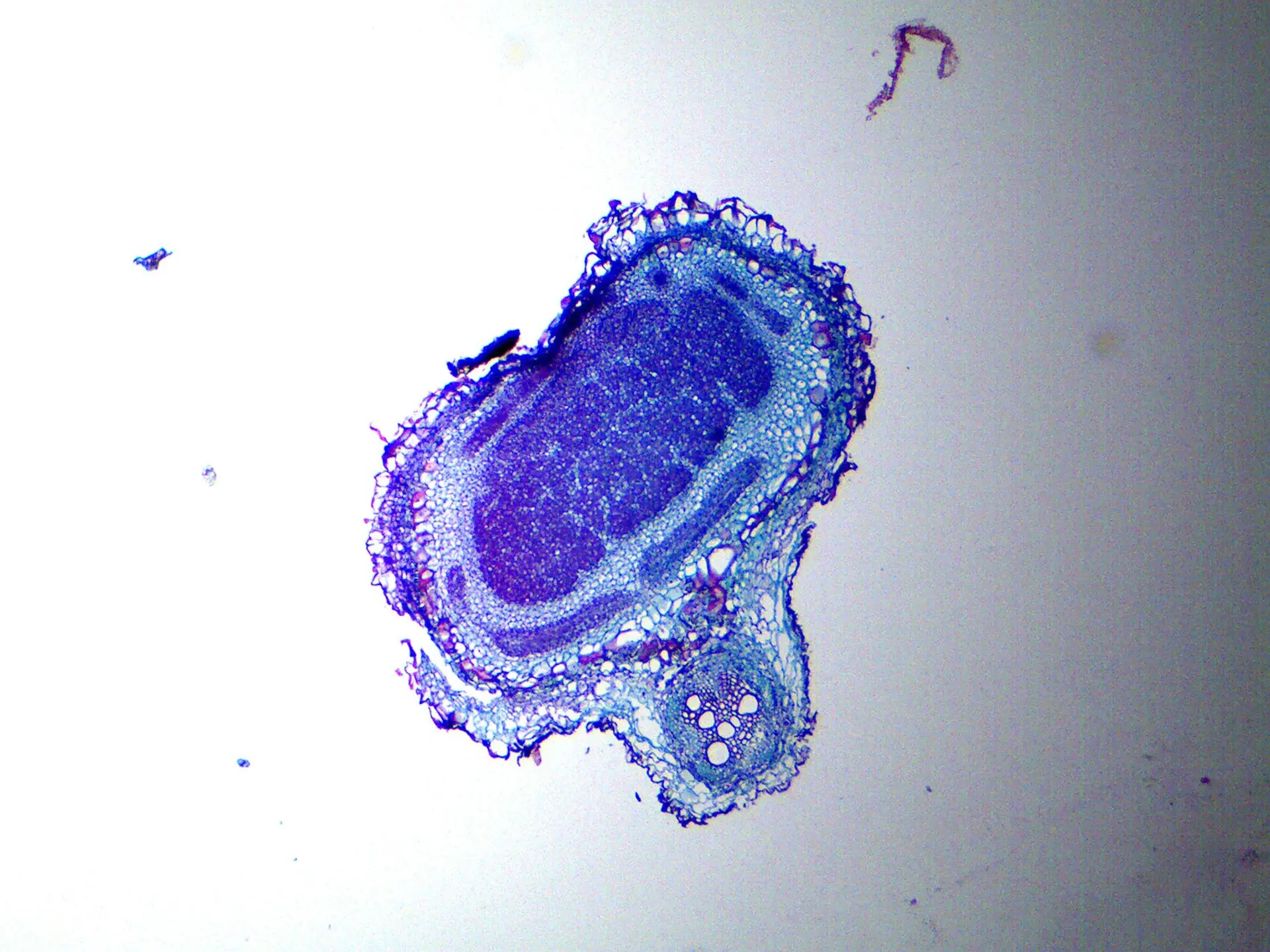
The team examined 68 alfalfa accessions and found every one could grow nodules spontaneously, though some did it more often than others. They chose the variety Zhongmu‑3 for deeper analysis. Compared with the typical pink rhizobia-induced nodules, these spontaneous nodules were smaller, white, packed with starch granules, and—crucially—had no bacteria inside. Even after the roots were later inoculated with rhizobia, the spontaneous nodules stayed uncolonized.
They then measured cytokinins—plant hormones that steer cell division—and found that trans‑zeatin riboside (tZR) was enriched in spontaneous nodules relative to adjacent root tissue. To test causation, they applied tZR or a synthetic cytokinin, 6‑benzylaminopurine (6‑BA), and saw nodules form that matched the spontaneous ones in structure.
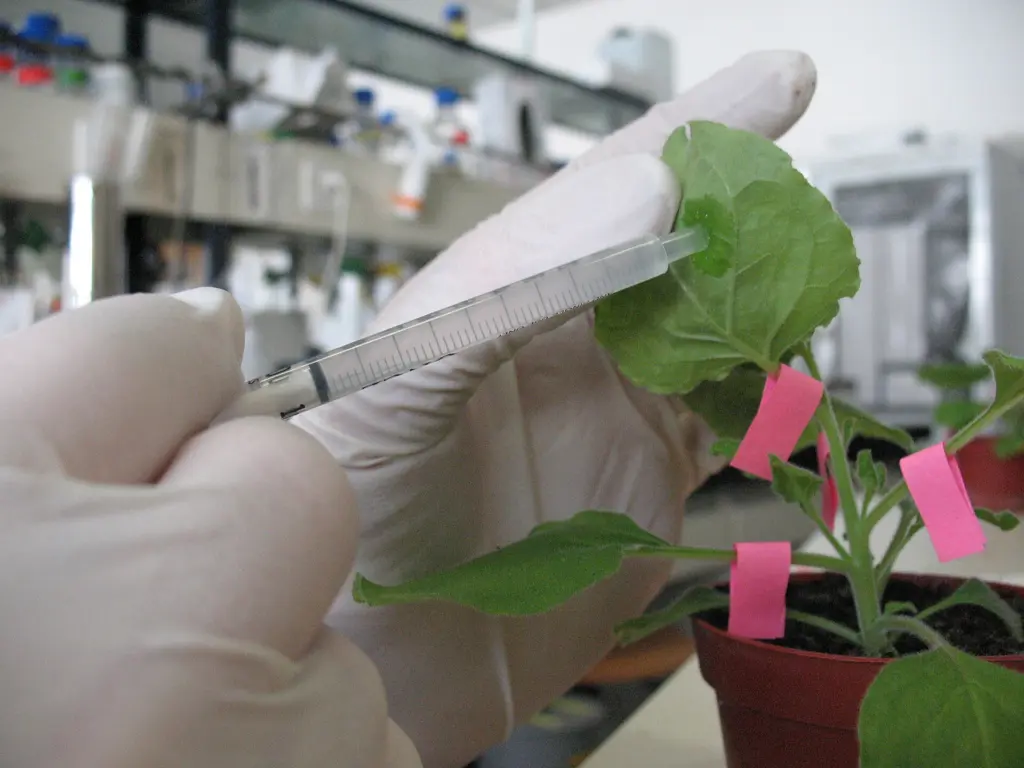
To see which genes were turning on, the researchers ran a transcriptome analysis. In both spontaneous nodules and cytokinin-induced nodules, the NIN gene and other nodulation-associated genes were activated. They also looked across species and found homologs of these co‑induced genes showed similar expression changes during rhizobia-induced nodulation in the model legume Medicago truncatula. Finally, they probed the upstream control: in yeast, the alfalfa type‑B response regulators MsRR3 and MsRR10 bound a cytokinin‑responsive element (CE) in the NIN promoter region, and in Nicotiana benthamiana leaves these regulators activated a CE-driven reporter.
What changed, and by how much
One number carries a lot of weight here: 68. Across that many alfalfa accessions, all formed spontaneous nodules, establishing that this is a widespread, not idiosyncratic, trait in the species. The hormone measurements were specific to tZR: it was enriched in spontaneous nodules relative to neighboring roots, while other measured cytokinins did not show corresponding increases. Applying either tZR or 6‑BA was sufficient to induce nodules that were structurally like the spontaneous ones. On the gene side, NIN and a set of nodulation genes lit up in both spontaneous and cytokinin‑induced nodules, aligning with the idea that a cytokinin–NIN axis is driving the organogenic program. And at the protein–DNA level, MsRR3/MsRR10 physically associated with the NIN CE in yeast and turned on a CE‑reporter in tobacco leaves, consistent with cytokinin-responsive regulators pointing at NIN.
What this does not yet do
These nodules do not fix nitrogen. The researchers report that establishing a functional symbiosis will require additional host factors and an effective rhizobial infection process; even when rhizobia were added later, the spontaneous nodules stayed empty. In other words, the developmental scaffold of a nodule can be built by the plant alone, but the plumbing and workforce for nitrogen fixation are missing.
The deeper cut
Cytokinin to NIN: the signal relay, in brief
Cytokinins trigger transcriptional programs through type‑B response regulators (RR‑Bs), Myb‑like transcription factors that bind cis‑elements in target promoters. The study connects this canonical relay to nodule initiation by showing MsRR3 and MsRR10 interact with a cytokinin‑responsive element (CE) in the NIN promoter and can activate a CE‑driven reporter. NIN sits high in the nodulation hierarchy: once expressed, it launches downstream modules that pattern cortical cell divisions and nodule primordia. The hormone specificity matters: trans‑zeatin riboside (tZR) enrichment in spontaneous nodules, and phenocopying with 6‑benzylaminopurine, argue that a cytokinin pulse is sufficient to flip the switch toward organogenesis. That shared NIN activation in spontaneous and cytokinin‑induced nodules—and homologous gene responses during rhizobia‑induced nodulation in Medicago truncatula—places the cytokinin–NIN axis as a conserved entry point into the nodulation program that can be engaged with or without infection threads. The yeast DNA‑binding and Nicotiana reporter assays don’t prove in‑planta occupancy at endogenous loci, but they establish biochemical plausibility for RR‑B→NIN transcriptional control consistent with the observed transcriptomes.
Why this matters for agriculture—carefully
A plant’s ability to kick off nodule development without bacteria sketches a to‑do list for engineering nodules in non‑legumes: first, turn on the organogenesis program; later, supply the infection machinery and the symbiotic metabolism. The study’s cytokinin–NIN module is a clear handle on step one. It maps hormone, transcription factors (MsRR3/MsRR10), and a master regulator (NIN) to a pathway that, when nudged, yields nodule‑like organs in alfalfa roots.
That does not make the hard part easy. The authors emphasize that spontaneous nodules lack intracellular bacteria and do not fix nitrogen; moving from “build it” to “make it work” will require identifying the host factors that allow effective infection and a functional symbiosis. Still, having a plant‑intrinsic entry point means researchers can separate organ formation from infection in design and testing, instead of trying to coax both at once.
Method notes worth remembering
– Scope: 68 genetically distinct alfalfa accessions all formed spontaneous nodules, so the phenomenon is broad in the species, not a lab artifact. Zhongmu‑3 served as a tractable case for deeper assays.
– Hormone and induction: tZR was enriched in spontaneous nodules relative to adjacent roots, and externally applied tZR or 6‑BA induced look‑alike nodules.
– Gene and regulator assays: NIN and other nodulation genes were co‑activated in spontaneous and cytokinin‑induced nodules; homologs co‑shifted during rhizobia‑induced nodulation in Medicago truncatula. MsRR3/MsRR10 bound the NIN CE in yeast and activated a CE‑reporter in Nicotiana benthamiana leaves.
Who did it and where to read it
The work comes from a team led by professor Feng Jian at the Institute of Genetics and Developmental Biology, Chinese Academy of Sciences, and was published in the Journal of Integrative Plant Biology on Sept. 29. The study reports a cytokinin–NIN regulatory module associated with spontaneous root nodule formation in alfalfa and details the evidence from hormone measurements, transcriptomes, and regulator assays.
If you want the primary source, it’s here: A cytokinin–NIN module drives spontaneous root nodule formation in alfalfa (Journal of Integrative Plant Biology, 2026).
The paper: A cytokinin–
<i>NIN</i>
module drives spontaneous root nodule formation in alfalfa (Journal of Integrative Plant Biology, 2026)
Sources: How alfalfa forms root nodules without rhizobia (phys.org)
Images: Cover: Bwiltz / Wikimedia Commons (CC BY-SA 4.0); Figure 1: NPS/Boston Photo Imaging / Wikimedia Commons; Figure 2: Yuliya Krasylenko / Wikimedia Commons (CC BY 4.0); Figure 3: Chandres / Wikimedia Commons (CC BY 3.0)
How this article was made: Everyman Science uses AI tools to structure, format and optimise its articles, and occasionally to produce illustrations where no free photograph exists. The reporting these articles are based on is human-produced and cited above. Spotted an error? Write to [email protected] and we will correct it. — The editors How we work.





Science desk team of Everyman Science, curating and reporting on the day’s most significant developments in research, space exploration, and technology.