Advances in Investigating Plant Communication Through Sound

Plants are capable of emitting ultrasonic sounds when they are stressed, according to a recent study. These high-frequency noises, which are outside the range of human hearing, serve as a form of communication by informing other organisms about the plant’s distress. Evolutionary biologist Lilach Hadany from Tel Aviv University explains that even in a quiet … Read more

After Moon Triumph, India Targets Sun with Aditya L1 Launch

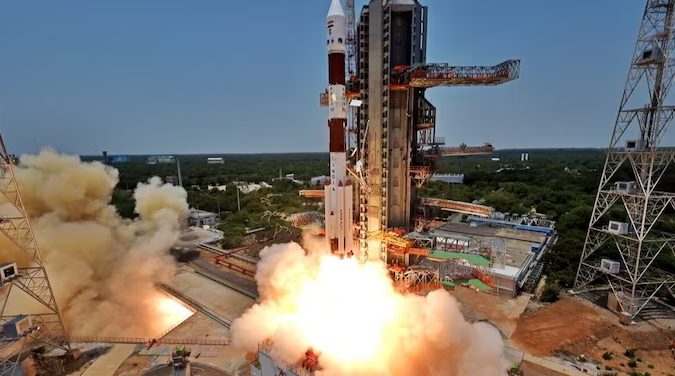
The Aditya L1 spacecraft lifts off from Sriharikota atop the PSLV-C57 rocket. (Photo: ISRO)

India successfully launches a spacecraft towards the sun following its landmark moon landing mission. The launch of the Aditya L1 spacecraft took place on Saturday from Sriharikota on India’s eastern coast. Just ten days after becoming the first country to land a spacecraft on the moon’s southern side, India has embarked on its first mission to study the sun.
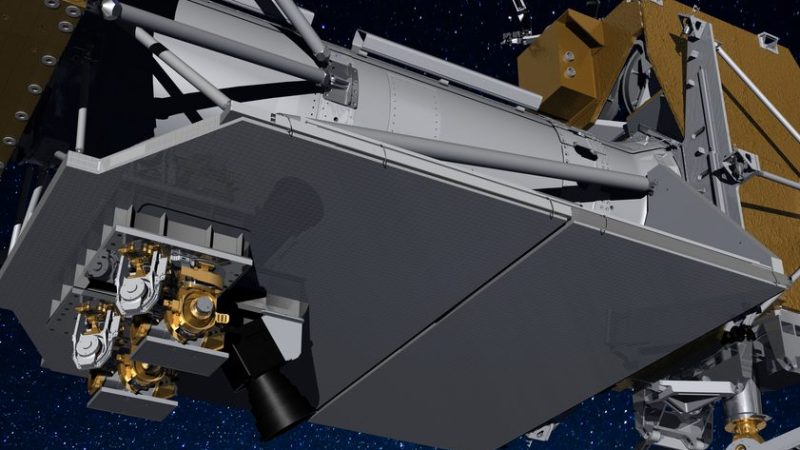
The Indian Space Research Organisation (ISRO) confirmed the successful launch of Aditya-L1, stating that the satellite had been placed in its intended orbit. Aditya L1 will travel a distance of 1.5 million km over the course of approximately four months before positioning itself in a halo orbit around the Lagrange point (L1) of the sun-Earth system. This orbit will be maintained due to the balancing gravitational forces.

Video: The Indian Express

Aditya L1 Objectives

The Aditya-L1 mission is India’s first space-based observatory-class solar mission, with a focus on studying the sun’s atmosphere. Equipped with seven specialized payloads, it delves into the sun’s deepest layers, such as the photosphere, chromosphere (400 km to 2,100 km above the photosphere), and the outermost corona. Using electromagnetic, particle, and magnetic field detectors, the mission aims to analyze solar winds, which can disrupt Earth and trigger auroras. This data promises to enhance our comprehension of the sun’s influence on Earth’s climate patterns.

Orbit for Uninterrupted Observation

Aditya L1’s Unique Position:

The Aditya L1’s primary payload, the Visible Emission Line Coronagraph (VELC), plays a pivotal role by constantly transmitting substantial spectral line data. This translates into a remarkable daily delivery of 1,440 sun images to ground stations. These images undergo rigorous analysis, processing, and global dissemination to scientists.

The strategic choice of Aditya L1’s orbit holds immense significance for solar observation. Positioned in the halo orbit around the sun-Earth system’s L1 point, it provides uninterrupted views of the sun. This remarkable location ensures that any solar storms directed towards Earth must pass through this orbit, enabling real-time monitoring of solar activities and their impact on space weather.

Global Recognition

India’s Space Triumphs:

During the BRICS summit in South Africa, India’s Prime Minister, Narendra Modi, earned praise from global leaders for Chandrayaan-3’s historic moon landing, marking India’s debut on the moon’s southern region. Modi emphasized that this success was a victory for all humanity. Coincidentally, this recent launch precedes the G20 Summit in New Delhi, providing Modi with an opportunity to showcase India’s achievements in its cost-effective space endeavors.

India’s Cost-Effective Space Program

It is worth noting that the Chandrayaan-3 moon mission had a budget of approximately $74 million, making it more economical than Hollywood movies like Gravity and The Martian, which had budgets exceeding $100 million. With each successful launch, India solidifies its position as a prominent player in the global space exploration community.

Related: India made History with Successful Moon Landing

Read more

ILLUMA-T: NASA’s Laser Communication System Ready for Space Trials

NASA is set to conduct trials of a laser communications system on the International Space Station. Known as ILLUMA-T, the system will utilize invisible infrared light to transmit and receive information at higher data rates than previous technologies. If successful, this system could revolutionize the way we send information from space missions back to Earth. … Read more

Artificial Intelligence Sniffs Out Scents from Chemical Structures

Artificial intelligence (AI) has the ability to predict the smells of various chemicals based on their molecular structures, according to a recent study published in Science. This AI system, known as a neural network, can provide descriptions of odours, such as ‘fruity’ or ‘grassy’, corresponding to hundreds of chemical structures, including some that do not … Read more

Novel Oxygen Isotope Observed for the First Time

Scientists have made an intriguing discovery – a never-before-seen form of oxygen. This new isotope, called oxygen-28, has the highest number of neutrons ever observed in an oxygen atom’s nucleus. Despite expectations of stability, oxygen-28 actually decays rapidly, challenging our understanding of the “magic” number of particles in an atom’s nucleus. The nucleus of an … Read more
A Black Hole So Vast, It Engulfs 30 Billion Suns

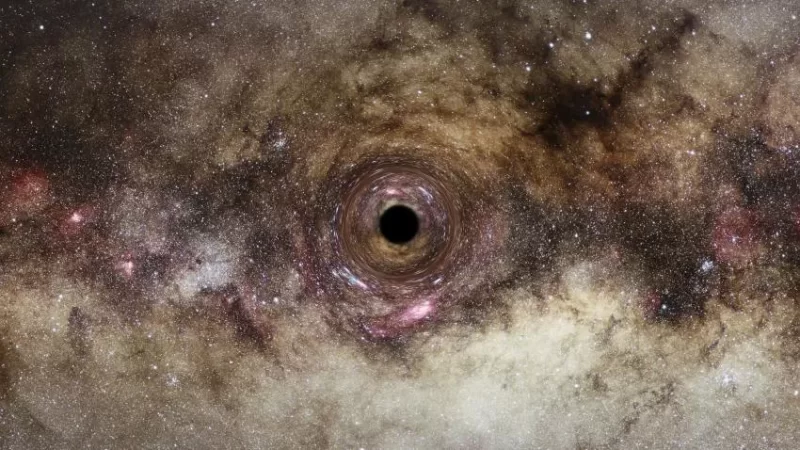
Galaxy cluster Abell 1201 hosts a colossal black hole, weighing in at 30 billion suns. In a groundbreaking discovery that pushes the boundaries of our understanding of the cosmos, a team of astronomers has stumbled upon an extraordinary celestial marvel—an ultramassive black hole located millions of light-years away from our planet Earth. With a mind-boggling … Read more
Debris Unveils Grim Fate of OceanGate’s ‘Titan’ Submersible Passengers

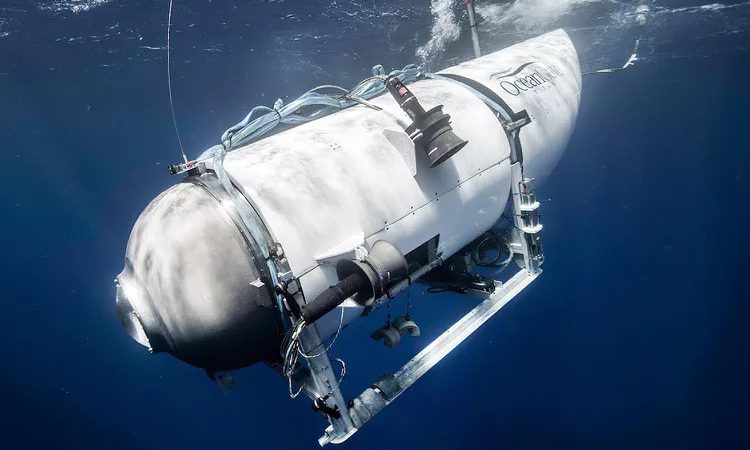
In a devastating turn of events, the 22-foot submersible Titan has gone missing while on an exploration mission at the site of the Titanic wreckage. With five people aboard and their oxygen supply running low, a frantic search of the vast seafloor, equivalent to the size of Massachusetts, was launched by authorities. Utilizing advanced sonar … Read more

Journeying into Untrodden Paths of Alan Turing’s Extraordinary Life

Alan Turing, an English mathematician, logician and cryptographer, is renowned for his role in breaking the Nazi Enigma code during World War II. His work gave the Allies a crucial advantage in Europe, ultimately leading to the invention of the computer. Tragically, Alan Turing’s life came to a tragic end in 1954 when he took … Read more

Lucy: The Bipedal Wonder of Human Evolution

In 1974, archeology experienced a significant breakthrough with the discovery of Lucy in Ethiopia. Lucy is a fossil of a young female Australopithecus afarensis, an ancient hominid species that lived in East Africa 3.7 to 3 million years ago. This finding demonstrated that human-like creatures had been evolving and walking on Earth long before the … Read more

Breaking the Glass Ceiling: Celebrating Women’s Contributions to Science and Technology

Margaret Hamilton proudly besides the printed out source code of the Apollo Project

The world of science and technology has always been dominated by men, but there have been many women who have made significant contributions and achieved great success in these fields. From the early days of computer programming to the latest breakthroughs in artificial intelligence, here are some of the inspiring women who have left their … Read more