Two doses before chemo spared mice nerve pain for six rounds
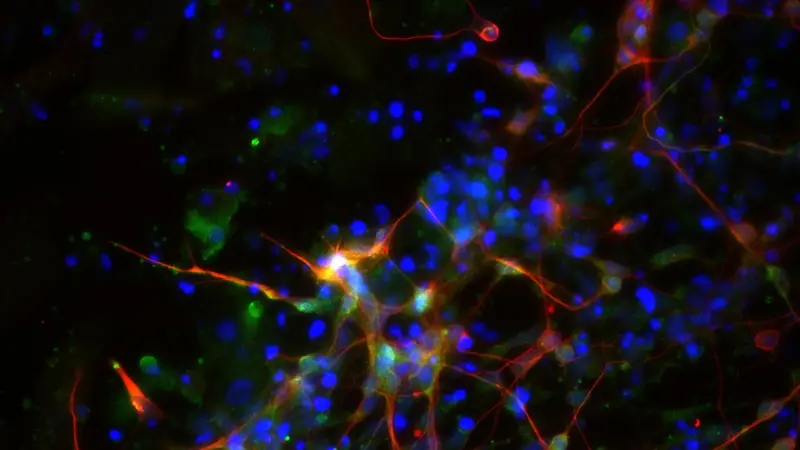
The plan was not to chase a psychedelic cure for pain. The team was probing how to protect nerves in cancer care when something odd surfaced: mice pretreated with psilocybin sailed through rounds of cisplatin chemotherapy without the usual spike of hypersensitivity in their paws.
That finding, reported in Science, came with a mechanistic twist. The drug seemed to keep the neurons’ energy supply lines open. It is an early result, in animals and lab dishes, but it points at a rare thing in oncology side-effect research: a candidate for prevention rather than after‑the‑fact relief.
Why this side effect matters so much
Chemotherapy-induced peripheral neuropathy, or CIPN, is the nerve pain, tingling and numbness that can follow certain cancer drugs. It is common and stubborn. Roughly one-third to one-half of people receiving certain chemotherapies develop it, said Dr. Thomas Strouse, reported via Live Science.
Once established, neuropathy can last. That is why a credible way to head it off would be a big deal to clinicians and patients alike. Researchers have been looking for one for a long time, Strouse said, reported via Live Science.
What the study actually did in mice
In experiments described in the Science study, two doses of psilocybin given before chemotherapy protected mice from nerve damage that can cause pain and heightened sensitivity. The protection persisted through as many as six rounds of chemotherapy, according to the study, reported via Live Science.
Timing mattered. Two doses — nine days and two days before the first chemotherapy session — completely prevented the mice from developing hypersensitivity, the study found, reported via Live Science.
Energy on the move: the mitochondrial clue
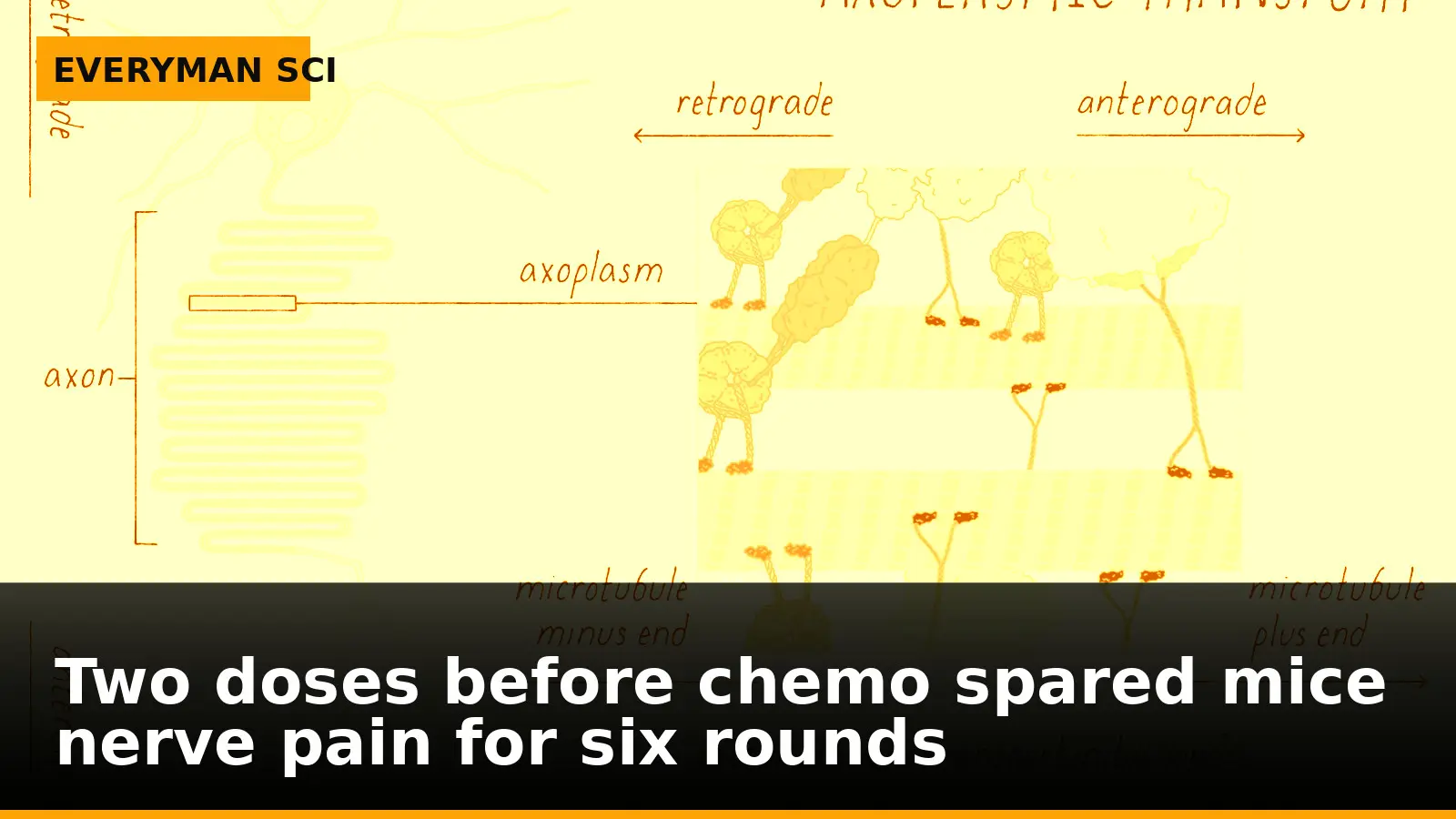
The team probed why. They found that cisplatin depleted mitochondria and ATP — the cell’s main energy currency — from nerve projections, reported via Live Science. Psilocybin’s protection, the researchers concluded, tracked with preserving mitochondrial trafficking, the shuttling of those energy-making organelles to the nerve endings that need them.
In other words, the drug did not simply crank up power overall; it appeared to keep power where the nerve uses it most. That distinction guided the interpretation of what they saw in the lab, reported via Live Science.
A familiar receptor with a new job here
The effect depended on the serotonin receptor 5‑HT2A, the study reported via Live Science. That receptor is also tied to psilocybin’s well-known psychedelic effects, which raises an obvious question for any eventual clinical use alongside chemotherapy.
Whether those mind-altering effects are essential to the nerve protection is not yet clear. But the receptor dependency anchors the biology to a concrete molecular switch, reported via Live Science.
The deeper cut
What “preserving mitochondrial trafficking” likely means
The study’s core claim is not simply that ATP levels stay higher with psilocybin, but that ATP remains available at the distal compartments where nociceptors transduce stimuli. Cisplatin exposure was associated with depleted mitochondria and ATP in neuronal projections; psilocybin preserved trafficking, which implies maintained kinesin/dynein-driven transport competence along microtubule tracks. While the article does not enumerate transport velocities or cargo densities, the mechanistic dependency on 5‑HT2A suggests a signaling cascade capable of modulating cytoskeletal dynamics or motor-cargo coupling. In serotonergic systems, 5‑HT2A couples to Gq/PLC, elevates intracellular Ca2+, and can engage PKC and small GTPases—routes that plausibly stabilize microtubules or enhance mitochondrial motility by post-translationally modifying Miro/Milton complexes.
Cisplatin’s link to mitochondrial injury and axonal energy shortfall provides the other half of the picture. If toxin exposure reduces the number of competent mitochondria within axons and simultaneously impairs the “railroad” they need to reach terminals, nociceptor endings face an ATP drought. In that framing, a protective agent that preserves trafficking would mitigate local energetic failure without necessarily boosting oxidative phosphorylation per mitochondrion. The study’s emphasis on preserved trafficking rather than restored capacity is therefore a specific, testable assertion about spatial energy homeostasis under chemotoxic stress.
Who’s behind the work
The research is part of MD Anderson’s Cancer Neuroscience Program, a multidisciplinary effort focused on the crosstalk between cancer and the nervous system, the researchers said, reported via Live Science.
That placement matters: preventing damage to the nervous system is as much a quality‑of‑life aim as a tumor‑response one. The psilocybin work sits squarely in that agenda.
What no one knows yet — and what must come next
The researchers have not shown that psilocybin prevents neuropathy in humans yet, said study co-author Dr. Moran Amit, reported via Live Science. As Amit put it, it has never been tested for this indication specifically in a systematic way in humans, reported via Live Science.
Human trials will need to establish both the effectiveness and safety of using psilocybin for this purpose, Strouse said, reported via Live Science. Until those data exist, oncologists will not know whether the mouse results translate to people on modern chemotherapy regimens.
If it holds up, what could change
This is prevention at the front end: two doses before chemotherapy, protection that endures across multiple cycles in mice. The study’s finding points to an approach that tries to keep neurons’ energy logistics intact during treatment, not patch them later.
If future trials show the same pattern in people and confirm safety, the biggest change would be experiential: fewer patients bracing for burning, tingling extremities while they fight their cancer. That is the promise on the table now — and the bar the next studies have to clear.
The paper: Psilocybin prevents chemotherapy-induced peripheral neuropathy through mitochondrial trafficking preservation (Science, 2026)
Sources: Psilocybin could prevent common and debilitating chemotherapy side effect (www.newscientist.com); Psilocybin may protect against a common, debilitating side effect of chemotherapy, early study finds (www.livescience.com)
Images: Cover: Everyman Science (illustration)
How this article was made: Everyman Science uses AI tools to structure, format and optimise its articles, and occasionally to produce illustrations where no free photograph exists. The reporting these articles are based on is human-produced and cited above. Spotted an error? Write to [email protected] and we will correct it. — The editors How we work.





Science desk team of Everyman Science, curating and reporting on the day’s most significant developments in research, space exploration, and technology.