Astronomers catch the youngest known planet, under a million years old and 55 AU from its star
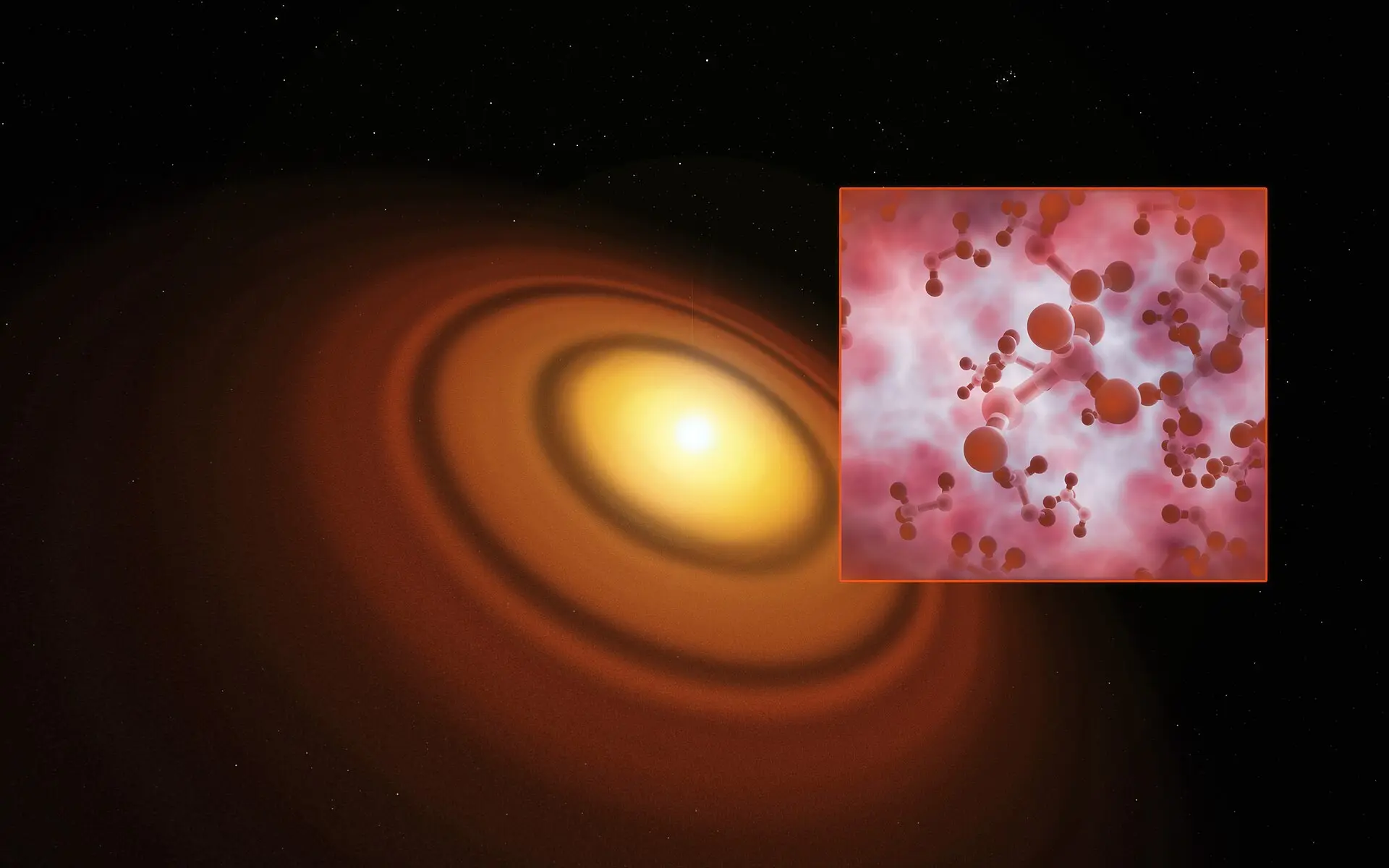
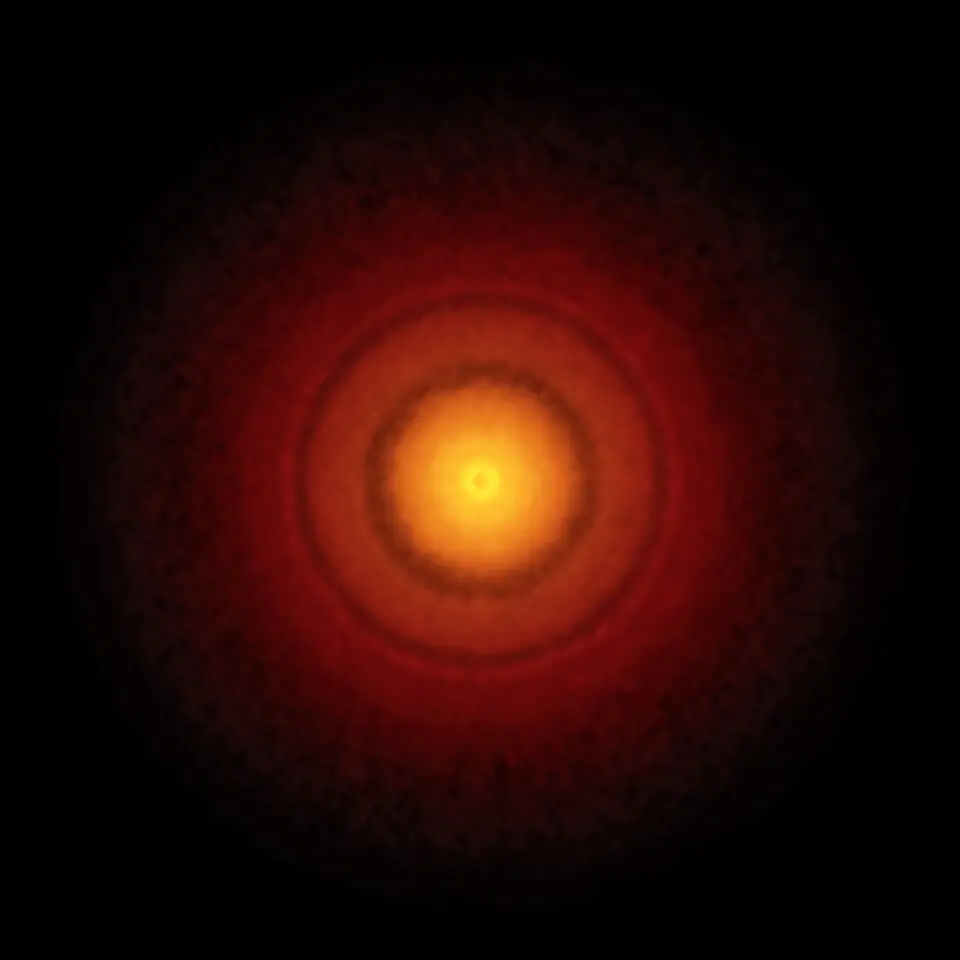
Picture a newborn world circling its star so distantly that sunlight there would be a faint echo. Astronomers now say that world exists: Elias 2-24 b, the youngest known planet, is less than a million years old and lives about 450 light-years from Earth.
It is a rare glimpse of planetary infancy. Most exoplanets we’ve confirmed are ancient by comparison—billions of years old—so catching one this early gives researchers a clock set close to zero.
A baby giant, far from home
Elias 2-24 b appears to be a heavyweight. One report pegs it as roughly as massive as Jupiter, while another places it between two and four times Jupiter’s mass. Both agree on the scale: this is no super-Earth. And it circles its star at a striking remove—about 55 times the Earth–Sun distance.
Those two facts together are what make the find consequential. A very young, very large planet sitting so far out is exactly the kind of data point that stresses our neat stories of how worlds grow.
Why the clock matters to theory
Current models suggest that building a Jupiter-size planet at Jupiter’s own distance from the Sun takes about 5 million years. Elias 2-24 b is younger than 1 million years and orbits about ten times farther out than Jupiter does in our system. On timing alone, the planet looks early for its size and address.
That mismatch doesn’t invalidate the models; it sharpens the questions they must answer. What has to change in our assumptions if a giant can show up this fast, this far out?
The age gap in our catalog
The confirmed exoplanet roster skews old. Most are billions of years into their lives, a reflection of how and where our detection methods have worked best. Against that background, a planet under a million years stands out like a toddler at a retirees’ reunion.
Age comparisons help put the youth in scale. Elias 2-24 b is roughly 5,000 times younger than Earth and around 0.008% the age of the oldest known exoplanet, PSR B1620-26 b.
What we don’t yet know—and why that’s the point
Two basic numbers are still fuzzy. One source frames the planet’s mass as “roughly Jupiter’s,” another as two to four times Jupiter’s. Both agree it’s a gas giant, but that spread matters for formation scenarios. Its absolute age is also only bounded—less than a million years—not pinned to a specific figure.
Those uncertainties are features, not bugs, at this stage. The point of a record-young planet is not that it neatly fits an existing box, but that it forces models to show their work—or change it.
The deeper cut
A quick tour of the age math
Two comparisons offered for Elias 2-24 b are unusually crisp. First: roughly 5,000 times younger than Earth. If you take Earth’s age as about 4.5 billion years, dividing by 5,000 lands you near 0.9 million years—comfortably within the “less than 1 million years” bound. Second: around 0.008% the age of PSR B1620-26 b, often nicknamed Methuselah among exoplanets. Expressed as a fraction, 0.008% is 8 × 10^-5. Invert that to get a sense of scale and you find Methuselah is about 12,500 times older than Elias 2-24 b. These orders of magnitude are the whole story for why the new planet is such an edge case. Formation models that budget ~5 Myr to assemble a Jupiter at ~5 AU simply assume more time than this object has had, and that’s before accounting for its ~55 AU orbit lengthening any growth-by-accretion timetable. You don’t need the specifics of disk physics to see the tension: push the same mass farther out and earlier in time, and the integrals for planet assembly get tighter.
How the find became official
Researchers reported the confirmation on September 16 in The Astrophysical Journal Letters. The planet belongs to a system about 450 light-years away—close enough, in galactic terms, to sit in our neighborhood’s young-star nurseries.
One consistent thread across accounts is that the planet sits far from its star—about 55 Earth–Sun distances—and that motion consistent with orbiting the star clinched its planetary status rather than a background impostor.
What comes next depends on a new eye in space
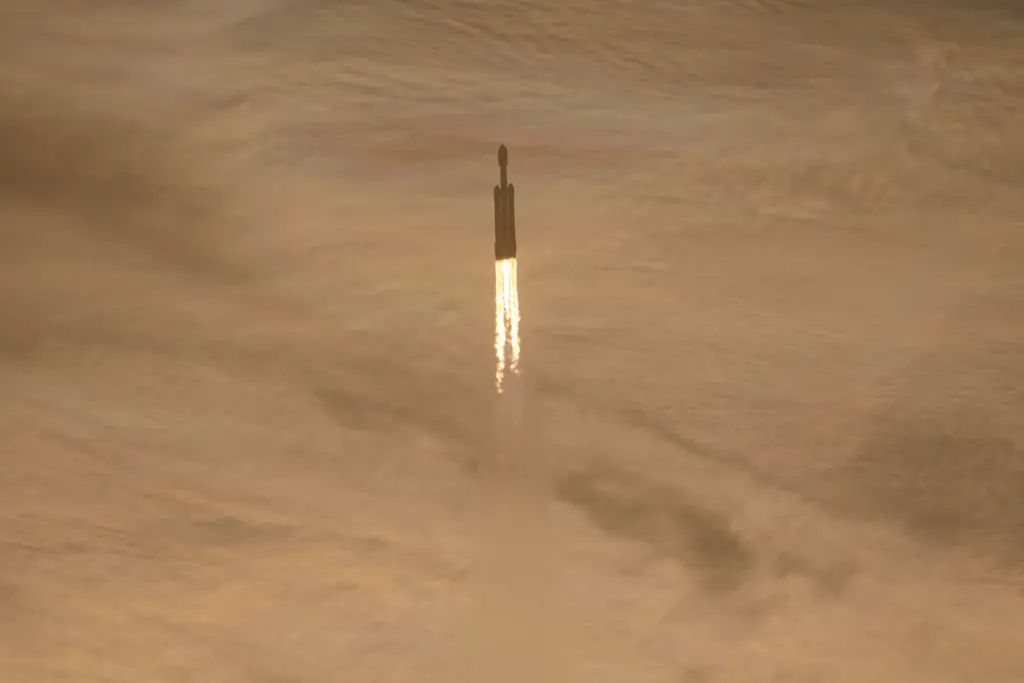
NASA’s Nancy Grace Roman Space Telescope launched on August 30. It is designed to be a prolific planet-finder, and experts project it could spot up to 100,000 new exoplanets during its mission.
If that forecast holds, the statistical weight of so many new worlds—especially if more of them are young—will tell theorists whether Elias 2-24 b is a one-off or an early sign that our timelines for building giants need revision.
Why this single planet matters beyond bragging rights
Records fall all the time in exoplanet science, but not always in places that stress the underlying physics. A giant world younger than a million years, parked far from its star, is precisely the sort of inconvenient fact that pushes a field forward.
Whether models stretch to fit it or give way to new ones, Elias 2-24 b ensures the next generation of planet formation theories will have to answer to something young, big, and far-flung.
Related research: Searching for Embedded Protoplanets with the Keck/NIRC2 Vortex Coronagraph: Confirmation of a Core-accretion Planet in the Narrow Gap of the Elias 2-24 Disk (The Astrophysical Journal Letters, 2026)
Sources: Astronomers just found the youngest known planet ever (www.sciencedaily.com); This million-year-old 'baby planet' is the youngest world scientists have ever discovered (www.livescience.com)
Images: Cover: ESO/M. Kornmesser / Wikimedia Commons (CC BY 4.0); Figure 1: S. Andrews (Harvard-Smithsonian CfA); B. Saxton (NRAO/AUI/NSF); ALMA (ESO/NAOJ/N / Wikimedia Commons (CC BY 4.0); Figure 2: NASA/John Kraus
How this article was made: Everyman Science uses AI tools to structure, format and optimise its articles, and occasionally to produce illustrations where no free photograph exists. The reporting these articles are based on is human-produced and cited above. Spotted an error? Write to [email protected] and we will correct it. — The editors How we work.





Science desk team of Everyman Science, curating and reporting on the day’s most significant developments in research, space exploration, and technology.