A restoration map the size of Algeria—and a $296 billion sprint to 2030
Picture a map with swaths of land shaded back in: forests stitched together, fields lined with trees, peat bogs rewetted, coastlines replanted with seagrass. According to a new U.N. stocktake, that re‑greening already spans 252 million hectares across 149 countries—the largest documented restoration effort on record—and it has created more than 1 million green jobs.
That is a real footprint, roughly the land area of Algeria. But the same report is blunt: to meet 2030 commitments, restoration must accelerate, with money multiplying and aquatic ecosystems moving from laggards to leaders. The study finds annual finance needs to jump from $64 billion to $296 billion by 2030 to stay on track.
What’s being counted, and why these numbers matter
The report—co‑published by the Food and Agriculture Organization of the U.N., the U.N. Environment Programme and the Secretariat of the Convention on Biological Diversity—totals documented hectares under restoration across terrestrial, freshwater, marine and coastal ecosystems. It is the first comprehensive global assessment against pledges to restore around 1 billion hectares and the Kunming‑Montreal Global Biodiversity Framework target: by 2030, at least 30% of degraded terrestrial, freshwater, marine and coastal ecosystems should be under effective restoration.
Counting hectares does not guarantee outcomes. But area is the common currency that lets very different projects—rewetting peatlands, agroforestry on farms, seagrass plantings—add up globally. It also pins a crucial question to a number: whether the world can reach the 30% restoration target in time. The study reports terrestrial ecosystems are nearly halfway to their share of that goal; freshwater, marine and coastal efforts are far behind.
By the numbers: where restoration is happening now
| Metric | Figure |
|---|---|
| Total documented area under restoration | 252 million ha (623 million acres) across 149 countries |
| Green jobs created to date | more than 1 million |
| Asia documented area under restoration | 192.2 million ha (474.9 million acres) |
| Africa documented area under restoration | 36.3 million ha (89.7 million acres) |
| Europe documented area under restoration | 9.1 million ha (22.5 million acres) |
| North and Central America documented area under restoration | 5.8 million ha (14.3 million acres) |
| South America documented area under restoration | 5.4 million ha (13.3 million acres) |
| Oceania documented area under restoration | 3.2 million ha (7.9 million acres) |
Asia dominates the current map: 192.2 million hectares—three‑quarters of the total documented area—are there. That is not a league table of performance, the report cautions; it reflects regional land area and capacities in monitoring and reporting as much as program scale. China alone reports 127.4 million hectares of terrestrial restoration, the largest national terrestrial figure in the stocktake.
Jobs now, bigger payoffs by 2030 if funding arrives
The immediate employment impact—more than 1 million green jobs—is one reason governments pitch restoration as development, not just conservation. The report goes further: with finance scaled up, restoration could generate an estimated 32 million new jobs worldwide by 2030.
Money is the hinge. Annual restoration finance must more than quadruple, rising from $64 billion to $296 billion by 2030. The largest estimated annual investment needs are in agroforestry ($87 billion), restorative reforestation ($52 billion), peatland restoration ($44 billion) and seagrass restoration ($28 billion). Those priorities mirror where both climate and biodiversity returns can be rapid and sizable.
The aquatic lag: wetlands, rivers, coasts and seas
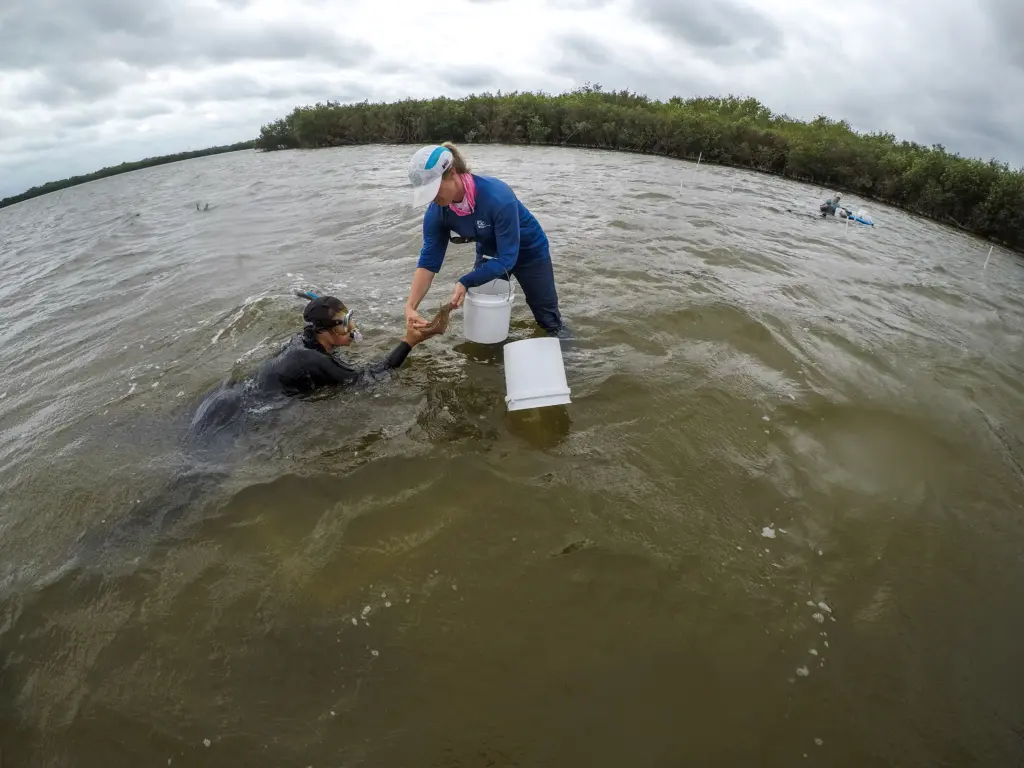
Progress in water‑linked ecosystems trails the land. Only 11 million hectares of freshwater ecosystems are documented as being under restoration, and 5.7 million hectares of marine and coastal ecosystems are reported across 62 and 46 countries, respectively. These are the same systems degrading fastest.
There is movement: the share of parties reporting implemented wetland restoration or rehabilitation programs rose from 8% to 54% since 2022. Even so, the report warns that limited reporting in aquatic realms may be undercounting what is actually happening, which makes targeted acceleration—and better monitoring—a twin priority.
What the numbers don’t settle
Hectares tell you how much is under way; they don’t tell you how well it’s working. The stocktake reports area and program uptake, but ecological outcomes—species rebound, water quality gains, carbon storage realized—vary with local context and time, and are not tallied here. Astrid Schomaker of the Convention on Biological Diversity Secretariat puts the policy edge plainly: governments must address the drivers of degradation and invest in monitoring mechanisms to make gains stick.
The deeper cut
How hard is it to count a hectare of restoration?
Across ecosystems, “area under restoration” is a classification decision layered on method. Terrestrial hectares can be mapped from satellite time series when canopy cover, burn scars or field edges change; but agroforestry additions that diversify a farm without closing canopy can be nearly invisible to optical sensors. Peatland rewetting shows up hydrologically before botanically. In coastal zones, seagrass transplants are patchy, submerged and seasonally variable, defeating coarse pixel products; here, acoustic surveys and diver transects underpin credible area statistics, but they are expensive and sparse. The stocktake’s warning about aquatic underreporting reflects these detection limits as much as program gaps. On the policy side, “under restoration” must have an operational definition: is it the year a project is funded, when fieldwork starts, or when ecological indicators exceed a threshold? Different registries choose differently, shifting denominators. That is why the jump in parties reporting wetland programs—from 8% to 54% since 2022—is as much about institutional capacity as ecological change. The methodological throughline: harmonized protocols and consistent baselines are prerequisites for comparing hectares across places and years.
Halfway on land, far to go overall
Terrestrial ecosystems are “nearly half” of the way to their 2030 restoration share, the study finds. That is encouraging but incomplete, because the 30% target spans freshwater, marine and coastal realms too—the very areas where current hectares are thinnest.
The pipeline to 2030 is clear enough in numbers. Commitments cover around 1 billion hectares, but documented delivery sits at 252 million. To close the gap, the report argues for system‑wide shifts—what it calls “restoration economies”—that can sustain ecological recovery and livelihoods at scale.
The scale of the ask, in practical terms
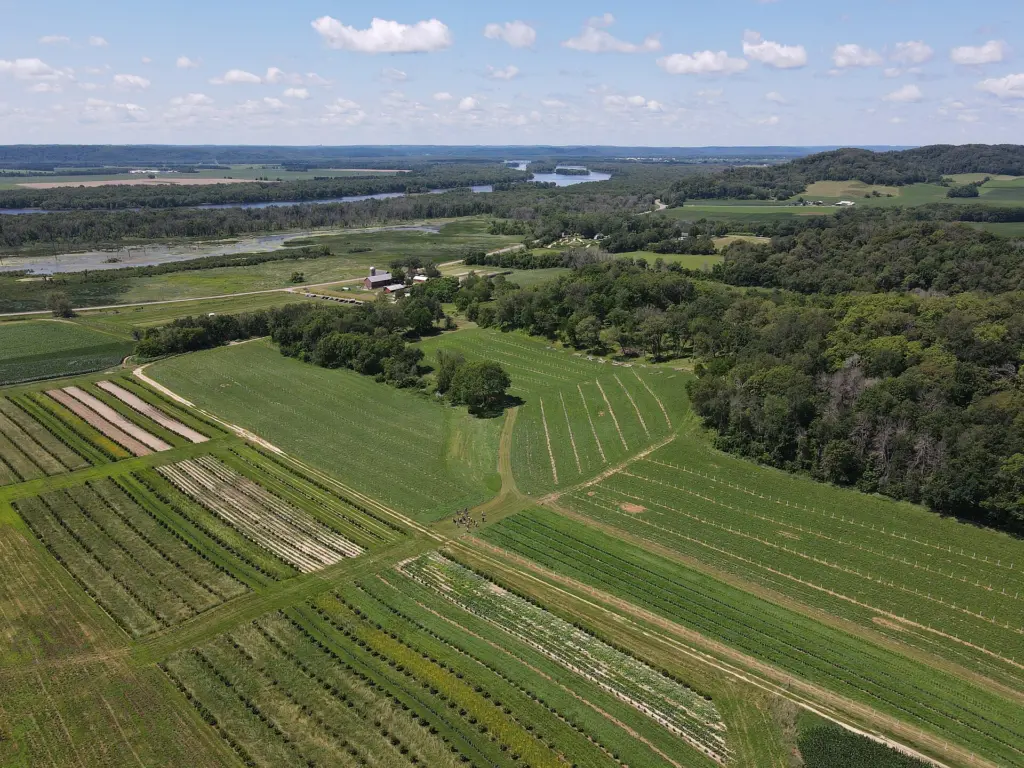
Raising annual finance from $64 billion to $296 billion by 2030 is the steepest single requirement. Agroforestry alone accounts for $87 billion of estimated annual needs—a signal that working lands, not just protected ones, will carry a large share of the load. Restorative reforestation at $52 billion complements that on degraded forestland, while $44 billion for peatlands and $28 billion for seagrass put money where climate and coastal‑protection benefits concentrate.
The upside is that the same investments underpin jobs: the study estimates restoration could generate 32 million new positions by 2030 if the finance arrives. The downside is the report’s caution that without tackling root causes of degradation and funding monitoring, today’s gains won’t endure.
Bottom line: a movement with mass, and a clock
The stocktake calls the current wave “one of the largest movements for nature in recorded history.” The mass is there in the map: 252 million hectares, concentrated in Asia but spread across every region, with more than a million jobs attached.
What the clock says is equally stark. To reach the Kunming‑Montreal 2030 target, restoration must expand into rivers, coasts and seas while finance more than quadruples. That combination—breadth plus speed—is the crux of turning inspiring projects into a durable restoration economy.
The paper: Restoration progress report: Nature's comeback (2026)
Sources: Restoration efforts are working, but we need to move faster to meet targets, says U.N. report (phys.org)
Images: Cover: Everyman Science (illustration); Figure 1: NASA/Kim Shiflett; Figure 2: Savannainstitute / Wikimedia Commons (CC BY-SA 4.0)
How this article was made: Everyman Science uses AI tools to structure, format and optimise its articles, and occasionally to produce illustrations where no free photograph exists. The reporting these articles are based on is human-produced and cited above. Spotted an error? Write to [email protected] and we will correct it. — The editors How we work.





Science desk team of Everyman Science, curating and reporting on the day’s most significant developments in research, space exploration, and technology.