After 1,645 Martian days, a suit swatch says Mars dust is smoother—and stickier
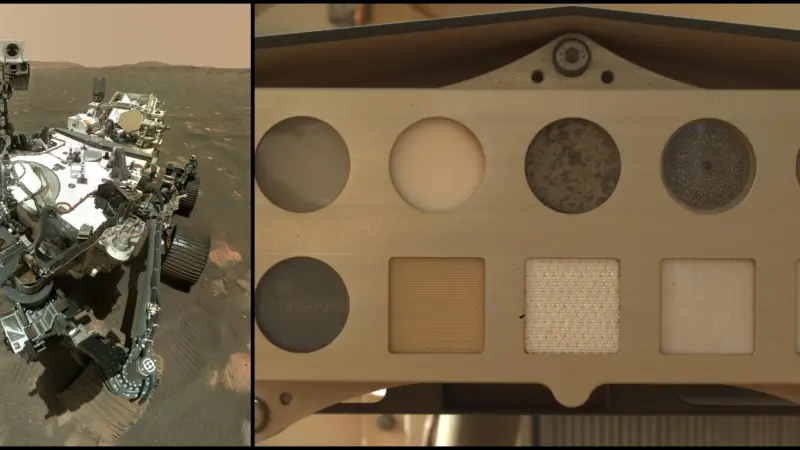
Picture a postcard-sized patch of spacesuit fabric, bolted to hardware on Mars and left to the wind. It’s a stand‑in for the gear a human would wear—and on Mars, the dust never stops trying to stick. The swatches are tiny, each less than a square inch (6.5 square centimeters) in size, but they’ve faced the planet’s grit for 1,645 Martian days. That long exposure, and what clung to it, underpins a new study of what future astronauts’ suits are really up against.
Why now? Because the study’s core finding isn’t the scare story many expected. It suggests Martian dust may not be quite as abrasive or irritating as its lunar counterpart. That’s welcome news—but it’s not the end of the problem. The stuff that is less scratchy can still be more insidious.
Dust that rounds off—without getting harmless
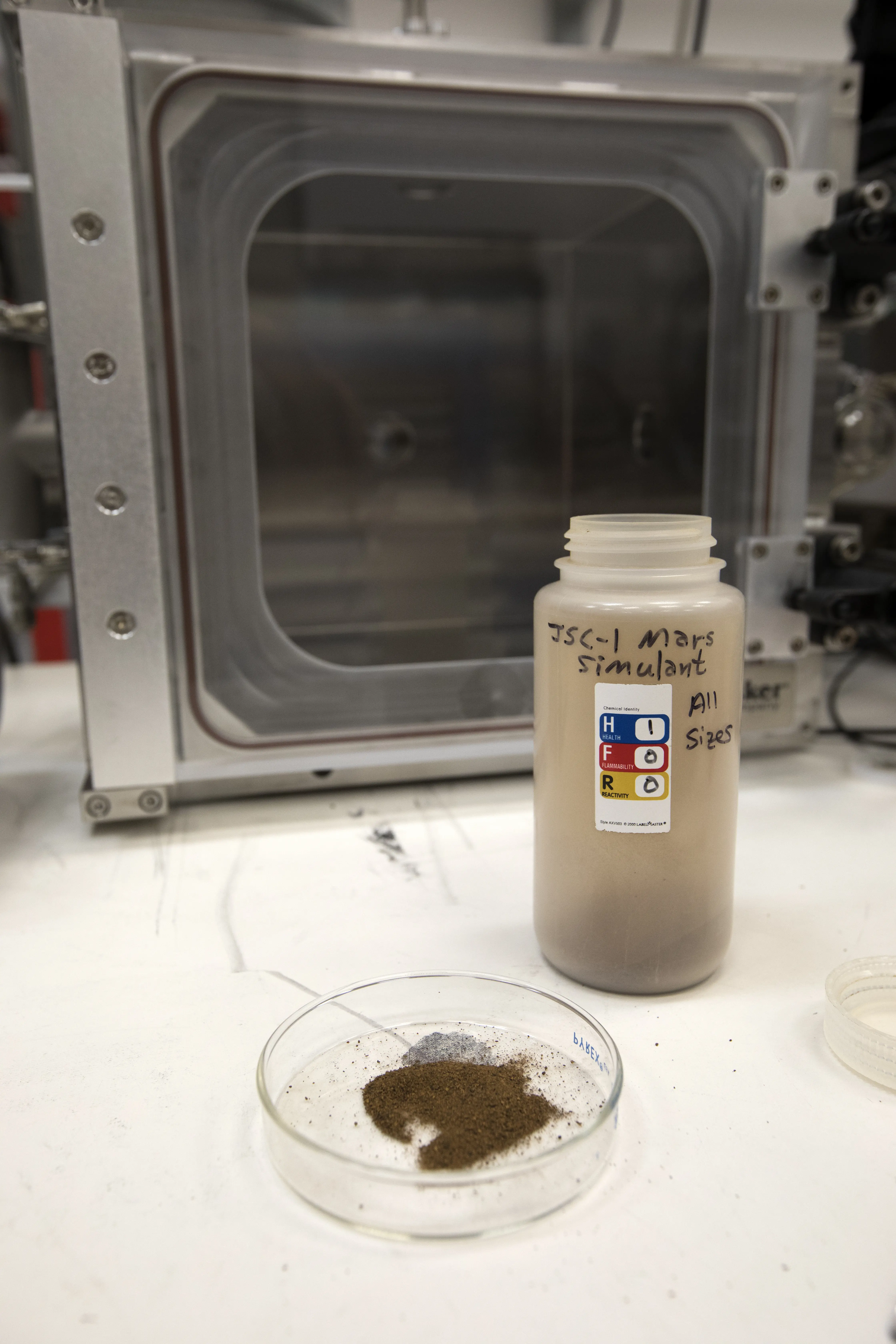
On the moon, jagged dust scratched visors and chewed on suits. Mars seems different. The study suggests Martian dust may be less abrasive or irritating than lunar dust. That points to smoother grains, not the glassy shards that plagued Apollo.
Analogy: think river pebbles versus freshly smashed glass. The pebbles glide over a surface; the shards bite. Where this breaks down is scale. Mars dust includes particles far smaller than a pebble—so small that different rules apply.
The ultrafine edge: when small gets serious
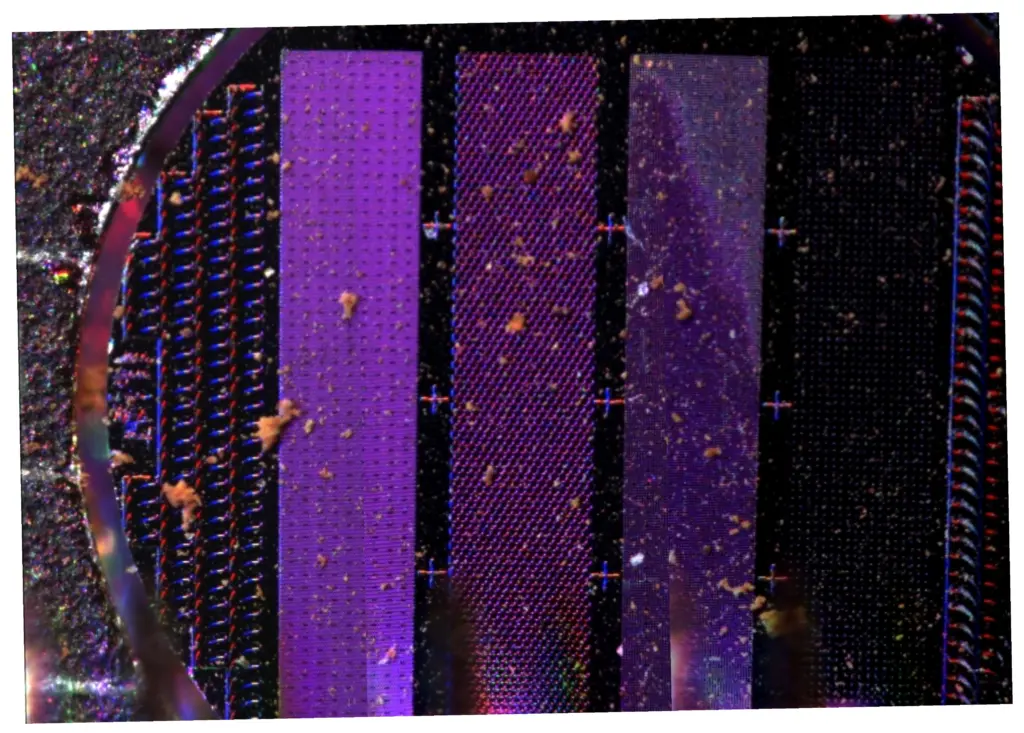
Some Martian particles are ultrafine, down to 100 nanometers (one ten‑thousandth of a millimeter) across. That’s the realm where dust stops behaving like grit and starts behaving like smoke. Particles that tiny can work their way into gaps that sand never could.
Brief exposure to hazardous substances may not seriously threaten astronauts’ health—a lot comes down to dose and duration. But when a problem exists by the billion specks, both words matter. Even if suits and air systems are closed loops, getting the ultrafine fraction back out once it has snuck in is not the same job as brushing off a boot.
Sticky by nature: electrostatics on a dry world
Dust that simply sits on a surface is one thing; dust that insists on sticking is another. According to Abigail Knight, the electrostatic properties of Martian dust are likely causing it to preferentially adhere to some surfaces. That means fabrics, seals and visors may collect a film even without rubbing or wetness to help it along.
Analogy: it’s like the way a balloon rubbed on your sleeve attracts confetti. Where this breaks down is charge control. On Mars there’s no party trick—just persistent, environment‑driven adhesion that doesn’t wait for you to rub anything on anything.
Chemistry that rides in with the grit
Martian material is not chemically bland. It contains perchlorates and other potentially toxic compounds and is enriched in sulfur, iron and silica. Those aren’t inherently a crisis in the short term—brief exposure may not seriously threaten health—but they’re not a mix you want ground into suit joints or tracked into an air recycler either.
Here, too, dose and duration rule. A smear that comes off on first contact is different from a film that builds day after day. Mission planners have to assume the latter is on the table.
What actually wears out first on a suit?
The less‑abrasive conclusion buys time, not invulnerability. Surfaces that rely on optical clarity could still cloud if ultrafine dust preferentially adheres. Fabrics designed to flex could see their folds become collection points for sticky films. Mechanical closures—the parts that have to move cleanly every time—face a three‑part threat: small enough to infiltrate, charged enough to cling, and chemically active enough to matter.
If that sounds manageable, remember the context: rovers have been operating on the surface of Mars continuously for more than 20 years. That track record says dust is not an occasional visitor; it’s the background condition. The study’s results refine the risk—it’s not razor‑edged grit everywhere—but they also underline the persistence of the hazard.
The deeper cut
Ultrafine size changes the transport game
At 100 nm, particles have aerodynamic behavior dominated by diffusion and electrostatic interactions rather than inertia. That means conventional “let it settle” thinking fails: gravitational settling velocities at that scale are so low that residence times in quiescent volumes are set by how fast particles find surfaces via Brownian motion and by how strongly they stick when they land. Add preferential adhesion from electrostatics, and deposition can become effectively one‑way on certain materials. For suit design, the shift in dominant transport modes matters because it inverts where the risk concentrates. Large dust burdens attack outer abrasion layers first; ultrafines target interfaces, seals and any surface energy contrast that invites sticking. In habitat air systems, anything that relies on inertial separation loses leverage precisely where the health question—dose and duration—cares most about capture. The practical engineering lever, suggested by the study’s pairing of lower abrasivity with higher fineness, is to bias materials and geometries against adhesion rather than against scratching. In other words, the enemy is the last trace, not the first gouge.
Why not just brush it off?
Brushing answers abrasion; it doesn’t answer ultrafine particles that prefer to adhere. If the electrostatic properties of Martian dust make it cling to some surfaces, the last layer may be the most stubborn.
And if the chemical load includes perchlorates and other potentially toxic compounds, you have a second‑order concern: what the brush stroke spreads. In a regime where dose and duration set the hazard, cleaning becomes part of exposure control, not just tidiness.
One thing the study doesn’t change
Even with smoother grains and less scratch risk than the moon, Mars is still a dusty place. The study suggests a different mix of problems, not the end of them. It reframes where to spend design effort: less on resisting gouges, more on outsmarting ultrafine, sticky, chemically lively films.
That’s a tractable shift. The swatches’ long watch—1,645 Martian days—wasn’t about proving that dust doesn’t matter; it was about learning which dust problems matter most. From here, the questions get engineering‑specific.
What we don’t yet know (from these data)
The findings speak to relative abrasivity and the presence of ultrafine, adhesive, chemically spiky dust. They do not pin down safe exposure thresholds or specify which suit materials are least prone to adhesion under Martian conditions. Those answers hinge on dose and duration and will require tests that deliberately vary both.
The paper: Fine and ultrafine Martian dust presents additional risks for future crewed missions to Mars (Proceedings of the National Academy of Sciences, 2026)
Sources: Mars dust may be less abrasive than lunar dust, spacesuit samples suggest (phys.org)
Images: Cover: NASA/Kim Shiflett; Figure 1: NASA/JPL
How this article was made: Everyman Science uses AI tools to structure, format and optimise its articles, and occasionally to produce illustrations where no free photograph exists. The reporting these articles are based on is human-produced and cited above. Spotted an error? Write to [email protected] and we will correct it. — The editors How we work.





Science desk team of Everyman Science, curating and reporting on the day’s most significant developments in research, space exploration, and technology.