Hydrogen chloride pops up over Alba Mons—in the wrong season
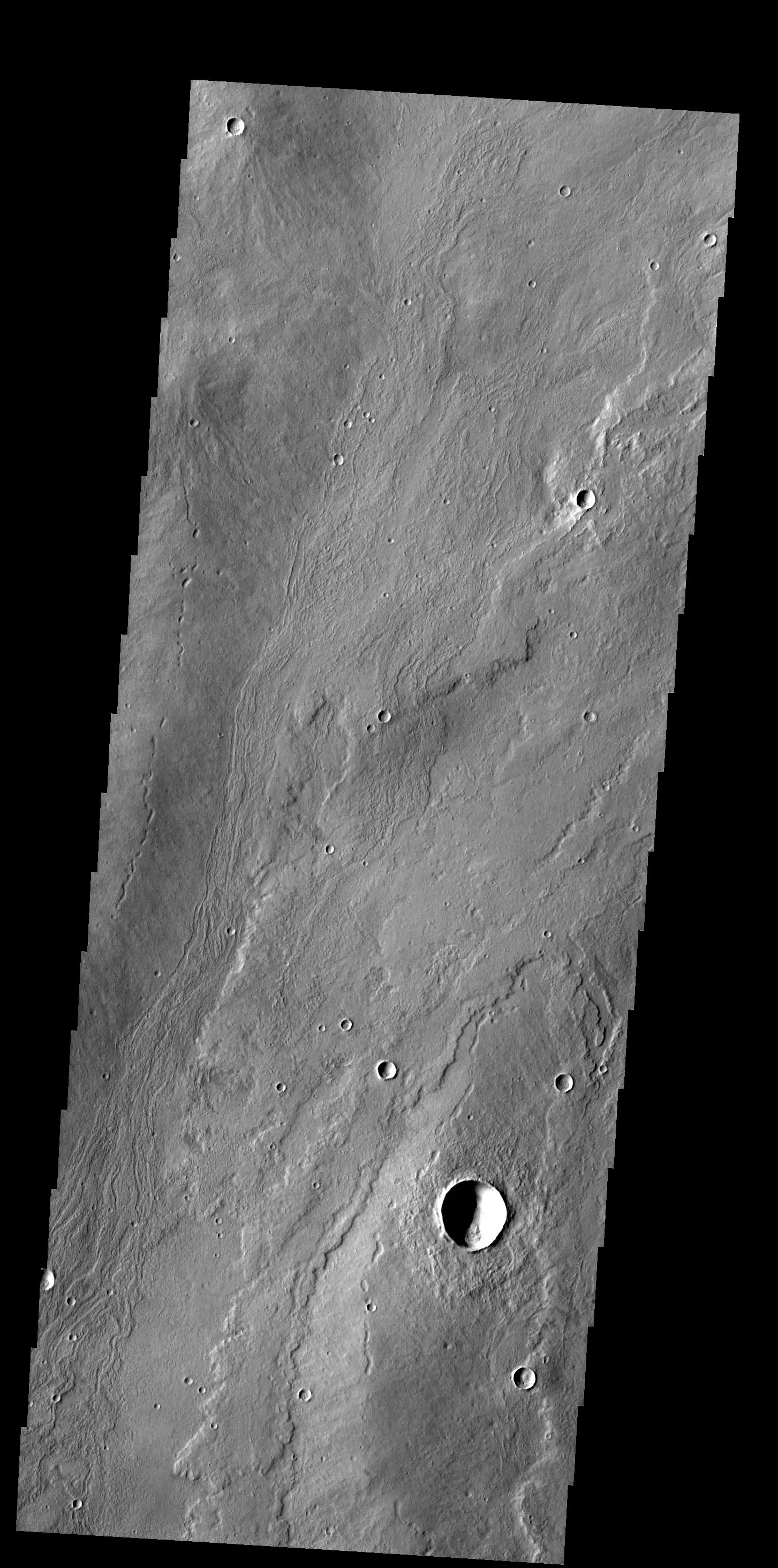
On a Martian early summer, over the flanks of a vast shield volcano, a thin trace gas flickered into view where it should have vanished. The ExoMars Trace Gas Orbiter (TGO) saw hydrogen chloride spike above narrow, fresh-looking fissures—an oddity because this gas usually fades with the season in Mars’ northern hemisphere.
Hydrogen chloride is a familiar escapee from magmatic vents on Earth, a breath from hot rock below. Finding it on Mars in the wrong season, and tied to cracks on a giant volcano, is the detail that has re‑opened an old argument: is the Red Planet truly geologically dead, or only sleeping?
A planet that rumbles, but doesn’t erupt
An international research team led by Alexander Trokhimovskiy argues that Mars is not geologically dead deep inside, but merely sleeping. That interpretation lines up with other hints: Mars hosts the largest volcanoes in the solar system, and orbital imagery shows some of them seem to have been active within the last few million years. Seismometers have also detected marsquakes—planetary rumbles that imply internal stresses are still at work.
Yet there’s a hard limit to the case. No new lava flows or eruptions have ever been observed. The evidence so far is circumstantial: the size of the edifices, the youthful look of some surfaces, the seismic murmurs—and now, a reactive gas that doesn’t behave as the season’s script says it should.
A strange season for hydrogen chloride
TGO first put hydrogen chloride on the Martian map in 2021. Researchers noted it rises and falls with the seasons, peaking in the planet’s northern hemisphere during winter and then mostly disappearing in summer. That variability seems tied to Mars’ cycles of dust and water.
The new twist is an exception to that rule. Scientists report that, over volcanic fissures on the flanks of Alba Mons, the gas appears in early summer instead. That geographic and seasonal mismatch is what elevates hydrogen chloride from an atmospheric curiosity to a geological clue.
Cracks on a giant: Alba Mons
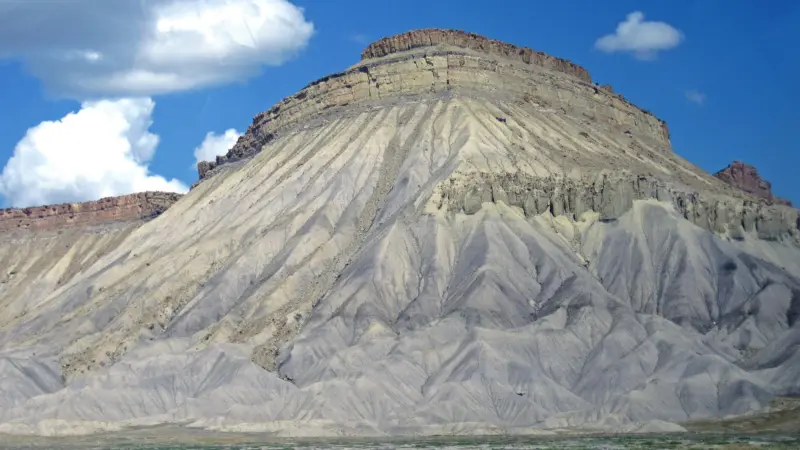
Alba Mons sits in the Tharsis region, home to the colossal Olympus Mons—the solar system’s tallest mountain, rising around 16 miles (26 kilometers) above the surrounding plains. By surface area, though, Alba Mons itself is the largest volcano.
There, the orbiter detected fresh and narrow fissures, in some cases hundreds of feet long. Around them, subtle discolorations mark the surface. Scientists suggest those color changes could be deposits left by gases making their way up from the planet’s interior, a pattern reminiscent of gas-venting terrains on Earth.
From fissures to plumbing: a dormant chamber below
Researchers connect the seasonal spikes over those cracks to the way Martian winters seal and summers unseal the ground. The idea is simple: gases rise through the fissures during the cold season but become blocked by ice, then, when that ice sublimates in early summer, chloride is released in bursts the orbiter can see.
The team goes further and suggests the seepage is tied to a dormant magma chamber—a piece of volcanic plumbing that hasn’t erupted in the modern era but can still exhale. In that picture, hydrogen chloride is not the star, just the messenger.
The deeper cut
Seasonal chemistry as a geological constraint
For readers used to thinking in terms of boundary conditions, the hydrogen chloride pattern is a tidy constraint on source models. Baseline HCl on Mars usually peaks during northern winter and is largely absent in summer; that background likely reflects coupling to the dust–water cycle. The Alba Mons signal violates this symmetry: it is spatially localized to fissures and temporally shifted to early summer. If you assume an atmospheric production pathway tied only to global dust or photochemistry, you struggle to reproduce both the localization and the phase shift. By contrast, a subsurface source modulated by frost sealing can do both. In winter, gases percolating upward are trapped beneath ice; as insolation ramps up and frost sublimates, a transient flux is released along open fractures. The fresh, narrow geometry of the fissures constrains diffusive path lengths, so you can plausibly deliver a pulse before HCl is scavenged or diluted. The dormant-magma-chamber hypothesis provides a reservoir and a driving pressure without requiring contemporary lava at the surface. None of this proves magmatism, but the joint spatial–seasonal structure sharply prunes the alternative trees.
What we still don’t know
No one has seen an eruption or a fresh lava flow on Mars, and that absence matters. Hydrogen chloride is a tracer, not a postcard from an eruption, and most of its variability elsewhere on the planet still tracks dust and water, not geology. The Alba Mons exception strengthens the volcanic case, but it does not settle it alone.
Likewise, while discolorations around fissures look like deposits from escaping gases, color by itself does not specify a source. The research team ties the pattern to a dormant magma chamber, but other explanations haven’t been ruled out in the field’s ongoing discussion.
Why this find matters for Mars—and for TGO
If Alba Mons is quietly venting, Mars is not a cold cinder but a planet with residual heat and a working, if sluggish, interior. That changes how scientists frame long-term climate and geology on a world where quakes still shake but lava has stayed out of sight.
It also speaks to the orbiter’s role. Colin Wilson, project scientist for the mission, has called these findings potentially TGO’s greatest success yet. Detecting a faint, intermittent gas signature and tying it to a specific landscape feature is exactly the sort of connection orbiters struggle to make—and, here, managed.
The study behind the claim
The analysis appears in Science Advances as Enigmatic HCl detections as a potential signature of igneous activity on Mars. The team reports that their atmospheric and geological reading of the hydrogen chloride patches is most consistent with seepage linked to dormant volcanism.
The research was published on Wednesday, Nov. 4. It builds on the orbiter’s 2021 identification of hydrogen chloride and focuses attention on Alba Mons, in Tharsis, as a place where Mars’ deep story may still be unfolding just below the surface.
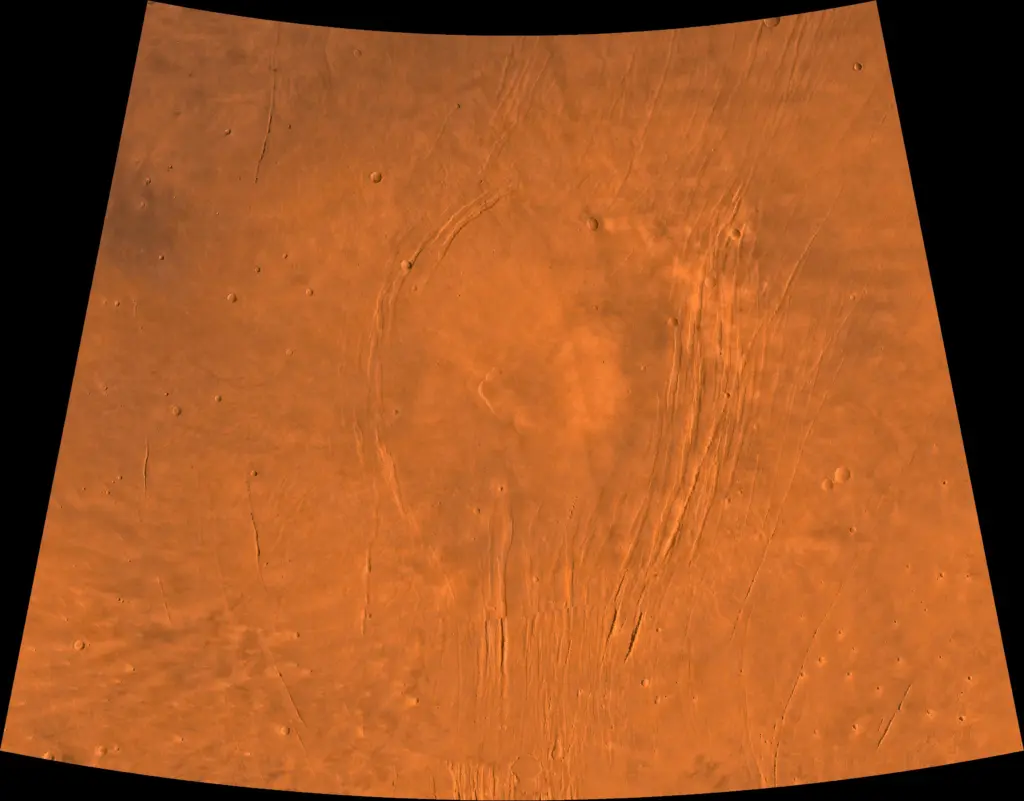
The paper: Enigmatic HCl detections as a potential signature of igneous activity on Mars (Science Advances, 2026)
Sources: European orbiter detects fresh hints of volcanic activity on Mars (phys.org); Mars isn't dead — recent volcanic activity reveals it's just sleeping (www.space.com)
Images: Cover: NASA/JPL; Figure 1: NASA/JPL
How this article was made: Everyman Science uses AI tools to structure, format and optimise its articles, and occasionally to produce illustrations where no free photograph exists. The reporting these articles are based on is human-produced and cited above. Spotted an error? Write to [email protected] and we will correct it. — The editors How we work.





Science desk team of Everyman Science, curating and reporting on the day’s most significant developments in research, space exploration, and technology.