Meet TACO1, the mitoribosome’s brace for proline jams
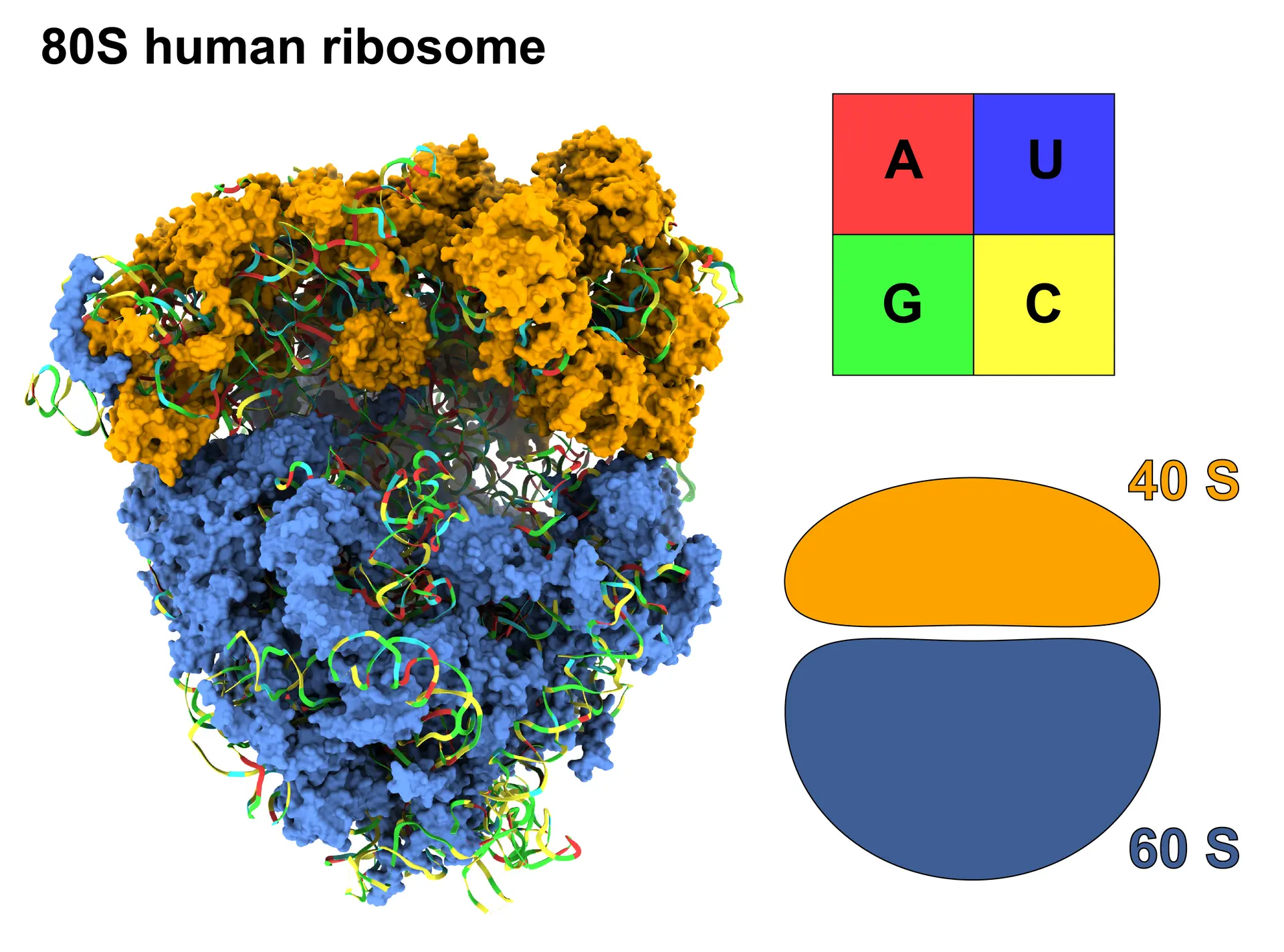
Cells make their own energy, and to do it well their mitochondria must build a handful of crucial proteins. The question on the bench here was very specific: when the mitochondrial ribosome hits hard-to-read stretches—especially runs of the amino acid proline—how does a helper protein called TACO1 keep the assembly line moving?
A team at Karolinska Institutet tackled that problem head‑on and, in a Nature Communications study, traced how human TACO1 engages the mitoribosome mid‑translation. The authors argue this mechanism is exactly the sort that goes wrong in certain mitochondrial diseases.
Who asked, and where it landed
Researchers at Karolinska Institutet report the work in Nature Communications (2026) under the title “Structural basis of TACO1 function in mitochondrial translation elongation.” The study is presented as new insight into a mechanism that can be disrupted in mitochondrial disorders. Mitochondria supply cells with energy and encode a small but essential set of proteins for that job, made by specialized mitochondrial ribosomes (mitoribosomes).
The bind is this: some sequences slow or even stall mitoribosomes, a problem that is “particularly true” for stretches with several prolines. TACO1 has been implicated as a factor that helps the mitoribosome thread through those bottlenecks; this paper sets out how.
What they actually did: catching TACO1 in the act
The authors used cryo‑electron microscopy (cryo‑EM) to capture human TACO1 bound to a mitoribosome that was in the midst of making a protein. They then layered on AlphaFold analysis, computational modeling, and molecular dynamics simulations to interrogate what the density maps and models together permitted them to say about motion and contacts at the active site.
In those reconstructions, TACO1 sits close to the ribosomal A site—the pocket that admits each new amino acid carried by an incoming transfer RNA (tRNA)—and reaches to interact with that incoming tRNA directly. The team also reports that TACO1 behaves differently than analogous elongation helpers in bacteria and in the cytosol of human cells.
What turned up: a flexible brace for hard passages
The combined structural and computational results suggest TACO1 is not a static plug‑in but a flexible brace. According to the authors, TACO1 can undergo substantial movements that help stabilize the incoming tRNA during the tricky steps of elongation. That is exactly the kind of assistance a ribosome needs to avoid stalling on difficult sequences.
“TACO1 reveals a distinct solution to a challenge faced by all ribosomes: keeping protein synthesis moving through difficult sequences,” says Joanna Rorbach, a lead corresponding author. Co‑authors add that the work “helps connect changes in TACO1 to defects in mitochondrial protein synthesis,” offering a clearer molecular basis for understanding associated diseases.
Numbers, signals, and what they mean
This is a mechanistic paper, not a clinical trial, so there are no patient counts or rate ratios. The signal the authors put forward is architectural and dynamical: TACO1 binds near the A site, touches the incoming tRNA, and—by their modeling—can move enough to steady that tRNA as it is positioned for peptide‑bond formation. In plain terms, the ribosome is less likely to hiccup when TACO1 is in the right place at the right time.
The disease link is concrete at the gene level: mutations in TACO1 are associated with cytochrome c oxidase deficiency and late‑onset Leigh syndrome. The authors frame their structure‑guided model as a molecular explanation for how such changes in TACO1 could interfere with mitochondrial protein synthesis.
| Aspect | Detail |
|---|---|
| Research question | How does TACO1 help mitoribosomes traverse difficult sequences during protein synthesis? |
| System | Human mitochondrial ribosome (mitoribosome) with human TACO1 |
| Key methods | Cryo-EM; AlphaFold analysis; computational modeling; molecular dynamics simulations |
| Binding site | TACO1 binds close to the ribosome’s A site and contacts the incoming tRNA |
| Mechanistic proposal | TACO1 undergoes substantial movements that stabilize the incoming tRNA during challenging elongation steps |
| Comparative note | Works differently from related factors in bacteria and elsewhere in human cells |
| Disease connection | Mutations in TACO1 are associated with cytochrome c oxidase deficiency and late-onset Leigh syndrome |
| Publication | Nature Communications (2026) |
How they pieced it together
“Combining cryo‑EM with AlphaFold analysis and molecular dynamics simulations allowed us to explore how TACO1’s flexibility may help position the incoming tRNA,” says first author Vivek Singh. That mix matters: cryo‑EM supplies snapshots of the complex in action; modeling and simulations test whether the conformations implied by the maps are mechanically plausible and how motions could guide the next amino acid into place.
The team emphasizes TACO1’s solution is distinct from relatives elsewhere in biology, underscoring that mitochondria’s translation machinery, though ribosomal at its core, plays by some of its own rules.
The deeper cut
Why proline trips ribosomes, and how a factor can help
Runs of proline are notorious pause sites because proline’s ring-constrained backbone geometry slows peptide-bond formation and can kink the nascent chain into awkward conformations. In elongation, A-site tRNA must be accommodated and aligned with the peptidyl-tRNA in the P site while elongation factors choreograph GTP-driven checkpoints. Any wobble in A-site tRNA positioning raises the activation barrier for chemistry and increases the odds of backtracking or drop-off. A factor that directly stabilizes the A-site tRNA’s acceptor stem or anticodon arm can trim that barrier and smooth accommodation. That is the logic behind placing a flexible cofactor within reach of the A site: it can bias microstates toward catalytically competent geometry without permanently locking the machine. Cryo-EM typically resolves the rigid core of such assemblies better than mobile elements; MD then explores whether proposed hinge motions are sterically and energetically tenable over microseconds. The interpretive risk is overfitting a dynamic ensemble to static densities; cross-validating contacts seen in maps with motions sustained in simulations is one way to keep the model honest.
What this does—and does not—show
The paper provides structural and modeling evidence for where TACO1 binds, what it touches, and how its flexibility could help during challenging elongation steps. It does not report how much faster or more accurate translation becomes with TACO1 present, nor does it test clinical outcomes. The link to disease is mechanistic: changes in TACO1 plausibly derail mitochondrial protein synthesis in ways consistent with known associations.
Clear next steps would be to quantify translation through proline‑rich sequences with and without TACO1 and to probe disease‑associated TACO1 variants within the same structural framework. Those would stress‑test the proposed mechanism under conditions that mirror physiological bottlenecks.
Why it matters for mitochondrial disease
Mitochondrial proteins are a small club, but they sit at the heart of energy production, so even subtle faults ripple widely. By tying TACO1’s position and flexibility at the mitoribosome to a concrete job—steadying incoming tRNA when the template gets rough—the study gives a molecular handle on why mutations in TACO1 track with disorders like cytochrome c oxidase deficiency and late‑onset Leigh syndrome.
As co‑author Anas Khawaja puts it, the work offers “a clearer molecular basis for understanding associated diseases.” That is not a therapy, but it is the map you need before choosing where to dig.
The paper: Structural basis of TACO1 function in mitochondrial translation elongation (Nature Communications, 2026)
Sources: How mitochondria keep protein production moving (phys.org)
Images: Cover: Ykust / Wikimedia Commons (CC BY 4.0)
How this article was made: Everyman Science uses AI tools to structure, format and optimise its articles, and occasionally to produce illustrations where no free photograph exists. The reporting these articles are based on is human-produced and cited above. Spotted an error? Write to [email protected] and we will correct it. — The editors How we work.





Science desk team of Everyman Science, curating and reporting on the day’s most significant developments in research, space exploration, and technology.