Antarctic snow tracks our trips through cold galactic clouds; a 300× greenhouse gas keeps the equator above freezing
Somewhere in the fine powder of Antarctic snow and in the clay of deep-sea cores, geologists have found elements that are common in interstellar dust. That microscopic grit is a breadcrumb trail. NASA-funded simulations say it lines up with times when our entire solar system ploughed into frigid clouds of gas and dust—episodes that, oddly enough, may have nudged Earth’s climate.
A second thread, drawn from an Astrophysical Journal Letters study, follows a different puzzle: how a dim young Sun could still have left much of early Earth above freezing. The answer, in this telling, runs through a potent greenhouse gas and temperatures just a few degrees on the friendly side of ice.
A moving bubble, a moving target for climate
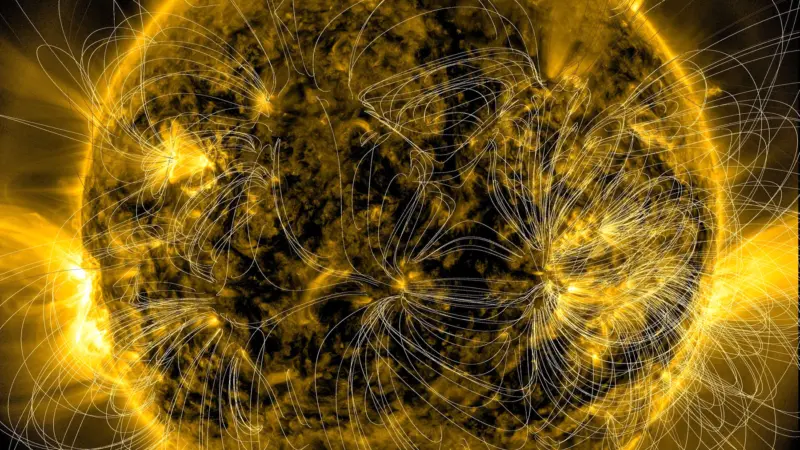
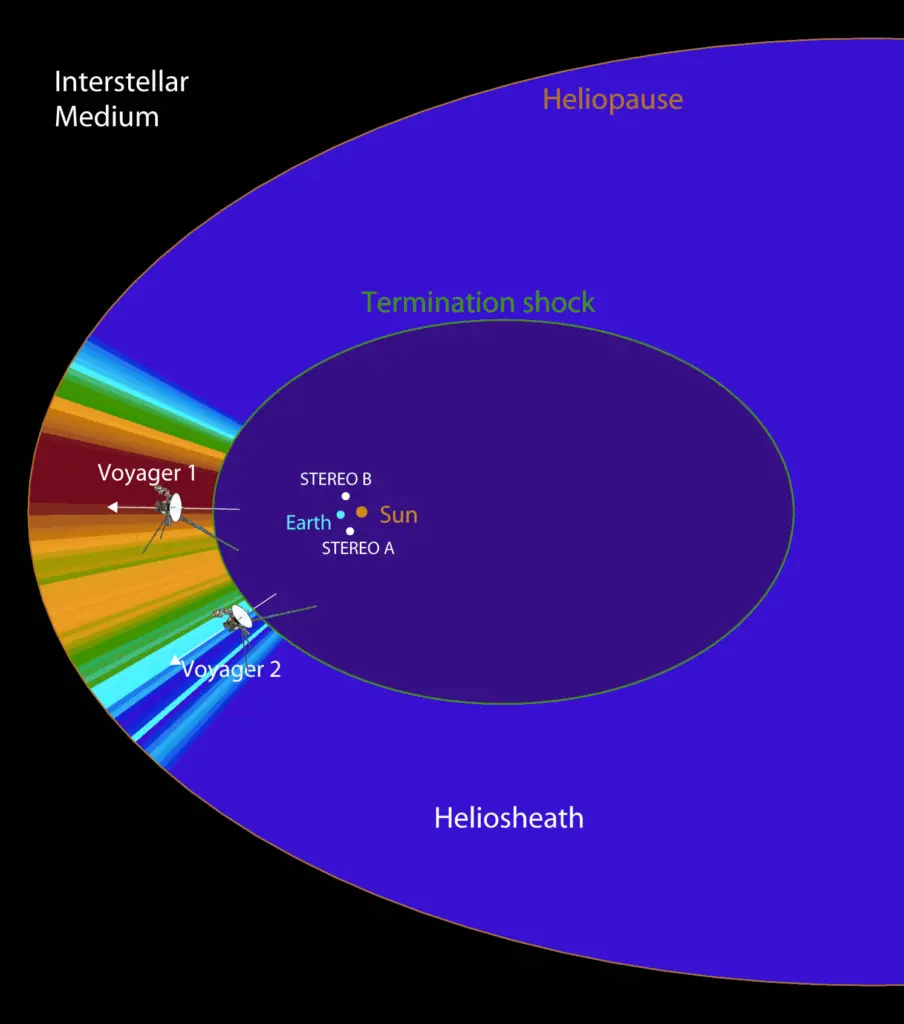
Our solar system sits inside the heliosphere, a vast bubble blown by the solar wind. NASA’s SHIELD effort reports that the heliosphere has traversed various regions within our galaxy, and that the environments it passed through may have triggered changes on Earth.
In simulations led by Merav Opher of Boston University, the Sun has encountered frigid expanses of gas and dust at least three different times in the past few million years. SHIELD dates those encounters to approximately 2 to 3 million years, 6 to 7 million years, and 13 to 14 million years ago.
Dust in the archives, signals in the models
The SHIELD team says their simulation results match geologic evidence. Elements prevalent in interstellar dust appear in deep-sea sediment cores, Antarctic snow, and lunar samples during those timelines. That concordance is what gives the modeling consequence: it ties a galactic itinerary to tangible Earth and Moon archives.
SHIELD’s picture is not of a static Sun, but of a star whose protective bubble changes as it moves—and of a planet whose upper air, chemistry, and ultimately surface conditions can respond to those changes. The claim, cautiously framed by the team, is that such passages may have helped drive some of Earth’s ancient shifts.
The paradox of a faint Sun and liquid water
Go back billions of years, and another climate knot appears. Vladimir Airapetian’s group, reported by NASA, points out that the young Sun was 70% as bright as it is today. By simple intuition, that dimmer star should have left Earth locked in ice, yet geological evidence instead points to stable liquid water.
The study they cite in Astrophysical Journal Letters pursues a greenhouse answer. It centers on nitrous oxide—a gas their team describes as 300 times more potent than carbon dioxide in trapping heat. The question is whether enough of it could have persisted in early skies to matter.
A small survival, a big climatic nudge
Airapetian’s team’s modeling takes a conservative cut: even if only 10% of the nitrous oxide they observed in their setup survived under the young Sun’s ultraviolet light, their simulations confirmed it would still warm Earth’s equatorial regions to about 41 degrees Fahrenheit (5 degrees Celsius). That crosses the crucial threshold where water stays liquid.
There’s a biological twist, too. The same team notes that just-above-freezing temperatures have been found to be more efficient for building complex chains of amino acids than warmer conditions. In that view, a cooler world lightly warmed by nitrous oxide is not only habitable—it might be chemically advantageous.
What we don’t know—and why that’s fine to say once
No one has yet pinned down exactly how large the climate swings from heliosphere passages were compared with Earth’s own internal drivers, or precisely how long any nitrous-oxide boosts would have lasted in real ancient atmospheres. The SHIELD results say the environments the heliosphere crossed may have triggered changes on Earth; they do not claim a full accounting. The study on nitrous oxide shows a mechanism that could have mattered; it does not claim it was the only one.
The deeper cut
How two numbers change the stakes
Two figures do most of the work in these stories. First, the young Sun at 70% brightness sets a stringent baseline: with less incoming energy, any greenhouse contribution has to be relatively more effective. Second, nitrous oxide’s potency—described by Airapetian’s team as 300× carbon dioxide’s—means small surviving fractions can still move the thermometer. Their modeling uses a 10% survival fraction for nitrous oxide under stronger ultraviolet irradiation and still reaches about 5 °C at the equator. Taken together, the arithmetic is straightforward: a dimmer star raises the bar; a more efficient greenhouse gas lowers the amount needed to clear it.
On the heliosphere side, the logic is similarly structural. If the solar system traverses distinct galactic environments and if simulation outputs line up with interstellar-dust signals in deep-sea cores, Antarctic snow, and lunar samples at 2–3, 6–7, and 13–14 million years, then external forcing is on the table for climate interpretation during those windows. The evidentiary weight here is phase agreement across independent records—simulated passages and physical traces—rather than a claimed amplitude. That’s why the SHIELD team frames the result as “may have triggered changes” and leans on the match to geologic timing.
Reading ancient sunlight into modern climate work
Why tell this story in a warming century? Because attribution depends on ruling in and ruling out mechanisms. If ancient swings can be tied to the solar system’s changing galactic neighborhoods, those episodes stop being mysteries and become case studies. If a potent greenhouse gas could keep a faint-Sun Earth above freezing, that clarifies how sensitive climate can be to composition changes—regardless of the source.
Neither line of research argues that today’s changes share the same causes. They do suggest that Earth’s climate has always been a dialogue between the sky outside our atmosphere and the chemistry within it, and that both leave traces we can read: timelines in sediments and snow, and temperature thresholds crossed when a gas as strong as nitrous oxide sticks around even a little.

The paper: Proton Irradiation of Primitive Atmospheres of Young Exoplanets and Early Earth: N
<sub>2</sub>
O Greenhouse Warming and Prebiotic Synthesis (The Astrophysical Journal Letters, 2026)
Sources: Starstruck: NASA Research Shows How Sun’s Ancient History Shaped Earth (www.nasa.gov)
Images: Cover: Everyman Science (illustration); Figure 1: NASA / Wikimedia Commons; Figure 2: NASA ICE / Wikimedia Commons; Figure 3: File:Earearth.png: Anynobody derivative work: Hike395 / Wikimedia Commons (CC BY-SA 3.0)
How this article was made: Everyman Science uses AI tools to structure, format and optimise its articles, and occasionally to produce illustrations where no free photograph exists. The reporting these articles are based on is human-produced and cited above. Spotted an error? Write to [email protected] and we will correct it. — The editors How we work.





Science desk team of Everyman Science, curating and reporting on the day’s most significant developments in research, space exploration, and technology.