Inside a solar magnetic hairpin, oxygen and carbon point to interchange reconnection
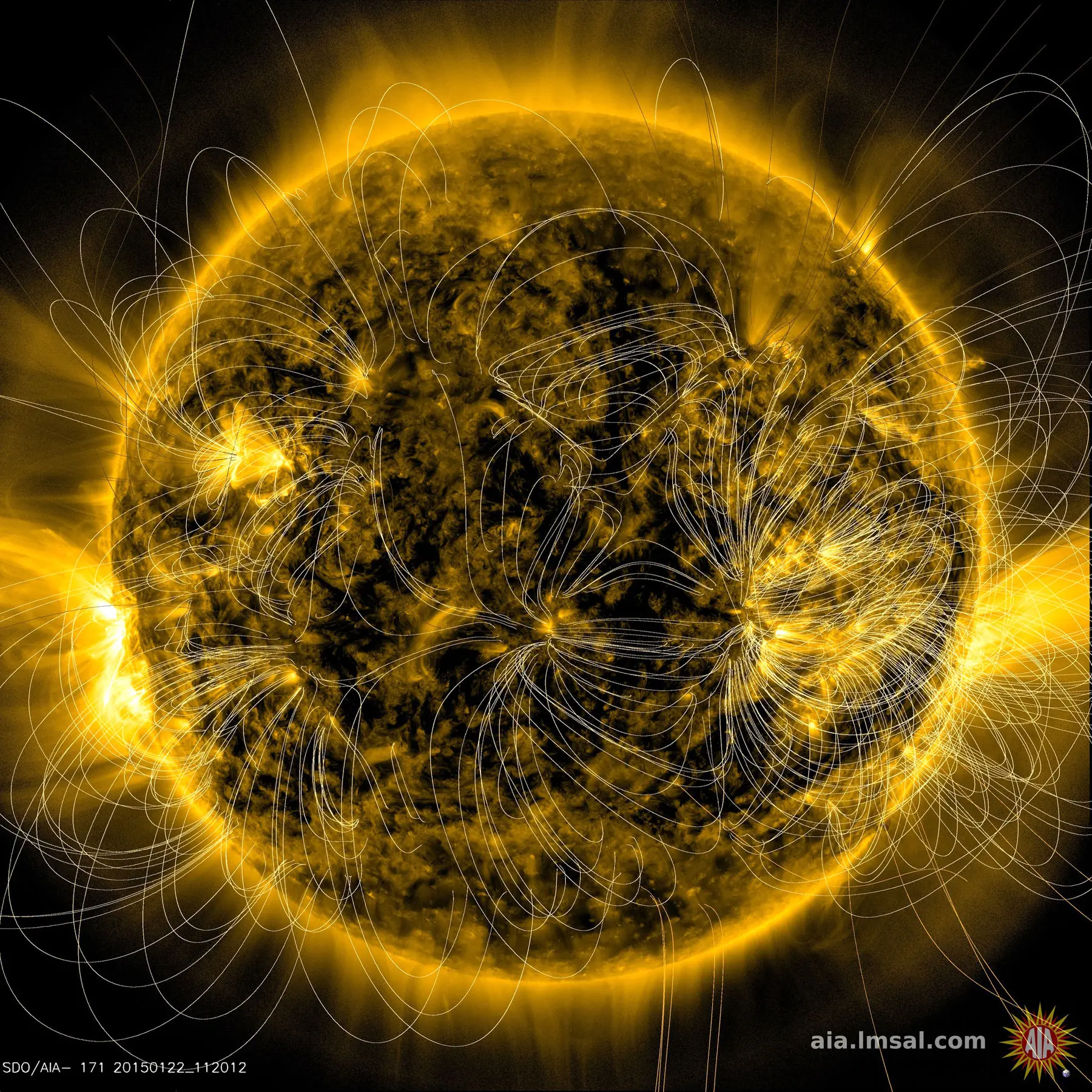
Imagine riding a river that suddenly loops back on itself—your kayak points upstream even as the current still drags you down. In space, Solar Orbiter hit that kind of bend: an S‑shaped kink in the solar wind’s magnetic field called a switchback. ESA says the spacecraft not only flew through one, it traced its origin to the Sun’s surface and linked it to a specific creation mechanism.
That makes today a moment to talk about how these magnetic hairpins actually work. The finding appears in Nature Astronomy, in a study led by Jesse T. Coburn, published today with DOI 10.1038/s41550-026-02928-0. The news is the excuse; the substance is the mechanism.
What a switchback is—and isn’t
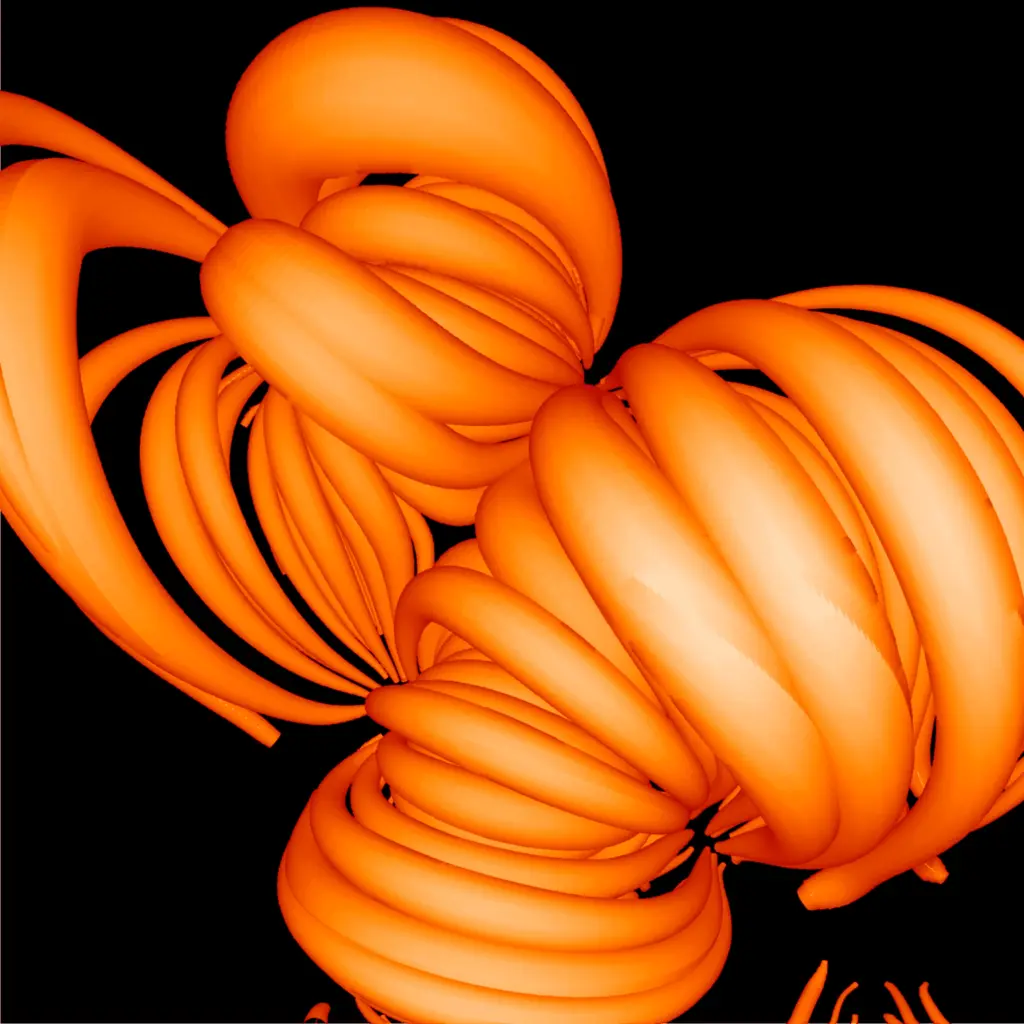
A switchback is not a detached blob or a stray gust. ESA describes it as an S‑shaped kink in the solar wind’s magnetic field. The field line bends so sharply that, locally, the magnetic direction briefly flips before snapping back.
Back in 2022, ESA reported Solar Orbiter had spotted such a kink and confirmed its S‑shape. Those shapes aren’t decorative: they encode how the Sun’s magnetism is being twisted and rearranged, and they carry that story out into space.
Why this is being asked now
ESA reports Solar Orbiter has now done more than see a shape: it flew through a very large switchback and, by “fingerprinting” the particles inside, traced it to the Sun’s surface. The study says the specific mix of particles it detected is a smoking gun for a process called interchange reconnection. That is a concrete, testable link between a bend measured in space and a magnetic reshuffle at the Sun.
At the time of the sampling, Solar Orbiter was roughly halfway between Earth and the Sun. Catching a switchback there—and tying it back to a solar source—lets researchers compare what’s happening near the star to what’s flying past the spacecraft.
Two ideas went in; one left a fingerprint
ESA’s account, citing Coburn, lays out two main competing theories for how a switchback forms: interchange reconnection and processes related to waves and turbulence. The new measurements do not just pick a favorite by vote—they use composition as evidence.
According to the study as reported, the specific mix of charged oxygen and carbon particles inside the kink singled out interchange reconnection. In plain terms: the particles themselves carried the telltale signature of where and how they were released.
So where does that leave waves and turbulence?
Not on the sidelines. Coburn’s analysis, as reported by ESA, concludes that both processes are involved in how switchbacks form and move through space. Interchange reconnection explains their birth; waves and turbulence matter for how they evolve as they travel.
That reconciles a debate into a timeline. The same switchback can owe its origin to one process and its subsequent behavior to another.
What this buys us: a cleaner link between Sun and space weather
ESA says Solar Orbiter’s result reveals more about solar magnetism—the unruly driver behind dangerous solar storms. Space weather begins with what the Sun’s magnetic field is doing; tying a measured switchback to a surface process tightens that causal chain.
It also shows, in ESA’s words, that the Sun’s atmosphere imprints its signature onto particles that make up the wind. If composition can be read as history, then in situ samples far from the Sun can still point back to specific solar conditions.
What we still don’t know (and why that’s okay)
There are two main theories because the full life story of a switchback is complex. The new study identifies interchange reconnection at the source and acknowledges waves and turbulence in transit, but it does not settle how often each pathway dominates or how their roles vary from one event to the next. Those are precisely the kinds of questions you can only ask confidently once you’ve nailed down at least one piece of the origin story.
The deeper cut
Fingerprints in flight: why composition matters
The crux of Coburn’s case, as relayed by ESA, is compositional: a specific mix of charged oxygen and carbon inside the S‑shaped kink flags interchange reconnection at the Sun. Composition works as a tracer because different release mechanisms tap different source reservoirs and histories. If material is liberated directly from magnetically connected regions at the surface, its ions and charge states can differ from those shaped predominantly by propagation effects. In that sense, the measurement reads less like a weather snapshot and more like a provenance label. While the inventory here does not enumerate ratios or charge states, the logic stands: if waves and turbulence alone sculpted the structure in transit, you would not expect a distinct, source‑specific particle mix to coincide with the magnetic reversal. Seeing that mix inside the kink argues for a birth event at the Sun rather than a purely downstream sculpting. From there, allowing waves and turbulence to govern the switchback’s journey reconciles their observed influence without asking them to do the job of creation.
How Solar Orbiter made the connection
ESA credits Solar Orbiter with doing something no other spacecraft could right now: sampling the particles in a large switchback and tying them back to the Sun’s surface. Daniel Müller puts it plainly: this discovery wouldn’t have been possible without Solar Orbiter.
That’s not just proximity; it’s the right kind of in‑flight detection paired with solar context. ESA reports the team analyzed in situ particles, compared them with images of the Sun’s disc, and modeled magnetic fields to connect the dots to a solar source.
A brief rewind: the first sighting
The 2022 report from ESA that confirmed the S‑shape was a preview of today’s result. First see the form, then sample its contents, then connect it to the surface. Today’s study closes that loop by linking an observed kink to a specific origin mechanism.
And it lands in a peer‑reviewed venue: ‘On the Coronal Origin of Magnetic Switchbacks in the Solar Wind’ by Jesse T. Coburn and colleagues is published today in Nature Astronomy, DOI 10.1038/s41550-026-02928-0.
The paper: On the coronal origin of magnetic switchbacks in the solar wind (Nature Astronomy, 2026)
Sources: Solar Orbiter tracks origin of mysterious magnetic switchbacks (www.esa.int)
Images: Cover: NASA/GSFC; Figure 1: NASA/MSFC
How this article was made: Everyman Science uses AI tools to structure, format and optimise its articles, and occasionally to produce illustrations where no free photograph exists. The reporting these articles are based on is human-produced and cited above. Spotted an error? Write to [email protected] and we will correct it. — The editors How we work.





Science desk team of Everyman Science, curating and reporting on the day’s most significant developments in research, space exploration, and technology.