Belgium’s ping‑pong potatoes put fry shops on edge
Hold a potato up to a ping‑pong ball. Now make the tuber no bigger than the ball. That is what Belgian farmer Mathieu Comijn says he is pulling from the ground this summer—“barely the size of pingpong balls.” He puts it bluntly: “It’s a disaster.”
For a country that treats a cone of fries as a minor civic sacrament, size is not a trivial metric. Comijn says those tubers “should be at least four times this size,” the difference between a fry you can cut into long, even batons and a stub that barely yields a single bite.
A calendar that won’t budge
Time isn’t on the farmers’ side. Comijn says his harvest is set for around Sept. 20. Potatoes do not stretch their timeline to match our hopes; when the lifting date lands, whatever grew will have to do.
That schedule hardens the stakes of the size shortfall. A field that might have filled a warehouse with processing‑grade potatoes is, for now, offering up tubers that strain the definition of “fryable.”
Scale of the stake: 500 hectares of spuds
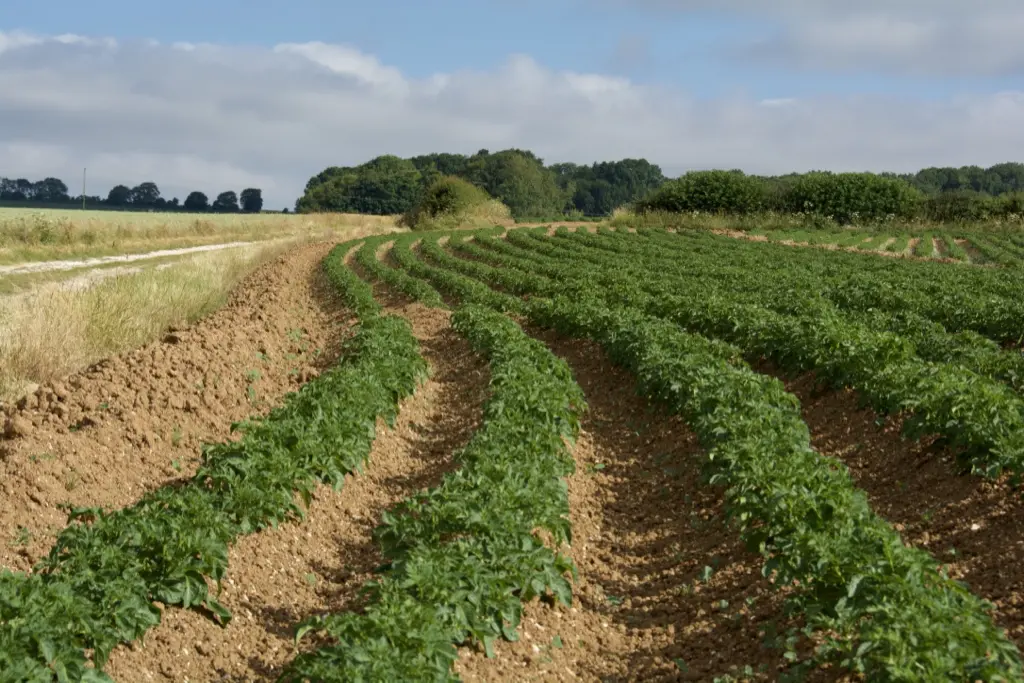
The Comijn family grows 500 hectares of potatoes—1,236 acres. That is not a backyard patch; it is a landscape of tubers with contracts attached.
Supply chains are built on such numbers. When a producer with hundreds of hectares reports ping‑pong‑sized tubers, the ripple is felt beyond one farm gate.
Last year was the feast; this looks like a famine of size
Stephane Comijn, who ran the farm before his son, draws a sharp contrast: last year, he says, the harvest was exceptionally abundant. This year’s rows, by his family’s account, are stingier by the tuber.
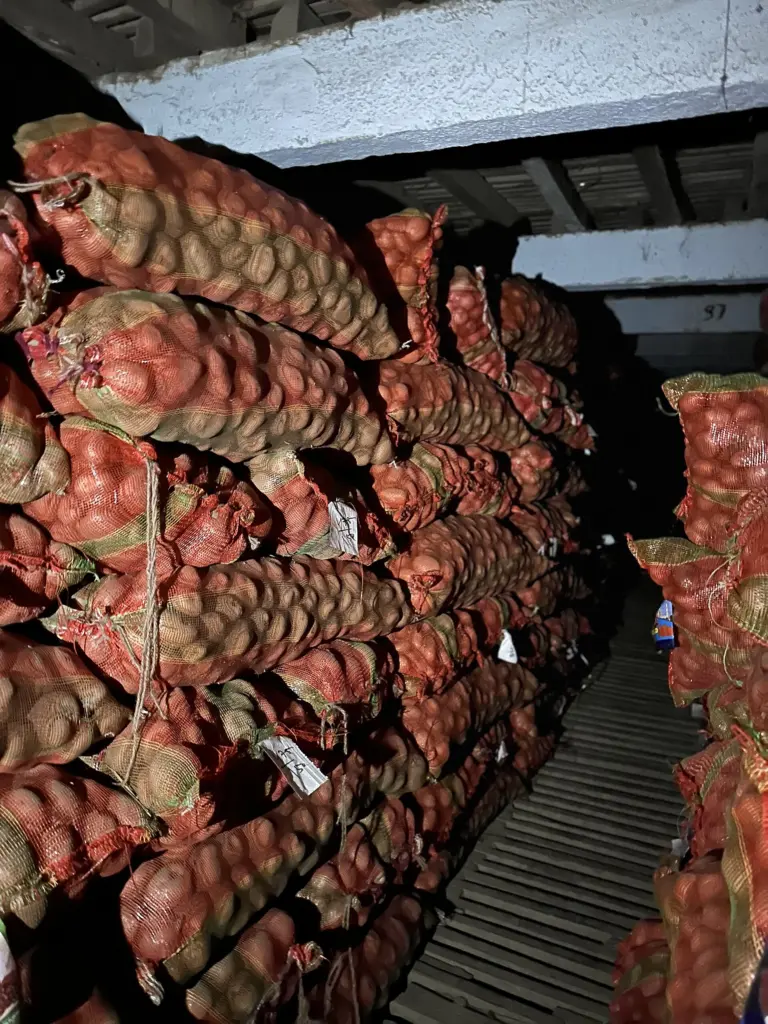
The family’s cold room—kept, Stephane notes, at 10°C (50°F)—underscores how carefully potatoes are handled when they do come in. Storage buys time, not size.
Fry shops count in the thousands—and they’re listening
Belgium’s fry culture isn’t a handful of hip counters; Bernard Lefevre, who heads the national union of fry vendors, represents 4,500 fry shops across the country. That is a lot of paper cones—and a lot of customers with opinions.
Lefevre has a pithy gauge of public sentiment: “Aside from illness in the royal family, the second‑worst piece of news a Belgian can hear is that the price of a cone of fries is going up.” When potato size falters, cut quality and yields do too; vendors watch both.
What the numbers don’t settle
We do not yet have a national yield figure, a price trajectory, or a tally of how many processors will shift varieties or specifications. Comijn’s September date and the reported tuber sizes frame the worry but don’t finish the math.
Even at one farm, the end‑of‑season split between processing‑grade and too‑small isn’t yet measured. Until the harvesters roll, much remains an estimate with real money behind it.
Weather memory runs long in fields
Stephane Comijn reaches back half a century for a reference point: the historic heat wave in 1976. Farmers carry those benchmarks in their heads, using them to make sense of swings between years like last year’s abundance and this year’s miniature tubers.
Year‑to‑year variability isn’t a headline so much as the background of agriculture. The striking thing now is the mismatch between a fixed harvest date and potatoes a farmer says are still only ping‑pong sized.
The deeper cut
Why a fourfold size gap isn’t just cosmetics
For frying, geometry is destiny. If a tuber’s characteristic linear size (say, its diameter) is down by a factor of four, its volume—and thus mass and potential fry yield—falls by 4^3 = 64, assuming similar shapes. Even if “four times” refers to length rather than diameter, the core point holds: volume scales with the cube of a linear dimension. That cubic penalty cascades through a processing line. Cutting heads that expect long, uniform tubers produce more nubbins and waste; fewer pieces meet spec for familiar stick lengths; oil uptake and fry times skew because surface‑area‑to‑volume ratios rise. A small potato exposes more surface per unit mass, meaning faster heat transfer and a greater fraction of crust relative to tender interior. Processors can adapt blade packs and cook curves, but those are work‑arounds to a simple constraint: when raw inputs shrink, both absolute yield and the share of premium‑grade cuts shrink with them. That’s why a farmer’s offhand “four times” maps to a disproportionate hit at the fryer.
By the cone: what could change at the counter
Comijn’s report of ping‑pong‑sized tubers and Lefevre’s 4,500‑shop constituency outline the pressure points. Smaller potatoes mean more labor per kilogram peeled and trimmed, shorter sticks, and a larger proportion of off‑spec pieces.
Vendors may respond in ways customers will feel: different varieties in the mix, altered portion sizes, or a tweak in the texture and length of the fries themselves. In a country where a cone is culture, those are not small adjustments.

Sources: Too small for fries: Drought shrinks Belgian potatoes (phys.org)
Images: Cover: Everyman Science (illustration); Figure 1: Jon Åslund / Wikimedia Commons (CC BY 2.0); Figure 2: Paul Harrop / Wikimedia Commons (CC BY-SA 2.0); Figure 3: Whispyhistory / Wikimedia Commons (CC BY-SA 4.0)
How this article was made: Everyman Science uses AI tools to structure, format and optimise its articles, and occasionally to produce illustrations where no free photograph exists. The reporting these articles are based on is human-produced and cited above. Spotted an error? Write to [email protected] and we will correct it. — The editors How we work.





Science desk team of Everyman Science, curating and reporting on the day’s most significant developments in research, space exploration, and technology.