They cooked a Venus probe to 465 C in an hour—and it held
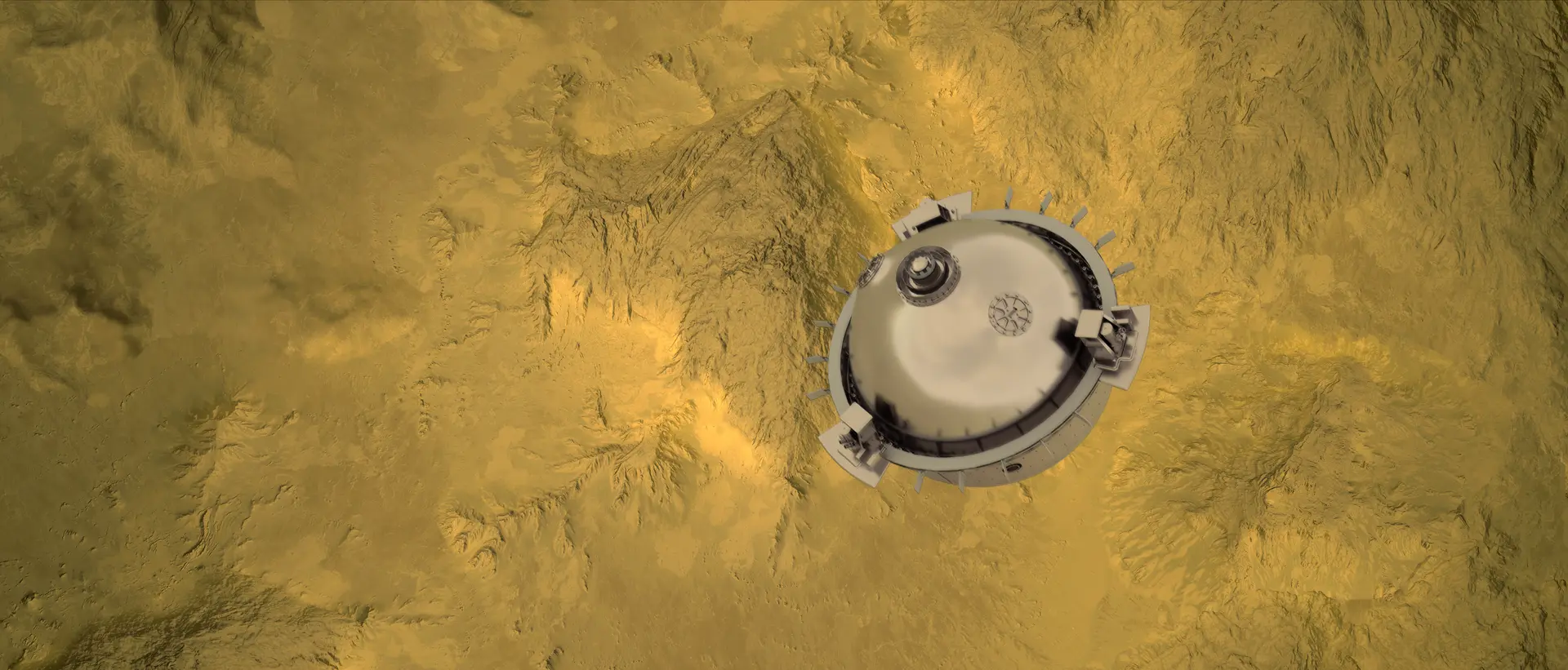
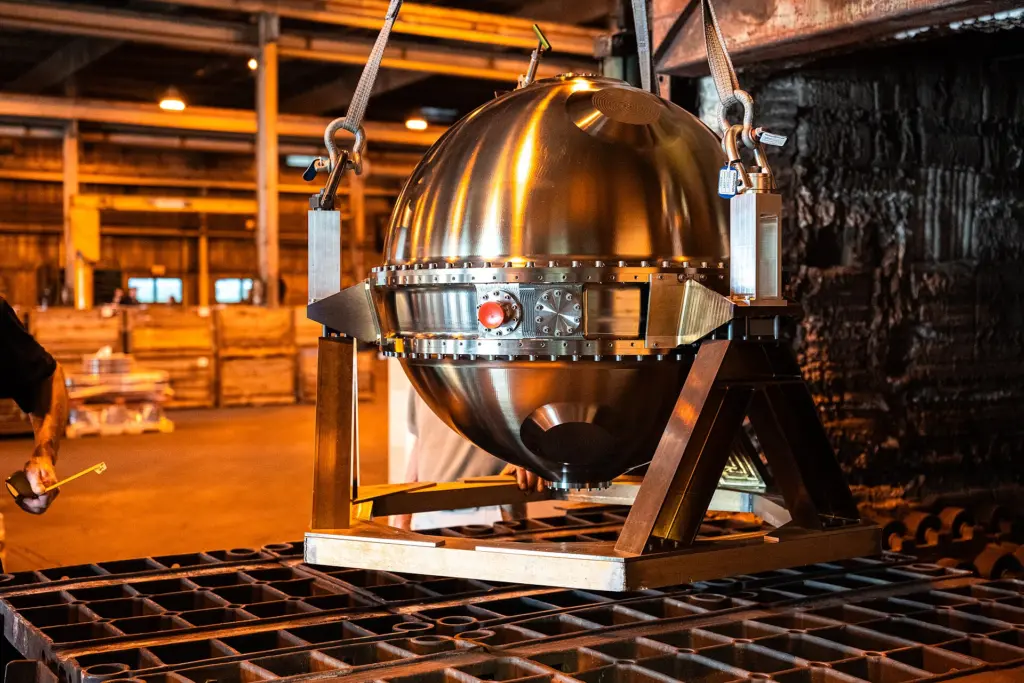
The walls of the test chamber already looked sunburnt. Ceramic tiles, heat‑scorched from previous trials, enclosed a steel sphere about the size of a yoga ball. Engineers dialed the heat up and watched the readouts climb: 869 degrees Fahrenheit, 465 Celsius. They kept turning the knob for about an hour—the same pace the real probe will endure as it falls toward Venus.
It was not the flight article but an engineering development unit, a stand‑in that takes the punishment first. The exercise had a simple aim, stated plainly by the DAVINCI team and reported via NASA: prove the vessel can stand the heat it will meet on the way down. If the shell holds and the internals keep their cool long enough, the mission earns the right to ask a harder question: what kind of world did Venus used to be?
Why cook a probe on Earth
DAVINCI—the Deep Atmosphere Venus Investigation of Noble gases, Chemistry, and Imaging—is built to study the origin, evolution, and present state of Venus in unprecedented detail. One target is as stark as it is human: to help determine whether the planet was once wet and habitable, like Earth. That answer lives in the deep atmosphere, not in orbit, which is why the mission includes a descent probe at all.
Before you ask a spacecraft to survive that fall, you prove its casing and thermal strategy can take a controlled beating on the ground. The team put the probe in a ceramic‑lined chamber and, over about an hour, raised the temperature to 465 C (869 F). That pacing matters; the team reported it matches how the probe will heat up during its descent toward the surface of Venus.
A controlled burn that mirrors a descent
Heating hardware to an ultimate number is one kind of test. Following the timing of a real mission profile is another. A rapid blast could pass a headline temperature while masking slow, cumulative ways heat creeps into delicate places. By matching the expected hour‑long rise, the DAVINCI team forced heat to flow the way it will in flight—through joints, insulation, and mounting points—so the development unit had to prove the whole design works as a system, not just as parts rated to a number.
The chamber itself tells a story. Its ceramic lining and scorched appearance are there to make heat distribution predictable and repeatable, so the team can say not only that it got hot, but that it got hot on purpose, in a way that simulates a dive into Venus.
What’s at stake if the shell holds
If DAVINCI’s hardware handles descent‑like heating, it clears a gate toward sampling the chemistry and structure of Venus’s atmosphere down where the most decisive clues are. The mission’s stated goals—to study the planet’s origin, evolution, and current state and to help determine if it was once wet and habitable—depend on gathering data at multiple layers, including near the surface.
That is where models of planetary evolution are made or unmade. Constraints from a deep plunge would not just fill a gap for Venus; they would pressure‑test our broader stories about how rocky worlds change, why two same‑size neighbors can take such different paths, and what “habitable” has meant over time.
What we don’t know yet from this test
The DAVINCI team has not publicly detailed, in this account, the internal temperatures reached during the hour‑long ramp, how long sensitive components remained within their operating windows, or how many cycles the engineering unit will endure. Nor do we have, here, the full layout of subsequent environmental tests that will stand between the development unit and flight hardware. Those unknowns do not blunt the core fact reported via NASA: the vessel was heated to 869 F (465 C) over about an hour to mirror descent warming, and it came through as intended.
The deeper cut
Heat gets in slowly, then all at once
An hour‑long ramp to 465 C stresses a probe’s thermal design differently than a short, higher‑power bake. The transient regime matters: heat loads couple through radiative exchange with the chamber walls and then through conduction from the outer shell inward. With a controlled dT/dt that matches descent, the test exercises time constants in the stackup—shell, insulation, struts, avionics boxes—so that thermal gradients develop similarly to flight. That is when differential expansion can drive mechanical stress at fasteners and feedthroughs, and when latent design flaws show up as hot spots or unexpected thermal lags.
A key virtue of matching the descent pacing is that it validates not just material ratings but the integrated heat capacity and thermal resistance network the design assumes. If the model budgets, for example, N minutes until a given internal node approaches its limit under the Venus‑like rise, the hour‑scale chamber profile puts that budget to a realistic test. Survive the profile with margin and you buy operating time for sensors and samplers in the layer of the atmosphere you most care about; miss it, and no amount of single‑number “max temperature” bragging rights will save the mission profile.
From a hot room to a hotter world
Thermal testing is not glamorous—the chamber is deliberately plain, the data are mostly plots rather than pictures—but it is the hinge between intention and capability. The DAVINCI team’s hour‑long march to 465 C, matching the way the probe will heat up in descent, is the kind of quietly decisive step a mission to Venus needs to take.
If the hardware keeps proving itself under these staged trials, DAVINCI will be positioned to go after the atmospheric measurements that speak directly to Venus’s past and present. Whether that past includes a wet, habitable chapter is a scientific question; building a probe that can keep working as the heat rises is the engineering prerequisite to even ask it.
Sources: NASA’s DAVINCI Probe Can Stand the Heat (www.nasa.gov)
Images: Cover: NASA GSFC visualization by CI Labs Michael Lentz and others / Wikimedia Commons; Figure 1: NASA/Mike Guinto / Wikimedia Commons
How this article was made: Everyman Science uses AI tools to structure, format and optimise its articles, and occasionally to produce illustrations where no free photograph exists. The reporting these articles are based on is human-produced and cited above. Spotted an error? Write to [email protected] and we will correct it. — The editors How we work.





Science desk team of Everyman Science, curating and reporting on the day’s most significant developments in research, space exploration, and technology.