Ten trillionths above absolute zero, Tiangong makes a single quantum wave
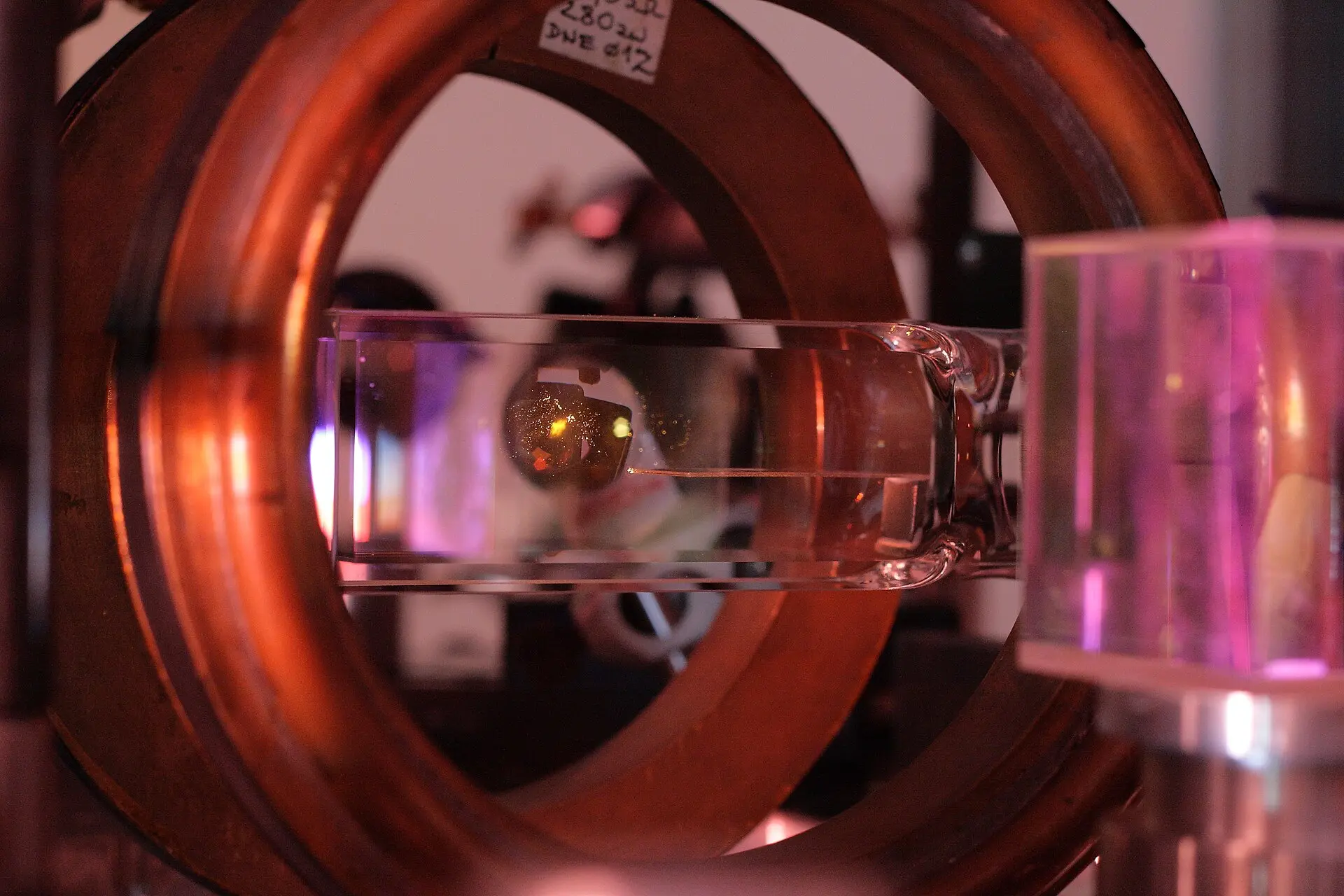
How cold can we make matter if we take gravity out of the picture? And once we get that cold, what new quantum tricks become possible?
A team working aboard China’s Tiangong space station set out to push temperature lower than any lab on Earth can sustain. In a study in Science, they report cooling atoms to 10 picokelvin—ten trillionths of a degree above absolute zero—and using the weightless setting to forge an exotic quantum state.
Who did what, and where it’s published
Researchers report in Science that they achieved quantum gases below 10 picokelvin in space, using Tiangong as their laboratory. We refer to that paper here as the study. The authors describe creating and probing an ultracold cloud in orbit and outline why space uniquely helps. The paper is: Quantum gases below 10 picokelvin in space (Science, 2026).
What they actually built on Tiangong
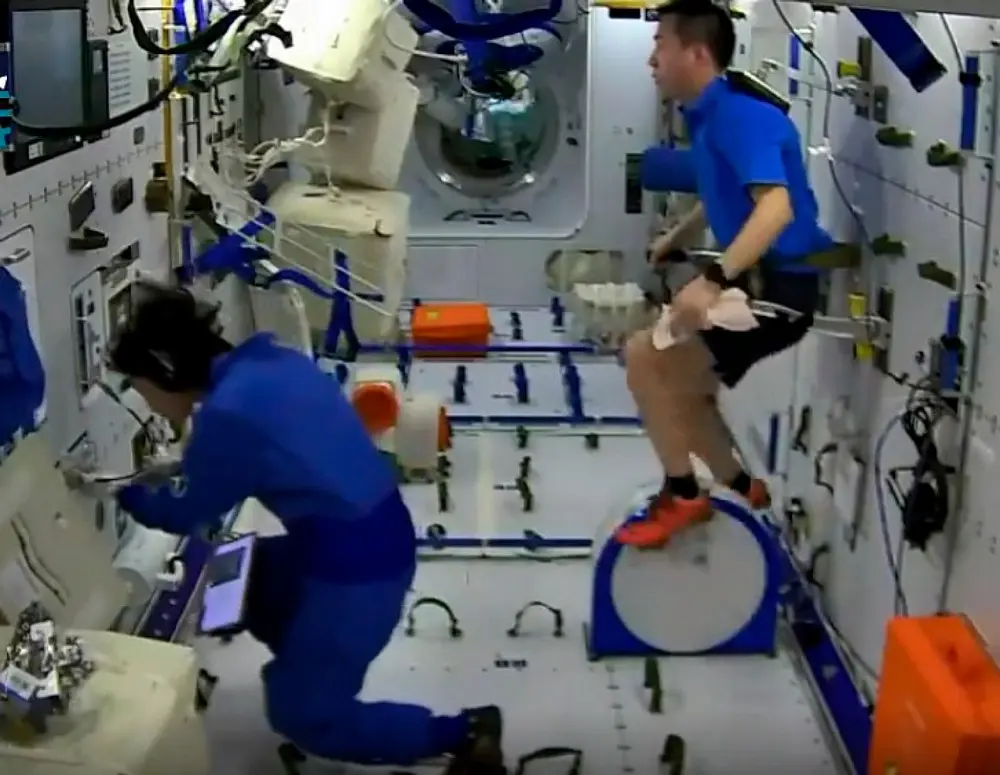
The team corralled a small cloud of atoms in a trap aboard the station and let microgravity do work Earth can’t. Specifically, they placed 20,000 rubidium atoms in the trap to restrict their motion. With less motion to begin with and no weight pulling the cloud into walls or wires, the atoms could be cooled to far lower temperatures than on the ground.
From there, the researchers transformed the weightless cloud into a Bose–Einstein condensate—a state where very cold atoms clump and behave as if they were a single, giant matter wave. Space makes this easier because, in microgravity, atoms effectively “float” and the cooling steps can be more efficient than under full gravity.
The method, in plain terms
At the heart of the setup is a laser-based trap that holds atoms still long enough to cool them. Confinement reduces their random motion, and in space that confinement doesn’t fight against weight. The researchers report loading 20,000 rubidium atoms into this trap aboard Tiangong, then cooling and combining them into a condensate. The study ties this approach to optical‑dipole‑trap (ODT) techniques used for precision quantum experiments.
Nothing exotic happens to the definition of cold: absolute zero is minus 459.67°F (minus 273.15°C)—the theoretical floor where particle motion would stall. The Tiangong experiment stops just shy of that, at 10 picokelvin.
So how cold is 10 picokelvin, really?
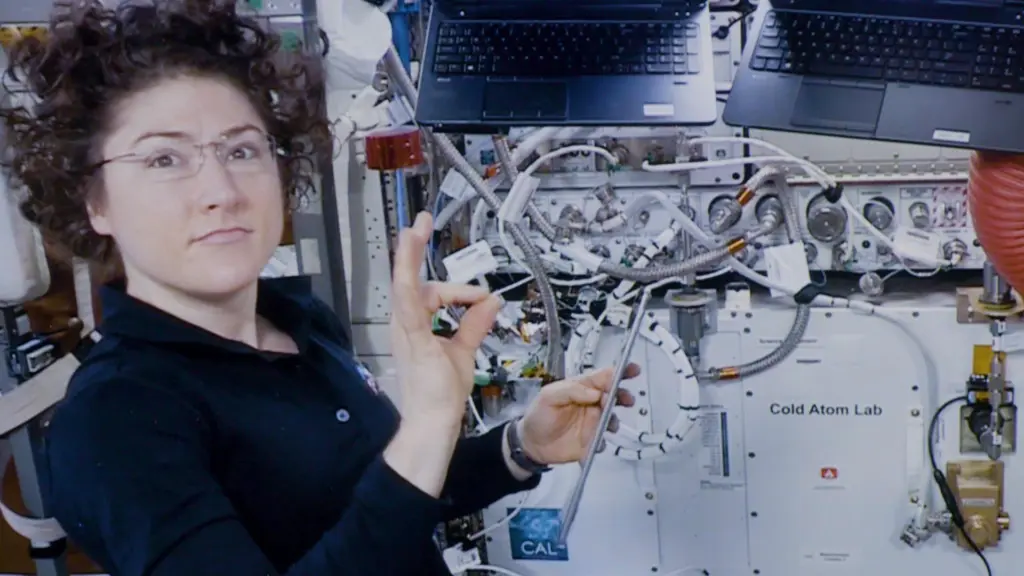
It’s the coldest temperature recorded for an atomic gas. By comparison, earlier spaceborne work on the International Space Station reached 52 picokelvin, and a tall drop‑tower experiment, which briefly makes atoms weightless by letting them fall, hit 38 picokelvin. Tiangong’s result undercuts both and does it in orbit, where the atoms can stay weightless without a crash mat waiting below.
The count matters too: cooling 20,000 rubidium atoms together provides enough matter to form a bona fide condensate, rather than a handful of stray ultracold atoms.
What this enables next
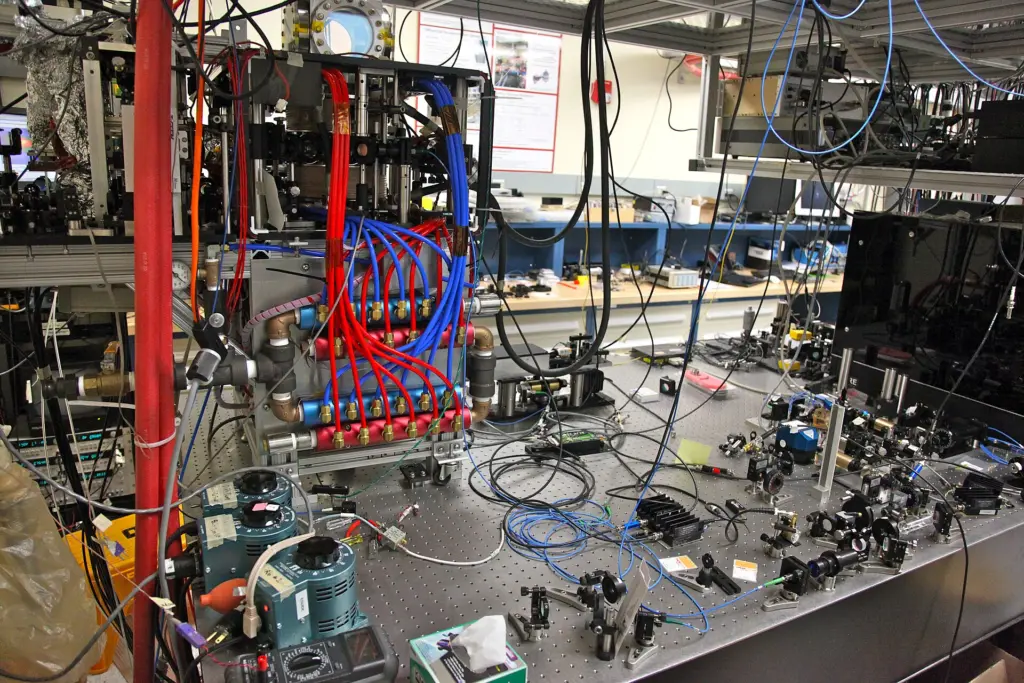
The researchers argue that hitting this record could seed a new wave of optical‑dipole‑trap experiments in space, especially in quantum simulation and precision measurement. Colder samples mean slower atoms and longer coherence times—precisely what you want if you’re trying to watch delicate quantum behavior unfold or compare frequencies with absurd accuracy.
Space, by making extreme cold more accessible, widens the menu: think better tests of fundamental physics with ultracold gases and more sensitive atom‑based instruments built for orbit.
Why we still can’t touch absolute zero
Even with space helping, absolute zero remains out of reach. Scientists are doubtful we’ll ever hit it. One version of the third law of thermodynamics says you’d need an infinite number of steps to get there. The second law adds a guardrail: entropy—the measure of disorder—always increases, and if you had a perfect heat sink at absolute zero, you could build a machine that wastes no energy at all. Nature doesn’t allow that.
The deeper cut
The thermodynamic wall, and why microgravity helps anyway
Microgravity doesn’t repeal thermodynamics; it changes boundary conditions. In a trap on Earth, gravity sags the cloud, tightens confinement in one direction, and forces faster rethermalization against surfaces. In orbit, the potential is more symmetric and gentler, so evaporative and laser cooling steps can shave off kinetic energy without the same gravitational heating or collisions with walls. That gets you deeper into the picokelvin regime before runaway losses empty the trap. But the third law’s Nernst statement still looms: as T→0, removing each additional bit of entropy costs disproportionately more resources, and the number of operations (compression, evaporation, re‑pump, re‑thermalize) diverges. The second law’s Kelvin–Planck form closes the loophole: a reservoir at T=0 would allow a 100% efficient heat engine; thus such a reservoir cannot exist. Bose–Einstein condensation rides just above that floor: once the chemical potential reaches the ground state, macroscopic occupation appears, but there remains residual excitation and finite entropy from interactions and imperfect isolation. Space lets you lower parasitic heating and extend free‑evolution times; it doesn’t magic the entropy away.
One box for unknowns, kept to one box
The study establishes the record temperature and the broad strokes—trap, 20,000 rubidium atoms, microgravity, and a Bose–Einstein condensate. It does not, in the summary descriptions available, spell out the step‑by‑step cooling sequence or report uncertainties on the 10 picokelvin figure. Those details will matter for comparing techniques and for designing the next round of space‑based quantum gas experiments.
The paper, and how to read it yourself
All of this comes from the study reporting quantum gases below 10 picokelvin in space, published in Science. It places Tiangong’s result alongside prior benchmarks—52 picokelvin on the ISS and 38 picokelvin in a drop‑tower free fall—and argues that space is the right place to go colder still, even if absolute zero itself remains a theoretical limit.
The paper: Quantum gases below 10 picokelvin in space (Science, 2026)
Sources: Chinese scientists cool atoms to near absolute zero in record-breaking experiment (www.livescience.com)
Images: Cover: Tomasz Kawalec / Wikimedia Commons (CC BY-SA 4.0); Figure 1: China Manned Space Engineering Office / Wikimedia Commons (CC BY 4.0); Figure 2: Steve Jurvetson from Menlo Park, USA / Wikimedia Commons (CC BY 2.0); Figure 3: NASA/JPL
How this article was made: Everyman Science uses AI tools to structure, format and optimise its articles, and occasionally to produce illustrations where no free photograph exists. The reporting these articles are based on is human-produced and cited above. Spotted an error? Write to [email protected] and we will correct it. — The editors How we work.





Science desk team of Everyman Science, curating and reporting on the day’s most significant developments in research, space exploration, and technology.