After a nuclear X‑ray flash, 97% of a simulated asteroid outran its own gravity
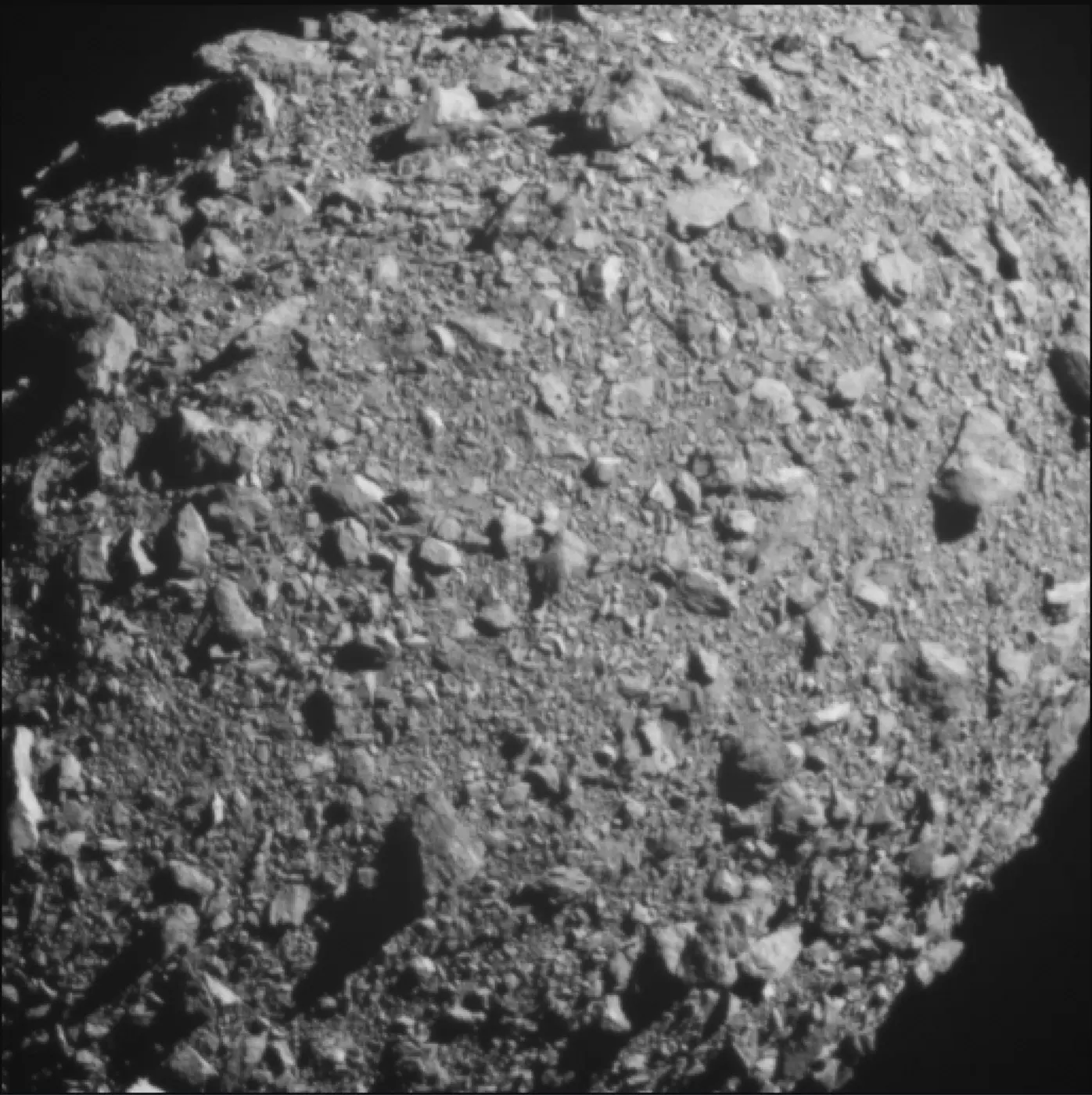
Picture this: a dim, slow point of light that won’t quite miss us. Space agencies have one proven nudge—smack it, like NASA’s DART did in 2022 when a spacecraft hit the asteroid moon Dimorphos to demonstrate kinetic deflection. But there’s another, far more controversial tool on the workbench: a nuclear device, not to pulverize the rock outright, but to flash it with X‑rays so the asteroid blasts a little of itself away and, with that recoil, changes course.
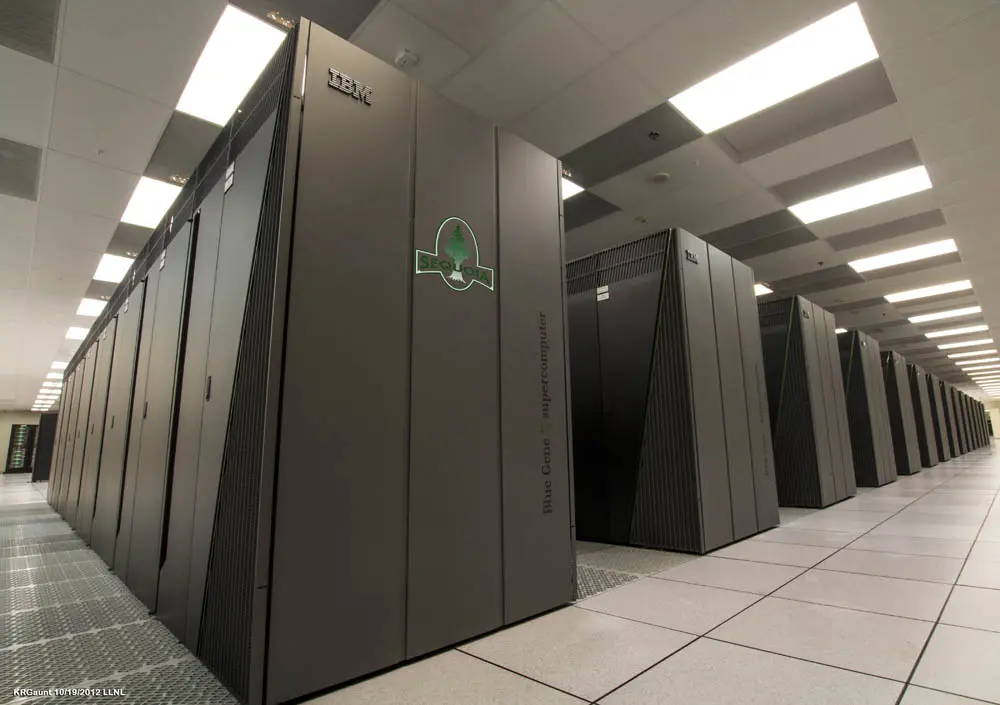
That last‑resort idea just got a hard look in new high‑detail computer runs. Researchers at Lawrence Livermore National Laboratory (LLNL) report three‑dimensional simulations of how an asteroid might respond to a nearby nuclear detonation’s X‑rays, published in The Planetary Science Journal. The study uses LLNL’s Spheral code to follow damage, fracture and fragment motion—things you can’t hand‑wave if the stakes are planetary.
Why this is being asked now
Planetary defense is moving from cartoon logic to engineering constraints. DART’s 2022 strike proved a kinetic hit can change an asteroid’s path. The new LLNL work asks a different question: if time is short or the target is tough, what happens when a nuclear device detonates near the surface and floods the rock with X‑rays that heat and vaporize material? Their Spheral simulations were built to examine that specific physics, in three dimensions, for scenarios where deflection or even disruption are on the table.
What a nuclear “standoff” actually does
Think of a hair dryer warming paint—heat makes the surface lift. Now replace the dryer with a flood of X‑rays and the paint with asteroid regolith: the top layer heats so fast it vaporizes and blasts off. That blow‑off produces a push in the opposite direction, changing the asteroid’s speed (deflection). If the heating and resulting stresses are high and widespread enough, they can shatter the body (disruption). The analogy breaks here: rocks aren’t smooth shells, and X‑rays don’t just “warm” them—energy couples in microseconds, drives shock waves and fractures that depend on composition and porosity.
How LLNL tested the modeling, before going 3D
Before trusting 3D breakups, the team checked the basics. They ran more than 1,500 one‑dimensional Spheral simulations and compared the deflection results against LLNL’s established Ares code. Close agreement between the two gave them confidence to move on to complex 3D disruption cases. High‑fidelity modeling matters here because whether fragments leave—or fall back—depends on details like damage, fracture, and the speeds of many pieces, not a single bulk shove.
What the simulations actually found
Two of the 3D cases showed strong signs of disruption. In the longest‑running case, about 98% of the asteroid’s material became fully damaged—its internal strength largely gone—and roughly 97% of the material moved faster than the asteroid’s escape velocity. That combination points to break‑up underway: if most pieces are above escape speed, the body is not reassembling under its own gravity.
There’s a practical benchmark for calling it a “robust” disruption: no fragment left larger than about 10 meters. The current runs didn’t reach that proof; they were stopped earlier in the process. But the extent of damage and how much material was already outrunning gravity strongly suggested active disruption in two scenarios.
The hard limit isn’t physics—it’s compute time
Following a rubble cloud for long enough to tally fragment sizes and paths is expensive. One simulation used 1,680 processors for 59 days and advanced only 145 milliseconds of physical time. That’s not a typo: milliseconds. To show that no fragments exceed ~10 meters and that they disperse instead of falling back together, you need to simulate far longer. Today, that’s the bottleneck.
The deeper cut
Under the hood: X‑ray coupling and SPH pain points
Spheral is a smoothed particle hydrodynamics (SPH) code: the asteroid is discretized into Lagrangian “particles” that carry mass, energy, and strength variables. X‑ray energy deposition is modeled as a near‑surface source term: rapid volumetric heating drives ablation and shocks that load a damage/fragmentation model. Escape versus reaccumulation hinges on the fragment velocity distribution relative to the body’s escape speed; reporting that ~97% of material exceeds v_esc implies the high‑end tail dominates the mass, not just a few fast chips. The timestep is throttled by a Courant-like condition on the fastest signal speeds through highly shocked, damaged material, which explains why 59 wall‑clock days bought only 145 ms of simulated time. Validation against Ares in 1D is not cosmetic: for standoff bursts, momentum coupling coefficients and material response functions must match across codes to within tolerances, or you mis-estimate both the imparted Δv and the fragmentation threshold. The remaining systematic the field worries about is structure: monolith vs rubble‑pile changes porosity, crack propagation, and thus how X‑ray–driven shocks attenuate and merge.
Why this route at all, when we have kinetic impactors?
Kinetic impact is already flight‑tested; DART showed it in 2022. Nuclear mitigation is being explored as a different tool, not a replacement. The LLNL work is about understanding the specific chain from X‑ray flash to heated ejecta, damage and fragment motion, so planners know when that chain might help—deflection if you need a shove, or disruption if the goal is to ensure no single large survivor remains. The methods are complementary; the physics are not interchangeable.
Failure modes: when breaking it makes things worse
If too little material outruns gravity, fragments can fall back together. That’s why the escape‑velocity check matters, and why the field uses a concrete yardstick: no fragments larger than about 10 meters for a robust disruption. The simulations to date show strong damage and lots of mass faster than escape speed in two cases, but they did not run long enough to confirm the final fragment sizes or their spread.
What we still don’t know (and how to find out)
No one has yet followed these modeled breakups to the point where fragment sizes and trajectories are unambiguous. The runs stopped at 145 milliseconds of physical time in the longest case, far short of the timescales needed to show that nothing bigger than ~10 meters survives and that debris disperses rather than reaccumulates. Getting there will require faster simulations and, eventually, checks against laboratory experiments and more realistic asteroid structures—work the researchers identify as next steps.
The take‑home mechanism
A nearby nuclear detonation doesn’t “blow up” an asteroid like in the movies. Its X‑rays flash‑heat the surface, vaporized rock blasts off, recoil changes the asteroid’s motion, and shock‑induced damage can fracture the body. In LLNL’s 3D runs, two scenarios showed strong signs of that process heading toward disruption, with one case damaging ~98% of the mass and pushing ~97% of it faster than escape speed. The open question—answerable with longer calculations—is whether that really leaves nothing bigger than about 10 meters and a cloud that keeps spreading instead of clumping back together.
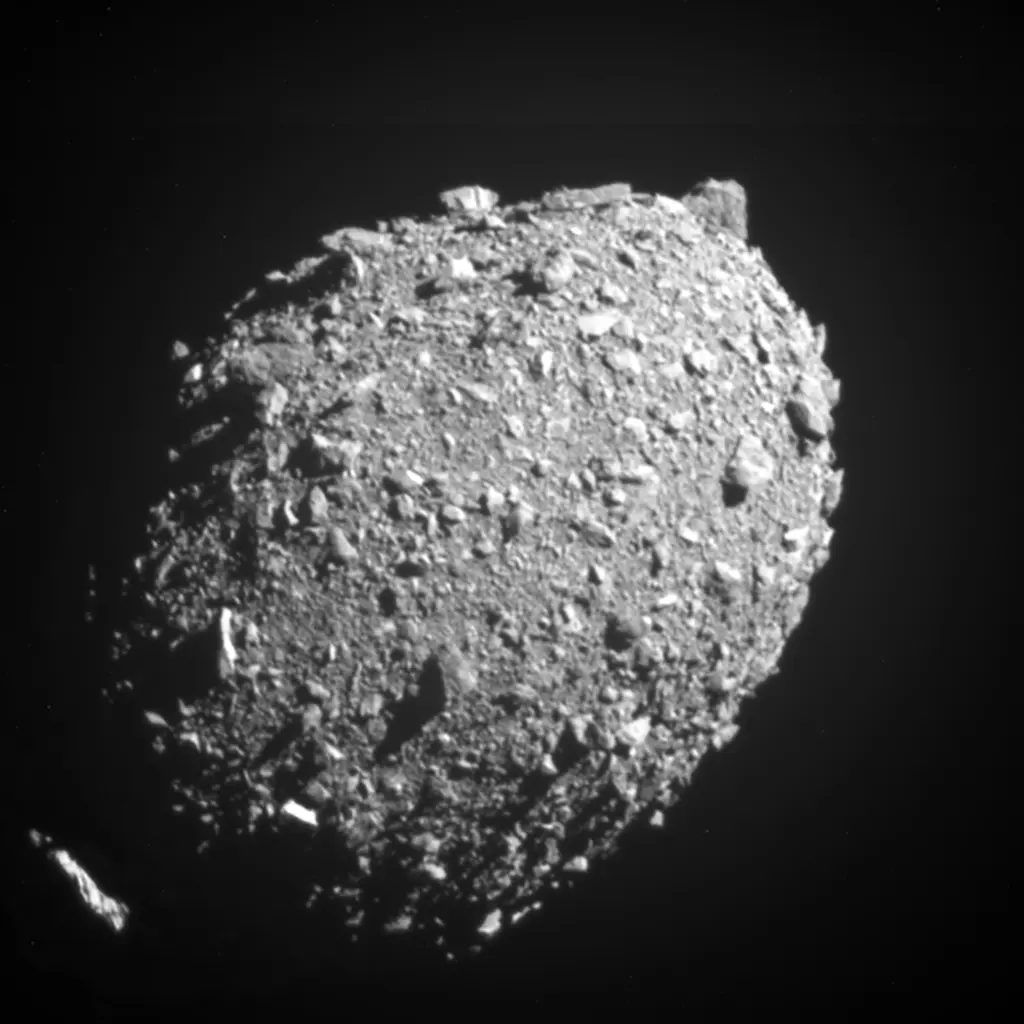
The paper: Nuclear Mitigation of Hypothetical Asteroid Threats in Smoothed Particle Hydrodynamics (The Planetary Science Journal, 2026)
Sources: Simulations explore nuclear mitigation of asteroid threats (phys.org)
Images: Cover: NASA/Johns Hopkins APL / Wikimedia Commons; Figure 1: NASA/Johns Hopkins APL / Wikimedia Commons; Figure 2: Lawrence Livermore National Laboratory / Wikimedia Commons
How this article was made: Everyman Science uses AI tools to structure, format and optimise its articles, and occasionally to produce illustrations where no free photograph exists. The reporting these articles are based on is human-produced and cited above. Spotted an error? Write to [email protected] and we will correct it. — The editors How we work.





Science desk team of Everyman Science, curating and reporting on the day’s most significant developments in research, space exploration, and technology.