They filmed single molecules clustering inside living neurons
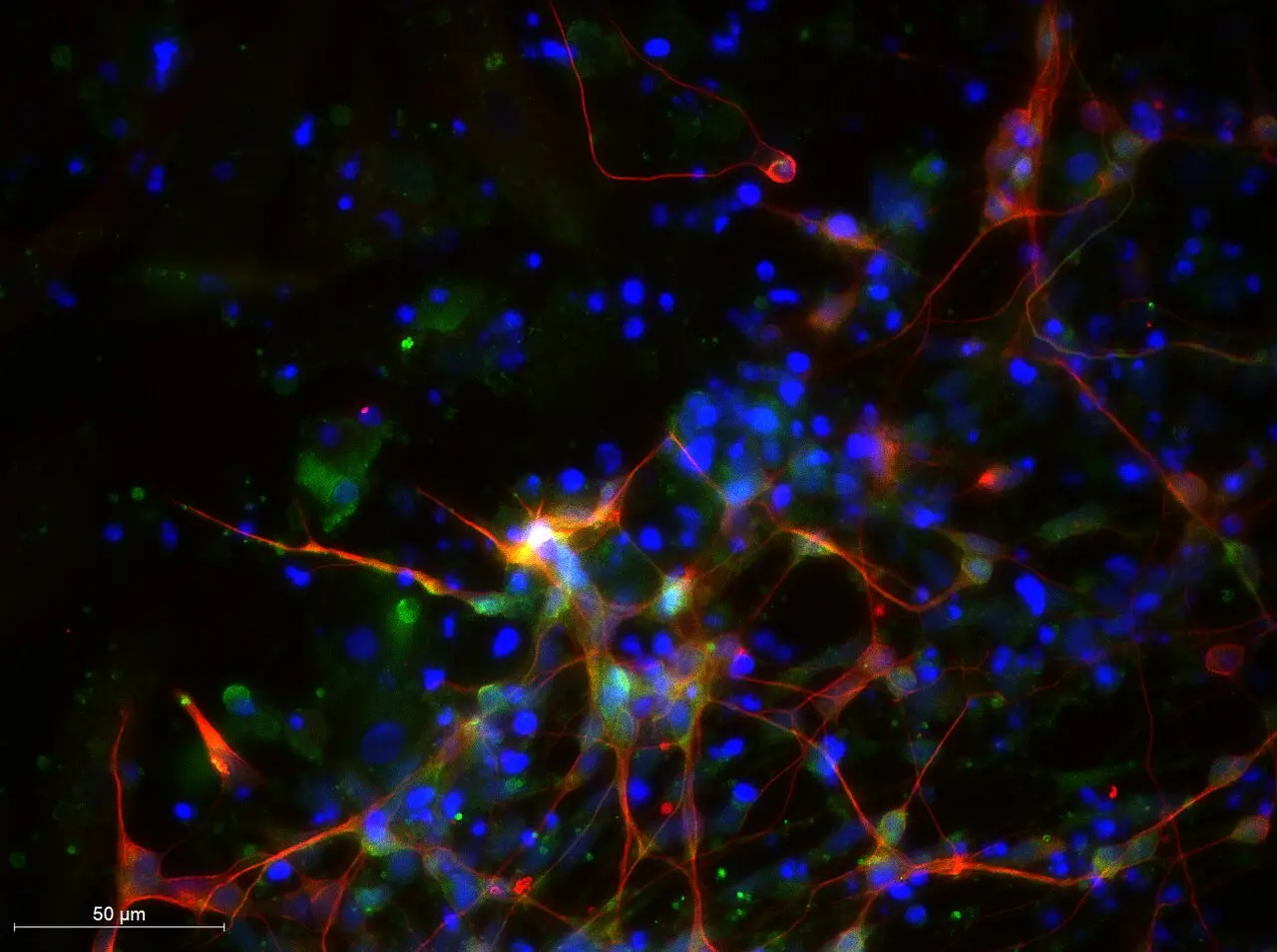
Here is the blunt question the researchers set out to answer: can we watch the proteins that go wrong in Alzheimer’s and Parkinson’s actually move, cluster and interact inside living neurons, and see—right then—what a drug candidate does to them?
A team at The University of Queensland says yes. In a Nature Protocols paper, they lay out a method called NASTIC that promises single‑molecule, real‑time views of protein behavior in living cells—exactly the kind of mechanistic evidence early drug discovery usually lacks.
Who did this and where it landed
The platform, developed over more than two decades at UQ’s Queensland Brain Institute, is led by professor Frederic Meunier’s team. The protocol itself—titled “Nanoscale spatiotemporal cluster analysis of expressed and endogenous proteins”—is published by Rachel S. Gormal and colleagues in Nature Protocols (2025). The work has been spun out into a Brisbane startup, Accretion Bio, with Phillip Craig as founder and CEO and Meunier and QBI colleague Dr. Tristan Wallis as technology co‑founders.
What the method actually does
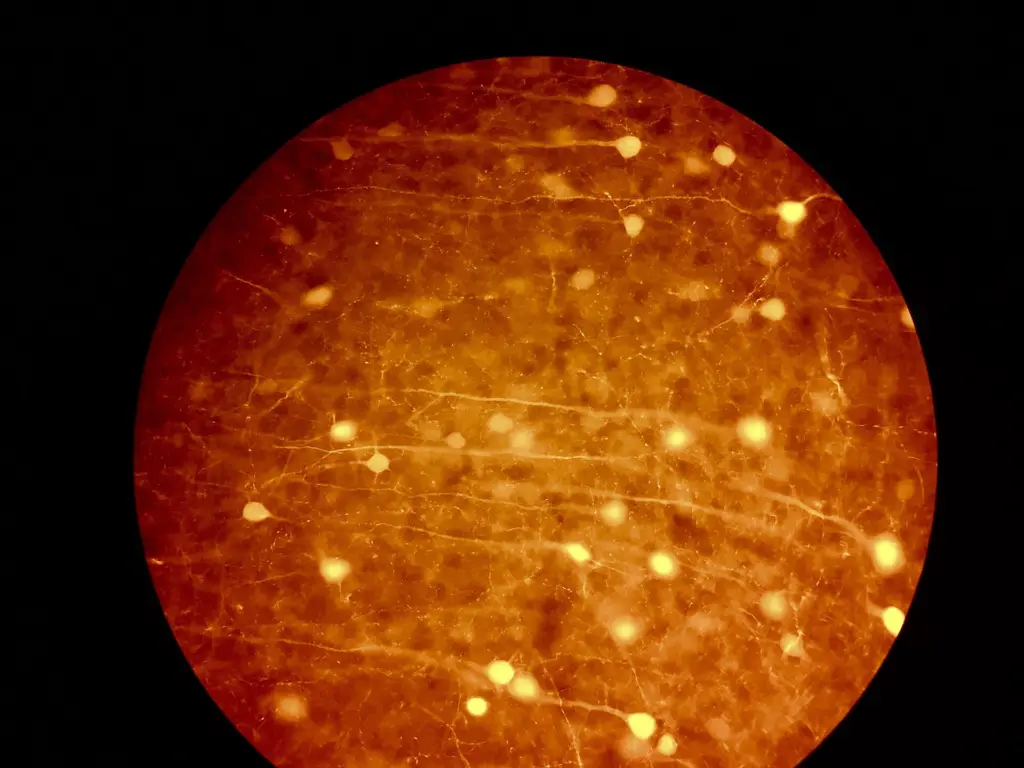
NASTIC—short for Nanoscale Spatiotemporal Indexing Clustering—lets researchers follow how key proteins move, form clusters and interact inside living neurons. It enables study of biological processes as they unfold, across space and time, at the single‑molecule level. In practice, that means observing protein behavior in living cells rather than inferring it after the fact from fixed samples.
Because it operates in real time, the same setup can be used to see how a potential drug changes its target’s behavior early in discovery, without waiting for downstream readouts. The University of Queensland describes the view NASTIC provides of neurodegenerative disease progression as “unprecedented,” and Meunier underscores that it captures motion, clustering and interactions where they happen: inside living neurons.
What the study adds—formalizing a new class of evidence
Accretion Bio’s CEO Phillip Craig frames the need simply: for years, drug programs have had to make high‑stakes calls without a crucial layer of mechanistic data about what is happening inside a living cell. In neurodegeneration, he argues, that functional information gap is one reason programs fail late and expensively in the clinic. By letting teams watch how a drug candidate changes a target’s behavior in real time, NASTIC supplies what Craig calls a new class of evidence.
The paper’s contribution is to codify that approach in a protocol—a step‑by‑step way for labs to capture and analyze nanoscale, spatiotemporal clustering of expressed and endogenous proteins. Interest is not purely academic: Queensland reports that industry‑funded research using the platform is already underway at QBI and that global pharmaceutical companies have taken notice. Accretion Bio’s initial focus, fittingly, is neurodegeneration.
Why this matters for Alzheimer’s and Parkinson’s
The hallmarks of many neurodegenerative diseases are proteins that mislocalize, aggregate or mis‑signal. If you can see those changes unfold inside living neurons—and see how an experimental molecule modulates them—you can make sharper go/no‑go decisions much earlier. Meunier notes the platform’s ability to track movement, clustering and interactions; Craig emphasizes the shift from indirect proxies to direct observation of targets in their native context.
Dr. Dean Moss of UniQuest, the university’s commercialization arm, calls the capability powerful and with potential to advance drug discovery globally. Antler Australia partner James McClure points to Accretion Bio’s domain expertise and leadership as reasons it can carry the technology to partners who need it.
What we still don’t know from the paper and launch notes
Some details a reader might expect are not specified in the public descriptions: which disease‑related proteins were demonstrated, the quantitative limits (throughput, duration of live imaging, or error characteristics), and how results compare head‑to‑head with existing approaches. The materials do not list numerical performance metrics, case studies with effect sizes, or validation across multiple cell types beyond living neurons.
It’s also important to note that a Nature Protocols paper is about how to do something reproducibly, not a clinical validation of outcomes. The claims about impact on drug discovery are prospective. Those will be tested as programs run and decisions made with NASTIC‑derived evidence are compared with outcomes downstream.
The deeper cut
Inside “nanoscale spatiotemporal cluster analysis”
Clustering, in this context, is about deciding whether observed protein localizations in space and time deviate from a random (Poisson) distribution in a way that implies functional assemblies. The “spatiotemporal” qualifier matters: transient nanoclusters can form and dissolve faster than typical acquisition windows, and purely spatial analyses will miss dynamics that are central to signaling. Indexing schemes track individual detections across frames and assign them to candidate clusters based on distance and dwell criteria; the hard part is setting thresholds that avoid percolation (everything connects) while retaining sensitivity to short‑lived, sub‑diffraction features. Single‑molecule‑level data make the statistics discrete and noisy: false merges and splits, photophysical intermittency, and motion blur can bias cluster size and lifetime estimates. A robust protocol therefore defines how to treat trajectories that briefly disappear and reappear, how to censor tracks near boundaries, and how to assess null models—e.g., by time‑scrambling detections to preserve spatial density while destroying temporal correlations. The payoff is a measurement of when and where proteins coalesce into functional units, and for how long—numbers that mechanistically anchor claims about target engagement or pathway modulation.
Limits and next steps, stated plainly
Limitations flagged by the narrative around NASTIC are mostly about scope and stage: it is a platform for observing and analyzing, not a therapeutic by itself. Demonstrating that earlier, mechanistic readouts improve attrition will take time and multiple collaborations. The launch materials do not enumerate constraints such as which neuronal subtypes are amenable or how easily the protocol ports between labs.
Next steps are already in motion: QBI reports industry‑funded projects using the platform, and Accretion Bio is focusing first on neurodegenerative programs. If those efforts show that direct, real‑time observation changes the odds of success, it would validate the central bet behind NASTIC: that seeing target behavior in living neurons is the missing layer many programs needed.
From lab bench to partners who need it
Accretion Bio’s founding by Phillip Craig, with Meunier and Dr. Tristan Wallis as technology co‑founders, formalizes the path from protocol to practice. Queensland notes interest from global pharmaceutical companies, and Craig positions the company to work with pharma and biotech partners while advancing its own neurodegeneration discovery work. Support from UniQuest and investors underscores the ambition to move this capability from a single brain institute to the wider drug discovery community.
The paper: Nanoscale spatiotemporal cluster analysis of expressed and endogenous proteins (Nature Protocols, 2025)
Sources: Nanoscale tech tracks proteins inside living neurons to guide Alzheimer's and Parkinson's drug discovery (phys.org)
Images: Cover: Morozless / Wikimedia Commons (CC BY-SA 4.0); Figure 1: Luisa Demarchi, Ilaria Bertocchi and Alessandra Oberto / Wikimedia Commons (CC BY-SA 4.0)
How this article was made: Everyman Science uses AI tools to structure, format and optimise its articles, and occasionally to produce illustrations where no free photograph exists. The reporting these articles are based on is human-produced and cited above. Spotted an error? Write to [email protected] and we will correct it. — The editors How we work.





Science desk team of Everyman Science, curating and reporting on the day’s most significant developments in research, space exploration, and technology.