2,884 supernovae hint dark energy isn’t constant
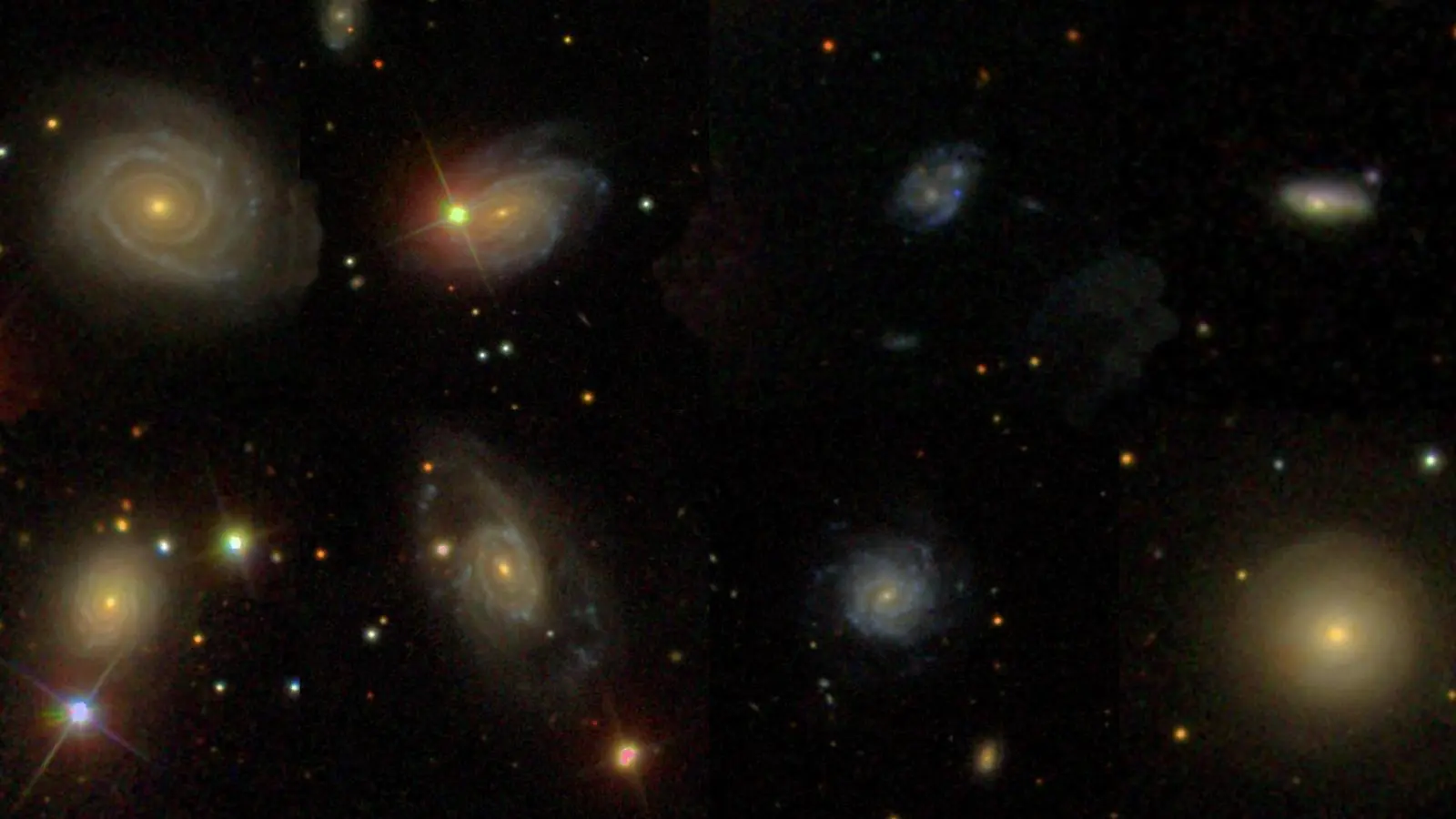
One by one, the lights went off in old logbooks and came back brighter in a single frame. Over three decades, telescopes caught thousands of white dwarfs dying the same explosive death. This year, an international team led from the University of Queensland’s School of Mathematics and Physics pulled 2,884 of those Type Ia supernovae into one coherent picture—and the universe that picture describes is shifting under our feet.
The standard story has been simple on paper: dark energy, the thing that makes cosmic expansion speed up, is fixed and unchanging. Fold that assumption into the equations, and the large-scale history of the cosmos adds up neatly. But the largest collection of these exploding stars ever assembled is now providing fresh evidence that dark energy may change over time.
A map built from 2,884 stellar detonations
Type Ia supernovae are the workhorses of cosmic distance measurement. The international research team reports a unified set of 2,884 such explosions drawn from three decades of astronomical observations. Bringing so many events into a single, consistent framework is what lets them trace the universe’s expansion with new precision, and it is what makes this compilation different: scale and uniformity, not just another batch of data.
Team members describe the undertaking as rebuilding three decades of observations into one consistent standard, so that supernova measurements taken years and continents apart could be compared fairly. The result is not just a bigger sample. It is a stricter yardstick applied across the whole timeline those supernovae illuminate.
The assumption under stress: a constant dark energy
Researchers frame the tension plainly. The standard model of cosmology assumes dark energy is fixed and unchanging. If that’s right, a comprehensive supernova record should reinforce the same story we have told for a generation.
Instead, they report more evidence for time variation. The expanded dataset, according to astrophysicist Tamara Davis, marks an important advance in efforts to understand dark energy’s nature, in part because it strengthens the case that the constant-in-time picture may be too simple.
Not one hint but two, from independent paths
This is not a single-team mirage. Researchers point to two completely independent measurements that have found hints of time variation in dark energy. One grew out of Dark Energy Survey findings published in 2024.
A separate astronomical project has also produced evidence suggesting dark energy might not remain constant. Independence matters in cosmology: when different kinds of observations begin to tug in the same direction, it becomes harder to explain the effect away as an artifact of one method.
What changes if dark energy changes
If dark energy evolves over time, the consequence is more than a footnote. It would mean our baseline model of the cosmos needs reworking at its core. The expansion history we infer from supernovae and other tracers would have to accommodate an energy component that shifts as the universe ages, not just a fixed term carried along for the ride.
Researchers also connect the question to deeper theoretical stakes. Understanding dark energy’s behavior could feed into attempts to reconcile gravity with quantum physics—two frameworks that both work extraordinarily well in their domains but do not yet fit together in a single theory.
What’s still up in the air, once and clearly
Hints are not a verdict. The teams describe evidence that points toward time variation, not a final determination that settles the issue. That is why they have gone to the trouble of compiling a dataset this large, and why they are not done adding to it.
The deeper cut
How “independent” hints earn their weight
Cosmologists prize independent measurements because shared systematics can masquerade as physics. If two analyses use the same underlying sky sample, the same calibration pipeline, or the same population assumptions, a bias in any of those steps can survive cross-checks. Independence means the noise and nuisances differ. Supernova-based inferences lean on how well explosions can be standardized; other probes confront their own orthogonal systematics. When separate teams, built on different data streams and modeling choices, see tension with a constant dark-energy picture, the posterior weight against simple constancy grows faster than a single result’s sigma count would suggest. This is partly because correlated errors don’t add in quadrature; uncorrelated ones do. In practice, cosmologists examine whether the likelihood surfaces from the two approaches overlap when you let nuisance parameters float. If the allowed regions pull in the same qualitative direction on time variation while remaining statistically consistent with each other’s nuisances, you start to take the convergence seriously—even when each on its own only rises to the level of a hint.
The next pieces to add
The researchers plan to expand the dataset as fresh observations roll in. One new vein is already opening: the Dark Energy Bedrock All-Sky Supernova program is identifying hundreds of supernovae, especially at distances closer to Earth than the events that powered much of the recent work.
Folding in those nearby explosions should sharpen the expansion map and test whether the signs of time-varying dark energy hold up. The team’s stance is pragmatic: build the best, cleanest catalog possible and see where the universe points when the statistics are finally big enough to be persuasive.
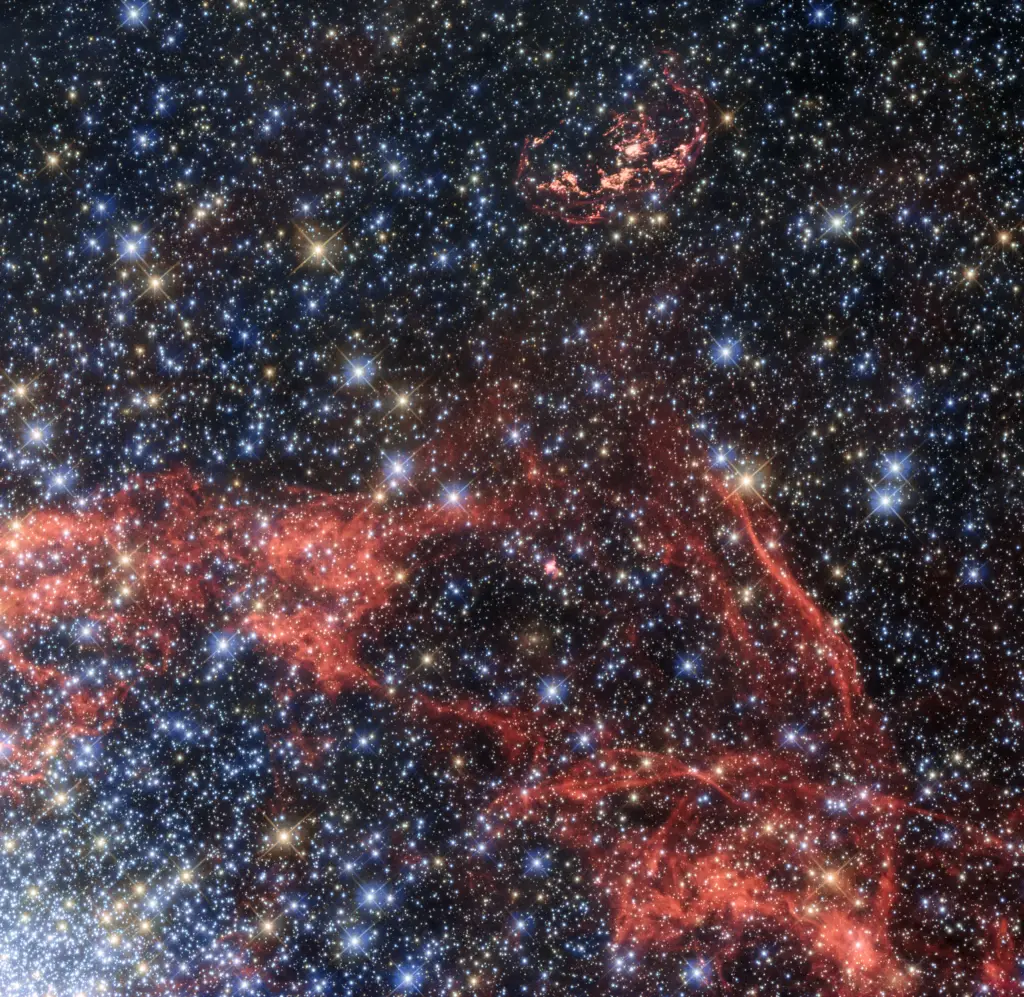
Why a bigger catalog changes the conversation
Scale is not just bragging rights here. An expanded sample improves the leverage on when and how the expansion rate changes over time. That is the crux of the dark-energy question: fixed, or evolving.
With nearly 3,000 events coherently assembled, and with another independent line of evidence pointing the same way, the conversation is no longer about one intriguing anomaly. It is about whether cosmology’s most convenient assumption—unchanging dark energy—survives contact with a universe that may be more restless than we thought.
Sources: Nearly 3,000 exploding stars challenge our understanding of the Universe (www.sciencedaily.com)
Images: Cover: NASA/JPL; Figure 1: NASA/GSFC; Figure 2: NOIRLab / Wikimedia Commons (CC BY 4.0)
How this article was made: Everyman Science uses AI tools to structure, format and optimise its articles, and occasionally to produce illustrations where no free photograph exists. The reporting these articles are based on is human-produced and cited above. Spotted an error? Write to [email protected] and we will correct it. — The editors How we work.





Science desk team of Everyman Science, curating and reporting on the day’s most significant developments in research, space exploration, and technology.