The stickiest ocean snow carries six times more carbon to the deep
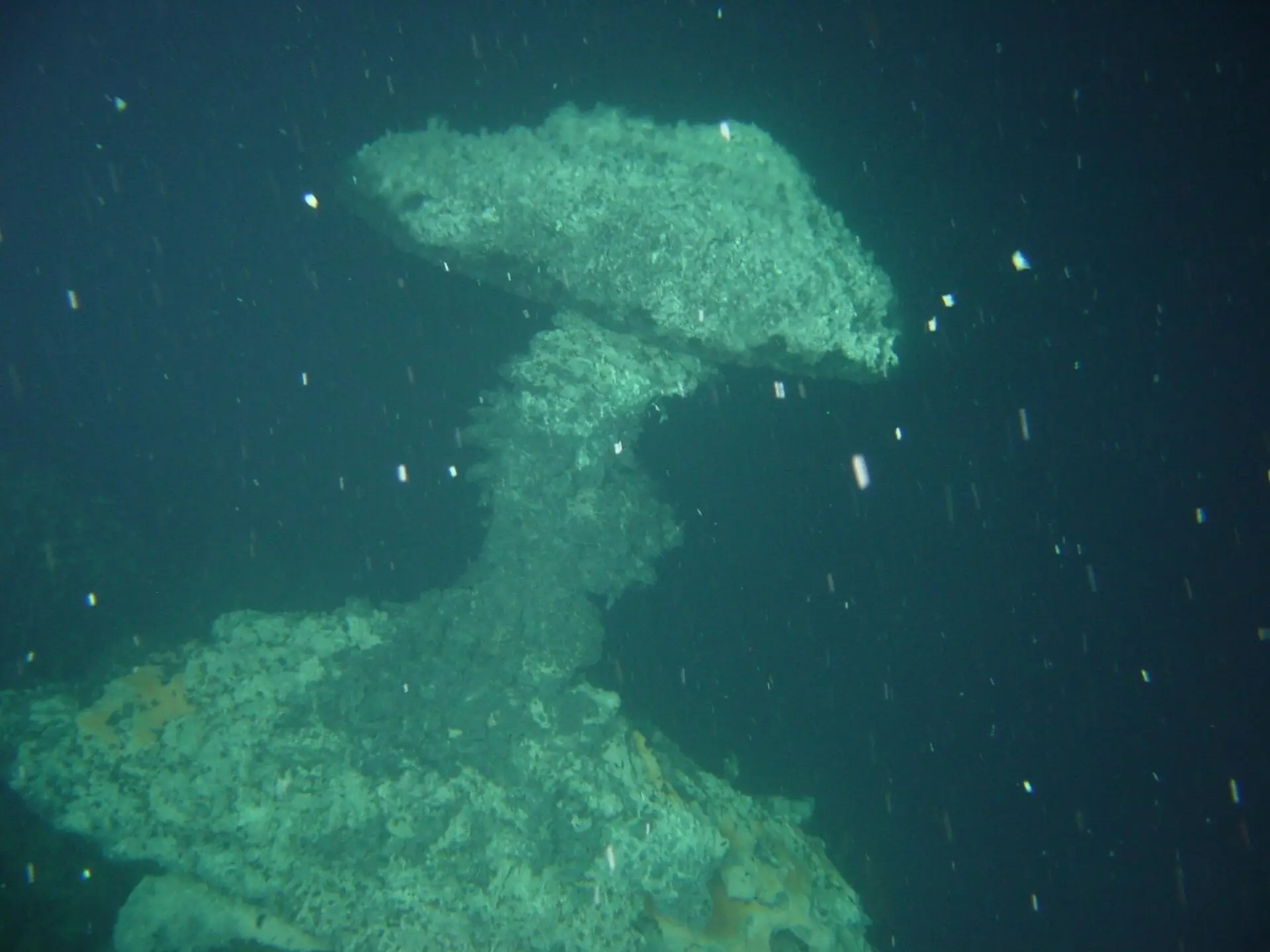
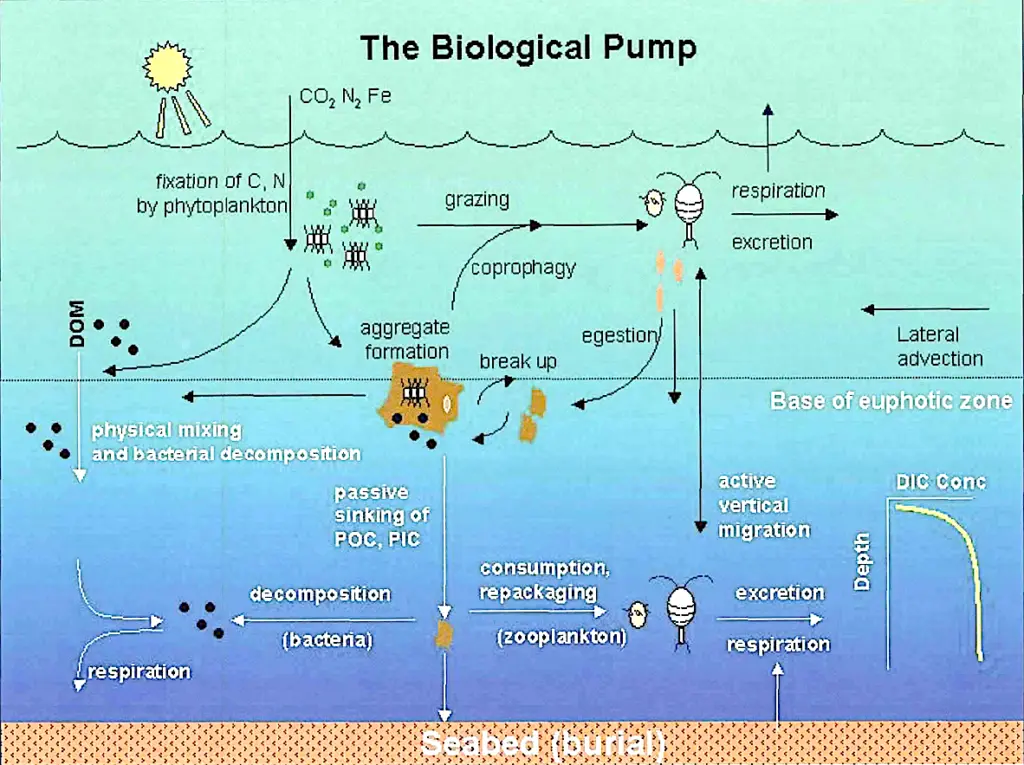
Imagine swimming through dusk at 200 meters down as a slow blizzard drifts past your mask—shreds of plankton, fecal pellets, and clear, gelatinous globs. This is marine snow, the ocean’s steady fall of crumbs. To a fish it’s dinner. To the planet, it’s a conveyor belt pulling carbon out of the surface ocean and, sometimes, locking it away for centuries.
Here’s the twist that puts it in the news: the study finds that the thickness—the literal gooeyness—of those particles governs whether they fall deep enough to matter for climate. The stickiest clumps carry far more carbon to depth than their runnier cousins.
A big pipeline with a big leak
Researchers estimate marine snow removes more than 10 gigatons of carbon from surface waters each year. Yet only about two gigatons reach depths where that carbon can remain stored for hundreds or even thousands of years. That attrition happens on the way down, as particles are grazed, gnawed, and—most of all—decomposed by bacteria.
Common sense says “bigger, heavier particles sink farther.” True—but incomplete. The study shows another property decides survival: viscosity, a particle’s internal stickiness. That’s the part that has been hiding in plain sight.
Why stickiness changes the game
Viscosity sounds like kitchen physics—honey vs. water. In marine snow, it’s about how tightly packed and gel-like the internal matrix is. The researchers report that the stickiest particles can transport more than six times as much carbon to the deep ocean as thinner, less viscous ones. The analogy to honey breaks down because marine snow isn’t a uniform liquid; it’s a lumpy gel with softer and tougher micro-regions stitched together.
That patchwork matters because bacteria don’t digest particles from the inside out; they need to attach, secrete enzymes, and work their way in. In the study, bacteria preferentially colonized less viscous patches near particle surfaces, while denser, stickier interiors stayed off-limits longer.
How they finally saw the “muscoscape”
The project began in 2021, when Bryce Inman and collaborators set out to observe living bacteria inside these tiny marine gels—something no one had managed directly. Multiple attempts failed before the team finally developed a working technique in 2025.
Their new imaging approach, described in a companion study published in Nature Communications, combined 3D confocal microscopy with fluorescent labels to map the micro-structure of individual particles while bacteria moved across them. That let the team watch, in situ, where microbes attached and where they stalled.
Microbial gatekeeping, one sticky layer at a time
In the lab, particles with greater viscosity resisted bacterial degradation and fragmentation for longer periods. The immediate cause wasn’t a lack of microbes but their access: they colonized the easier, less viscous periphery first. Only after chewing through those zones could they reach the tougher core.
Computer simulations further suggested that these stickier particles can descend to greater depths before breaking apart. That extra distance matters because deeper fragments and dissolved carbon are more likely to be isolated from the atmosphere for a long time.
The size of the effect, in climate terms
Taken together, the findings help explain why some sinking material transports carbon much farther than other particles that start in the same water. According to the researchers, the stickiest particles can deliver more than six times as much carbon to depth as less viscous ones. That multiplier applies within the larger picture in which more than 10 gigatons leave the surface, but only about two gigatons are sequestered for centuries to millennia.
The deeper cut
Inside a sticky particle: why viscosity slows decay
Bacterial degradation of marine snow is largely a boundary process: cells attach to exposed surfaces, secrete extracellular enzymes, and take up hydrolysis products that diffuse back. In a highly viscous gel, two things change. First, enzyme and substrate diffusion through the matrix slows, so hydrolysis fronts advance more slowly into the interior. Second, mechanical fragmentation—often what renews microbial access by creating fresh surface—is suppressed because a more cohesive matrix resists shear and crack propagation. Both effects keep the particle’s surface-area-to-volume ratio low for longer, throttling overall carbon-specific respiration. The study’s observed pattern—colonization concentrated in less viscous surface patches, with delayed penetration into dense cores—is exactly what you’d expect from diffusion-limited enzyme action on a heterogeneous hydrogel. Simulations showing deeper transit before breakup fit the same logic: if fragmentation is postponed while sinking continues, the particle simply has more time to reach depths where remineralization products are effectively removed from short-term exchange with the atmosphere.
What if the goo fails?
When particles are less viscous, bacteria get in faster, fragmentation starts earlier, and the material shreds into smaller bits that are easier to fully respire before they sink far. That’s how a share of the more than 10 gigatons leaving the surface is whittled down to the roughly two gigatons that actually reach long-term storage depths.
The study reframes “fragility” not just as size or density but as a property of the particle’s microscopic terrain—where microbes can gain a foothold and how fast their chemistry can pry the interior open.
One open question, once
No one has yet mapped how marine-snow viscosity varies across regions and seasons, or which source materials most reliably make the stickiest particles. Until that’s measured, it’s hard to say how much of the global gap between more than 10 gigatons exported and about two gigatons sequestered is controlled by viscosity versus other factors.
Why this changes models more than methods
The work doesn’t demand a new ocean sensor tomorrow; it offers a parameter models can use today. If viscosity governs microbial access and breakup timing, then export-efficiency schemes that only track particle size and sinking speed are missing a lever that, according to the study, can swing delivered carbon by a factor greater than six.
That is the quiet significance: stickiness isn’t just texture. It is a control knob on the ocean carbon sink, and a good chunk of the climate story rides on where that knob is set.
The paper: Marine snow viscosity regulates microbial degradation and the ocean carbon sink (Science, 2026)
Related research: Molecular rotors reveal the 3D viscous habitat of mucus-colonizing bacteria (Nature Communications, 2026)
Sources: Hidden climate superpower: Why some ocean “snow” carries six times more carbon (www.sciencedaily.com)
Images: Cover: null / Wikimedia Commons (CC BY 4.0); Figure 1: Hugh W. Ducklow , Deborah K. Steinberg and Ken O. Buesseler / Wikimedia Commons (CC BY-SA 4.0); Figure 2: RobinIsadorable / Wikimedia Commons (CC BY 4.0)
How this article was made: Everyman Science uses AI tools to structure, format and optimise its articles, and occasionally to produce illustrations where no free photograph exists. The reporting these articles are based on is human-produced and cited above. Spotted an error? Write to [email protected] and we will correct it. — The editors How we work.





Science desk team of Everyman Science, curating and reporting on the day’s most significant developments in research, space exploration, and technology.