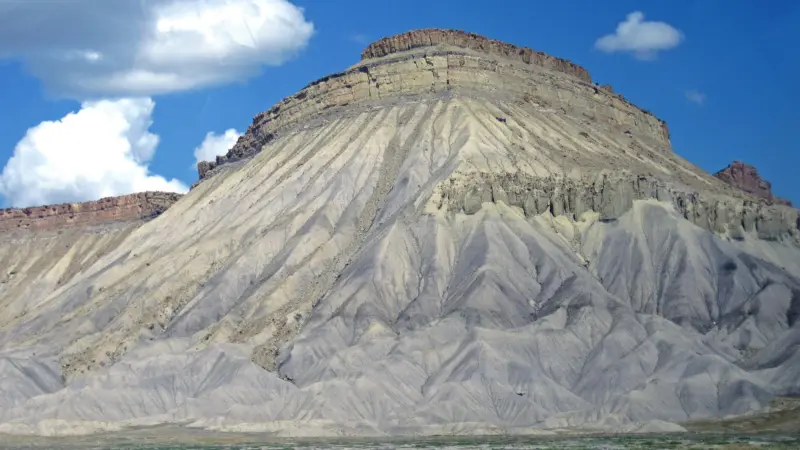
Earth’s tides funneled 150 gigawatts into tiny hot spots inside the Moon
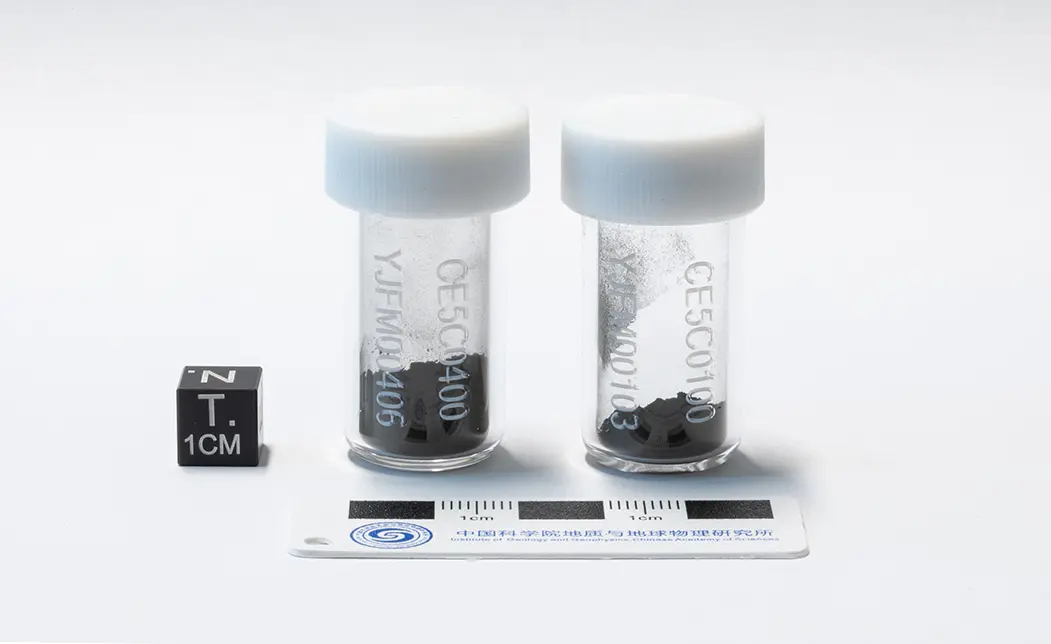
A rock shouldn’t still be hot two billion years after its world should have gone cold. Yet the Chang’e‑5 mission returned lunar material dated to around 2 billion years ago—basalt, the kind of rock forged in heat and pressure. That single fact tugs on the rest of the Moon’s story until it creaks.
A new study points the finger back at Earth. In simulations reported by Miao Chen of the Chengdu University of Technology and colleagues, tidal forces from our planet once pumped extraordinary amounts of energy into small pockets deep inside the Moon. That finding reframes a long‑standing puzzle in the Moon’s geological history.
The cold‑Moon problem that wouldn’t stay cold
The familiar origin tale is violent. The Moon was created when another early protoplanet, Theia, slammed into Earth, ejecting debris that coalesced into our satellite. That debris was relatively small—about a quarter the size of Earth—which should have meant the newborn Moon shed its heat fast. By standard reckoning, after that huge protoplanet hit the early Earth around 4.5 billion years ago, the Moon should have cooled rapidly and fallen geologically quiet.
But the Chang’e‑5 basalts tell a different chapter. Some of that lunar material was formed only around 2 billion years ago, long after the heavy bombardment period that gave the Moon most of its craters had ended. Impacts, in other words, are a poor suspect for late heat.
Turning to gravity for an answer
Chen and colleagues turned to gravity—specifically to tidal heating. Early in lunar history, the Moon was much closer to Earth than it is today, orbiting in 16 days rather than the present 27. Such proximity would have subjected the Moon’s interior to strong rhythmic flexing as it moved around Earth, a mechanism capable of stirring heat inside a body.
The key twist is where that heat went. Instead of assuming a uniform interior, the team’s modeling allowed for structure, and energy concentrated into two symmetric regions along the core–mantle boundary. They named them tidal heating anomaly zones.
A small fraction, a huge wattage
Despite occupying only 2.5% of the mantle’s volume, those tidal heating anomaly zones, according to the study’s calculation, took in 150 gigawatts of power around 3.2 billion years ago. That is an enormous number to be focused into a small share of the interior.
Concentrated heat matters. Funnel enough energy into compact zones and you can keep parts of the interior warmer for longer than a simple, smooth‑cooling model would allow—creating conditions that can later yield basalt like the kind Chang’e‑5 brought home.
What this changes for the Moon’s story
If Earth’s pull sustained deep hot spots inside the Moon, then late volcanism is no longer an outlier—it’s a consequence. The Moon’s geological history may need to be told with tides as a recurring character, not just an early‑act footnote. The finding plugs a gap between an origin that should have cooled fast and rocks that insist something stayed warm.
It also reframes how we think about time on the Moon. A 16‑day orbit implies a closer companion, and closer means stronger tides. Over hundreds of millions of years, that steady kneading could have banked heat where the interior’s structure let it pool.
The deeper cut
Why 2.5% of the mantle taking 150 GW is a big deal
The arithmetic is stark. If 150 GW is deposited into just 2.5% of the mantle’s volume, the local heating rate in those zones is roughly 40 times the mantle’s average (because 1/0.025 = 40). Heating that inhomogeneous by itself can reorganize mantle dynamics: thermal buoyancy scales with ΔT, so a factor‑tens enhancement in heat input steepens local temperature gradients, promotes low‑viscosity channels, and makes it easier for partial melts to nucleate where they otherwise wouldn’t. Tidal dissipation depends sensitively on rheology—Q and viscosity set where strain energy turns to heat—so once a warm pocket softens, it can become a feedback trap for further dissipation. In other words, the very act of heating selects the places that keep heating.
The study’s headline figure (150 GW) is a power, not an energy. What sustains late outcomes is integration over time. Even modest sustained power, if focused and long‑lived, can accumulate to large thermal budgets locally. With the Moon closer to Earth (a 16‑day orbit rather than 27), the forcing amplitude was higher; channeling a fraction of that into anomaly zones amplifies the effect. The numbers given don’t fix absolute temperatures, but they do fix a contrast: a small fraction of mantle receiving the lion’s share of tidal dissipation is enough to keep heterogeneity alive for geologic spans.
What we still don’t know from this picture
The numbers explain that deep, localized heating was possible and potent. They do not, on their own, specify where on the surface later eruptions would have broken through, how often they did so, or precisely how the heating evolved as the Moon’s orbit lengthened from 16 to 27 days. Those remain open questions prompted by the late‑formed basalt and the tidal‑heating framework.
Why future explorers should care
If tides helped script the Moon’s interior, the fingerprints won’t be random. The idea that only 2.5% of the mantle soaked up 150 gigawatts suggests targetable provinces where ancient heat once pooled. For anyone planning to read the Moon’s rocks for history—or for resources—this reshapes where to look and what patterns to expect.
And there is a larger shift in mindset. Rather than treating the Moon as a uniformly cooling sphere, this work makes it a place where Earth’s gravity once sorted heat into distinct zones. That makes the Moon’s late‑life volcanism less an exception and more a consequence of being our neighbor.
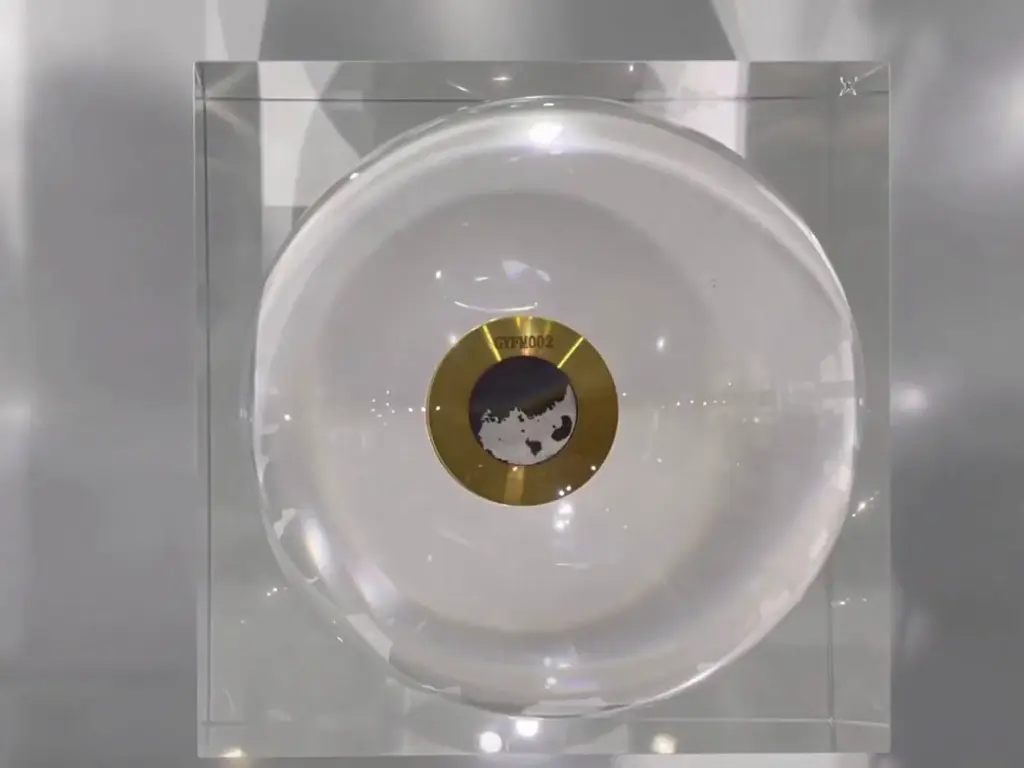
The paper: Tidal Heating Anomaly Zone at the core-mantle boundary of the Moon (Planet, 2026)
Sources: Earth's gravity may have kept the early moon's volcanic heart beating (phys.org)
Images: Cover: Hui Ren / Wikimedia Commons (CC BY 4.0); Figure 1: China News Service / Wikimedia Commons (CC BY 4.0)
How this article was made: Everyman Science uses AI tools to structure, format and optimise its articles, and occasionally to produce illustrations where no free photograph exists. The reporting these articles are based on is human-produced and cited above. Spotted an error? Write to [email protected] and we will correct it. — The editors How we work.





Science desk team of Everyman Science, curating and reporting on the day’s most significant developments in research, space exploration, and technology.