
A storm that cost 56.7% of Jamaica’s economy—and insurance paid 2%
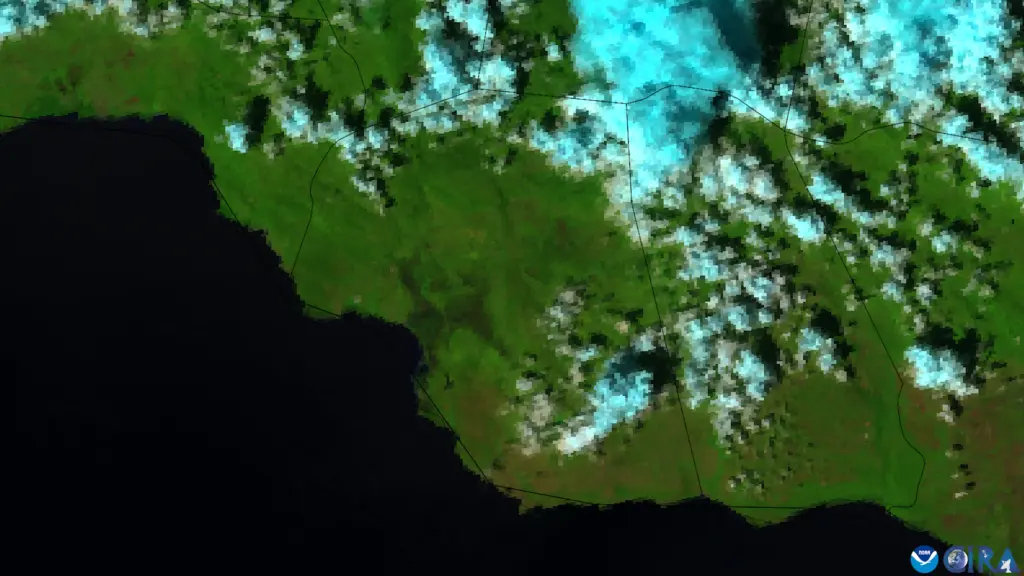
Picture western Jamaica after Hurricane Melissa: a landscape so shredded that it took around 480,000 truckloads to move 4.8 million metric tons of rubble. That is not a metaphor. United Nations satellites counted it.
Melissa was the strongest hurricane on record in Jamaica. The Category 5 storm flooded plantain farms, blew the roofs off 120,000 homes and knocked out power across much of the island. In the weeks after, the bills landed: damage and losses of up to $12.2 billion—56.7% of Jamaica’s 2024 GDP, according to the Planning Institute of Jamaica.
A recovery priced like half a year of the economy
GDP is the yardstick for all goods and services a country produces in a year. When a single storm inflicts losses worth 56.7% of that yardstick, the scale is plain: Melissa tallied a bill comparable to more than half of Jamaica’s entire 2024 economy. The Planning Institute’s figure—up to $12.2 billion—puts an empirical price on what it means when power, housing and farms all break at once.
And yet, disaster insurance and catastrophe bond payouts covered only around 2%, according to a Science analysis by Auroop R. Ganguly, Aayushi Mishra and colleagues. Insurance is supposed to cushion shocks; here, it barely dented the costs, leaving government and communities to find the remaining 98%.
When prudence meets a wall of water
Jamaica had spent a decade rebuilding its fiscal reputation. “They cut their debt down in half in just 10 years, which is unheard of,” Aayushi Mishra said. But financial discipline did not stop the roofs from peeling or the grid from failing—and, crucially, it did not spare the country from needing to borrow again to rebuild.
The Science analysis captures the bind. In 2024–2025, Jamaica set aside around $3.15 billion for debt payments—roughly six times the $510 million devoted to construction and infrastructure upgrades. When repayments outrun investment in drainage, coastal barriers and other defenses by that ratio, resilience remains a line item that struggles to compete.
Rules are starting to bend toward resilience
The International Monetary Fund’s assessments influence how much countries can borrow and on what terms. The IMF began rolling out new debt assessment models that gave disaster preparation more credit in 2022. Its updated 2025 guidance reinforced that approach for countries seeking resilience loans. Those may sound bureaucratic, but they change what counts as “responsible”: spending on preparation now earns room to breathe later.
The broader pattern is stark. Teresa Anderson notes that 93.5% of the countries most vulnerable to climate change are also spending as much as two-thirds of their revenue on repaying debts. In her words, “the climate crisis is pushing countries into debt, but the debt crisis is leaving them more exposed to climate change.” Jamaica’s numbers after Melissa are a case study in that loop.
Logistics at continental scale, on island roads
Trucks and tonnage can feel abstract until you ask what they measure. The 480,000-haul cleanup is a proxy for the hidden work of recovery: clearing access to hospitals, reopening schools, restoring power lines. Every load of rubble is a neighborhood made passable again. The 4.8 million metric tons show how much physical change—fallen trees, broken concrete, mangled roofing—Melissa forced into motion.
Numbers like 120,000 unroofed homes also map human tasks. That is a coordinated supply chain for materials, labor, and credit, competing with the simultaneous need to shore up embankments and keep farms alive. When only about 2% of costs arrive via insurance, those tasks depend on budgets already strained by existing debt service.
What we don’t know from these counts
These figures do not specify how the $12.2 billion breaks down across housing, power, roads and agriculture, or how many days major services were offline. Nor do they enumerate which specific defenses—drainage upgrades, coastal barriers, or grid hardening—would have most reduced the 4.8 million metric tons of debris. Those details matter for targeting the next dollar of resilience spending, and they are not in this dataset.
The deeper cut
Basis risk and debt sustainability, briefly
Why did insurance cover only around 2%? Many sovereign and regional disaster covers are parametric: payouts trigger when measured hazards—say, wind speed or rainfall—cross set thresholds. That keeps settlements fast, but it introduces basis risk: the hazard metric can be “high” while realized damage is low (overpay), or the metric can be “moderate” while topography, exposure, and vulnerability combine to produce outsized losses (underpay). Melissa’s island-wide power impacts and the 120,000 unroofed homes highlight exposure and vulnerability interacting with hazard in ways a single index may miss. On the debt side, the IMF’s debt sustainability analysis (DSA) historically treated resilience spending as discretionary. Giving disaster preparation more credit changes the intertemporal budget constraint: spending today reduces expected future primary deficits by lowering loss distributions under tail events. In DSA terms, adaptation moves probability mass leftward for growth shocks and narrows the variance of contingent liabilities. That can lift the sustainable debt path without relaxing prudence—if lenders accept the modeled reduction in expected losses as real. The open technical challenge is quantifying that loss-reduction with enough fidelity to satisfy risk-averse creditors while keeping triggers transparent enough to maintain the speed advantage of parametric instruments.
Escaping the loop means counting what counts
Ganguly, Mishra and colleagues argue for tweaks that let countries invest in resilience without being punished for it: debt assessments that recognize preparation, more useful insurance that reflects vulnerability, and room to pause repayments after shocks. The point, as they frame it, isn’t “bigger coverage” for its own sake but redesigning the financial plumbing so preparation is not crowded out.
The Melissa ledger supplies the urgency. A storm strong enough to rip roofs from 120,000 homes and spawn 4.8 million metric tons of debris will not be the last. If insurance keeps covering only a sliver and budgets keep tilting six-to-one toward past debts over future defenses, the 56.7% figure will not be an outlier—it will be a warning.
Related research: Fiscal discipline without physical resilience (Science, 2026)
Sources: Disasters and debt. Escaping the 'climate-debt doom loop' (phys.org)
Images: Cover: Everyman Science (illustration); Figure 1: JPSS imagery: CSU/CIRA & NOAA/NESDIS / Wikimedia Commons
How this article was made: Everyman Science uses AI tools to structure, format and optimise its articles, and occasionally to produce illustrations where no free photograph exists. The reporting these articles are based on is human-produced and cited above. Spotted an error? Write to [email protected] and we will correct it. — The editors How we work.





Science desk team of Everyman Science, curating and reporting on the day’s most significant developments in research, space exploration, and technology.