When 60 kg/m³ tips a mountain’s deep root
Stand on a high plateau and it feels like the Earth beneath you is simply holding you up. But some mountains and volcanic regions hide a stranger story: pieces of the deep crust and the rigid shell above it can grow heavy, lose their grip, and peel away into the mantle. Researchers at Istanbul Technical University have just mapped when that hidden failure happens, and when it doesn’t, by varying the size and density of the culprit rock in computer models.
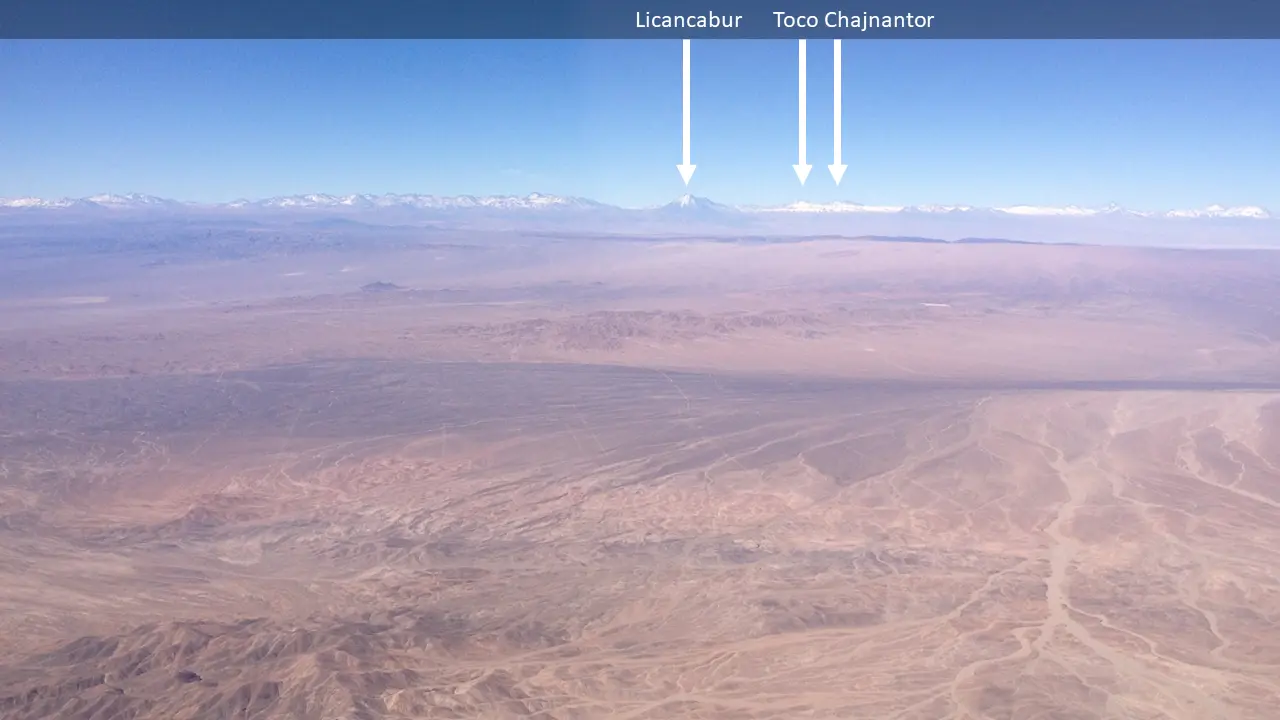
Why talk about it now? Because the new modeling pins the problem to a few testable knobs—geometry and tiny density differences—then checks them against places where removal of deep lithosphere has been proposed, including the central Andes, the southern Sierra Nevada, and Tibet. The study’s findings help explain why some regions seem primed to shed deep roots while others hang on.
The upside‑down part of mountain building
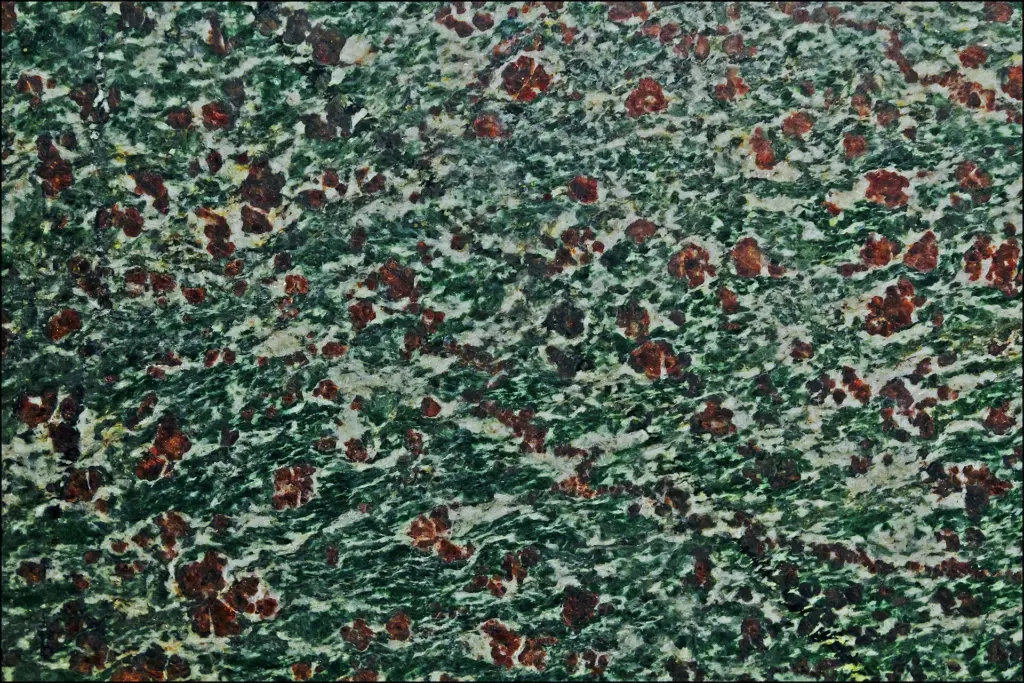
In our mental picture, mountain belts grow upward as plates crumple. At depth, the opposite can start the clock. When continents collide, the crust can thicken to 60–80 kilometers, and its lowest 20–30 kilometers can turn into eclogite—a high‑pressure rock that ends up denser than the lithosphere it sits in. That density contrast is small on paper but enormous in consequence over millions of years.
You can think of it like a denser plug embedded in a raft. If the plug grows heavy enough, it can drag the raft downward. The analogy breaks down because the Earth is hot and viscous: rocks creep, layers have their own buoyancies, and what fails isn’t a rigid dunk but a slow instability that can rearrange hundreds of kilometers of the deep lithosphere.
What the ITU team actually varied: shape and density
To probe the mechanics, the researchers tested two end‑member shapes inspired by fast seismic anomalies beneath major ranges: a thick, compact eclogite body 25 km (16 miles) thick and 100 km (62 miles) wide, and a thin, broad one 10 km (6 miles) thick and 250 km (155 miles) wide. They then swept through density contrasts between the dense eclogite and the lithosphere below it.
Two thresholds frame the story. When the eclogite was at most 70 kg/m³—about 2%—denser than the underlying lithosphere, nothing sank. For the thick, compact body, dripping only appeared at contrasts of 130 kg/m³, about 4%, and above. Those numbers are not universal cutoffs, but in the models they mark the divide between a stable root and one that can start to peel away.
Small percentages, big consequences
A 2–4% density excess does not sound like much. In rock, it is decisive. The team emphasized how little extra weight is needed to tip the balance: up to 70 kg in every cubic meter leaves the base of the continent intact; add roughly another 60 kg/m³ and the compact root can tug the lithosphere downward.
This is why eclogite matters. It’s not that the entire lower lithosphere turns to stone‑lead; it’s that a relatively modest densification in the lowest tens of kilometers can be enough to change the force budget from neutral to sinking. The thin, broad geometry was also tested, but the dripping thresholds reported by the team pertain to the thick, compact case.
Geologic time keeps score in pulses
If deep roots do fail, the surface may record it in fits and starts rather than as a single grand event. Volcanic records in some arcs show activity in pulses roughly 10–30 million years apart. In at least one well‑studied region, researchers have documented two magmatic stages over the past 20 million years.
Those numbers don’t prove the cause by themselves, but they set a tempo any deep‑Earth mechanism must match. The ITU team’s focus on small density steps and realistic geometries provides one such clock to compare against field histories.
Where to look on the map
The findings bear on three places where lithospheric removal has been proposed: the central Andes, California’s southern Sierra Nevada, and Tibet. Each has thickened crust, and each has hints—structural or magmatic—that something more than simple uplift has shaped its evolution over millions of years. The new thresholds and geometries give geologists a way to ask, in each case, whether a dense root could plausibly have helped pull the base downward.
The deeper cut
For the rock‑physically inclined: why 70 vs. 130 kg/m³ matters
The contrasts the team reports, 70 and 130 kg/m³, are small compared with absolute lithospheric densities (~3,000 kg/m³), but buoyancy depends on differences, not absolutes. A negatively buoyant inclusion must overcome both the viscous resistance of the surrounding mantle lithosphere and any net buoyancy of compositionally depleted keels. In 2D Stokes flow, the growth rate of a downwelling scales with Δρ·g·h/η, where Δρ is the density excess, g gravity, h a characteristic thickness, and η effective viscosity. Holding η and h fixed, doubling Δρ roughly doubles the driving stress; if the system sits near marginal stability, that extra ~60 kg/m³ is enough to shift it from decaying perturbations to growing downwellings. Geometry enters because a compact body concentrates stress and reduces the lateral length scale over which the surrounding material must deform; a thin, wide body spreads the load and increases the viscous penalty. None of this fixes an Earth value for η or h, which is why the study treats the 70 and 130 kg/m³ numbers as model limits rather than universal thresholds.
What we still can’t say yet
The models described by the researchers are two‑dimensional and do not simulate melting. That choice keeps the physics tractable but means the work does not directly calculate how magmas would respond as a drip develops. It also leaves open how fully three‑dimensional geometries might change the exact thresholds reported.
As Dr. Oğuz Hakan Göğüş of the Eurasia Institute of Earth Sciences at ITU put it, “Processes far beneath the surface shape how mountain belts and volcanic regions evolve over millions of years.” Pinning down those processes will mean checking the model’s density‑and‑shape rules against rocks and structures in the field.
How a drip can end a mountain’s deep root
Put the pieces together and the picture is spare but powerful. Crust grows thick; part of its base densifies into eclogite; if that dense root is compact and exceeds about a 4% density excess, it can start to peel the base of the lithosphere downward. If it does not, even a mountain‑scale root can persist—stable, heavy, but stuck in place for geologic time.
The paper: Eclogite Induced Lithospheric Drips: Implications for the Removal of the Lithosphere at Magmatic Arcs and Orogens (Terra Nova, 2025)
Sources: What makes rock deep beneath continents break away and sink? (phys.org)
Images: Cover: Rapidavocado / Wikimedia Commons (CC BY-SA 4.0); Figure 1: dun_deagh / Wikimedia Commons (CC BY-SA 2.0)
How this article was made: Everyman Science uses AI tools to structure, format and optimise its articles, and occasionally to produce illustrations where no free photograph exists. The reporting these articles are based on is human-produced and cited above. Spotted an error? Write to [email protected] and we will correct it. — The editors How we work.





Science desk team of Everyman Science, curating and reporting on the day’s most significant developments in research, space exploration, and technology.