Total Solar Eclipse 2026: A Celestial Spectacle Across the Northern Sky
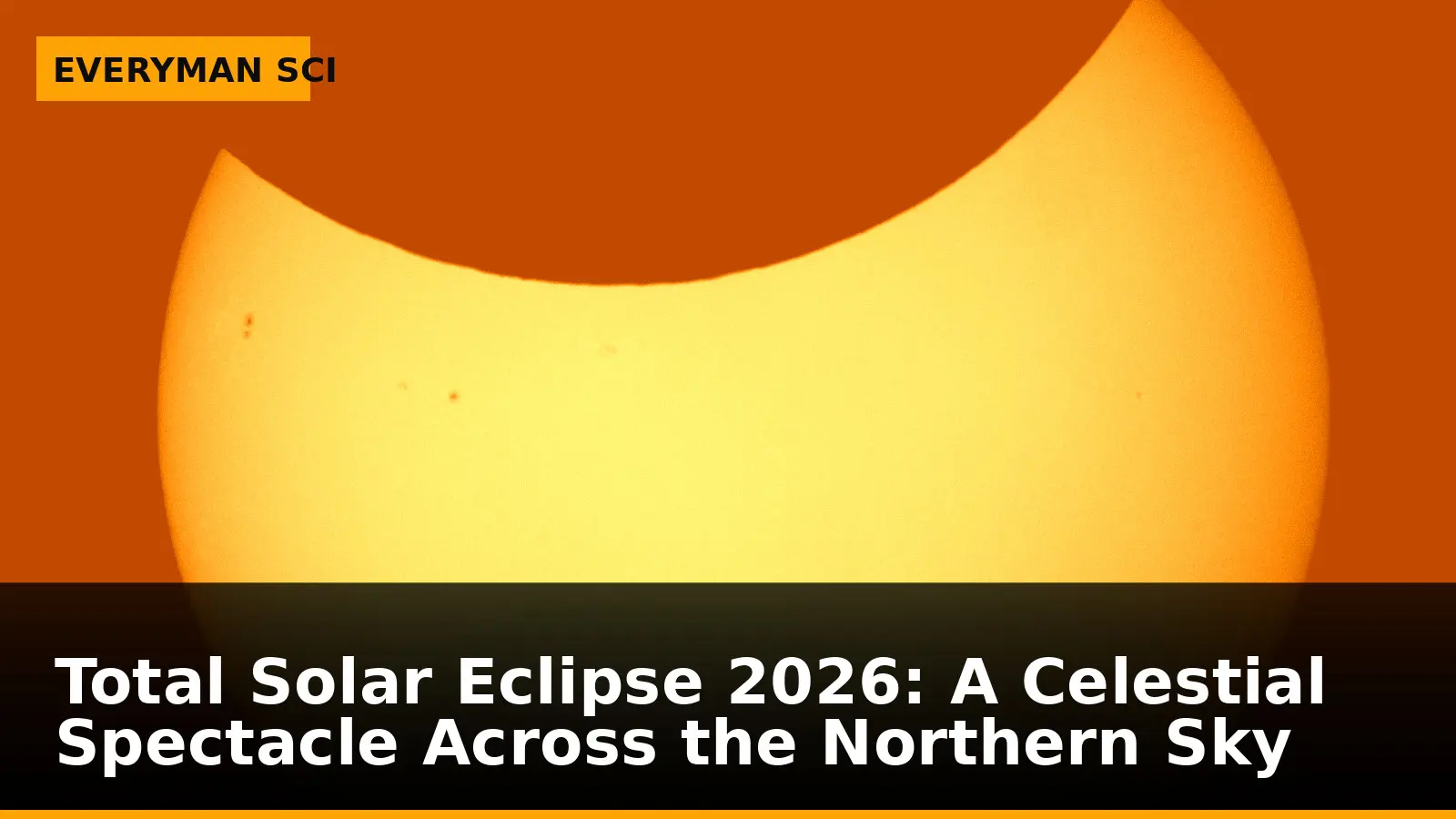
Imagine standing on the rugged coastline of Greenland, with the icy winds brushing against your face as the world around you dims. On August 12, 2026, a celestial event unfolded, captivating millions across the globe—a total solar eclipse. This natural phenomenon occurs when the Moon passes directly between the Earth and the Sun, casting a shadow that momentarily turns day into night. The path of totality, where the eclipse could be observed in its full glory, stretched from the Arctic Ocean, across Greenland, Iceland, and into parts of Europe, including Portugal and Spain.
The Path of Totality: A Journey Across the Sky
The 2026 total solar eclipse began its journey over the Arctic Ocean, with the Moon’s shadow sweeping across Greenland’s eastern coast. Observers stationed along Rype Fjord were among the first to witness the Moon’s umbra, or shadow, as it touched the Earth. This shadow then raced across Iceland, painting the skies with a surreal darkness. As it moved across the Atlantic, the eclipse path reached the Iberian Peninsula, offering a breathtaking spectacle to skywatchers in parts of Portugal and northern Spain. In Spain, areas like San Millán de los Caballeros became prime viewing spots, where the Sun’s corona, the outer atmosphere, was visible in a halo of light around the Moon.
The Science Behind the Eclipse: A Dance of Shadows
A solar eclipse is a cosmic ballet of celestial bodies. When the Moon aligns perfectly between the Earth and the Sun, it casts two types of shadows: the penumbra and the umbra. The penumbra is the lighter outer shadow, where a partial eclipse is visible. The umbra is the darker, inner shadow, creating the spectacle of a total eclipse for those within its narrow path. This alignment is rare, as the Moon’s orbit is tilted relative to Earth’s, making total eclipses less frequent than partial ones. For a few precious minutes, those in the path of totality experience a profound darkness, as if night has fallen in the middle of the day.
Eclipse Chasers: A Global Community
Eclipse chasers, or umbraphiles, are enthusiasts who travel the world to witness these fleeting moments of cosmic alignment. For many, the 2026 eclipse was a must-see event, drawing travelers to remote locations like Greenland and Iceland. These chasers often plan their trips years in advance, meticulously calculating the best spots to experience totality. The allure lies not only in the visual spectacle but also in the shared experience with fellow enthusiasts, fostering a sense of global community. For some, it’s an opportunity to engage in citizen science, contributing data on eclipse effects on local wildlife and atmospheric conditions.
Impacts on Science and Culture
Solar eclipses have long captured human imagination, influencing both science and culture. Historically, they were seen as omens, often sparking fear and awe. Today, they serve as valuable opportunities for scientific research. During totality, astronomers study the Sun’s corona, which is usually obscured by the Sun’s bright light. This research can provide insights into solar activity and its effects on Earth, such as solar flares and geomagnetic storms. Culturally, eclipses inspire art, literature, and folklore, reflecting humanity’s enduring fascination with the cosmos.
Looking Ahead: Future Eclipses and Their Significance
As the shadow of the 2026 eclipse fades, anticipation builds for future solar eclipses. Each event offers unique opportunities for scientific discovery and cultural reflection. The next total solar eclipse will occur on August 23, 2027, visible across parts of the Arctic and Europe. These celestial occurrences remind us of our place in the universe, encouraging both scientific inquiry and a deeper appreciation for the natural world. As we look to the skies, eclipses continue to connect us across time and space, uniting us in our shared wonder of the cosmos.
Sources: NASA, ESA, Space.com
Images: Cover: Everyman Science (illustration)





Science desk team of Everyman Science, curating and reporting on the day’s most significant developments in research, space exploration, and technology.