Hydrogen and helium reionize together—for the first time—in a 1.6‑billion‑light‑year simulation
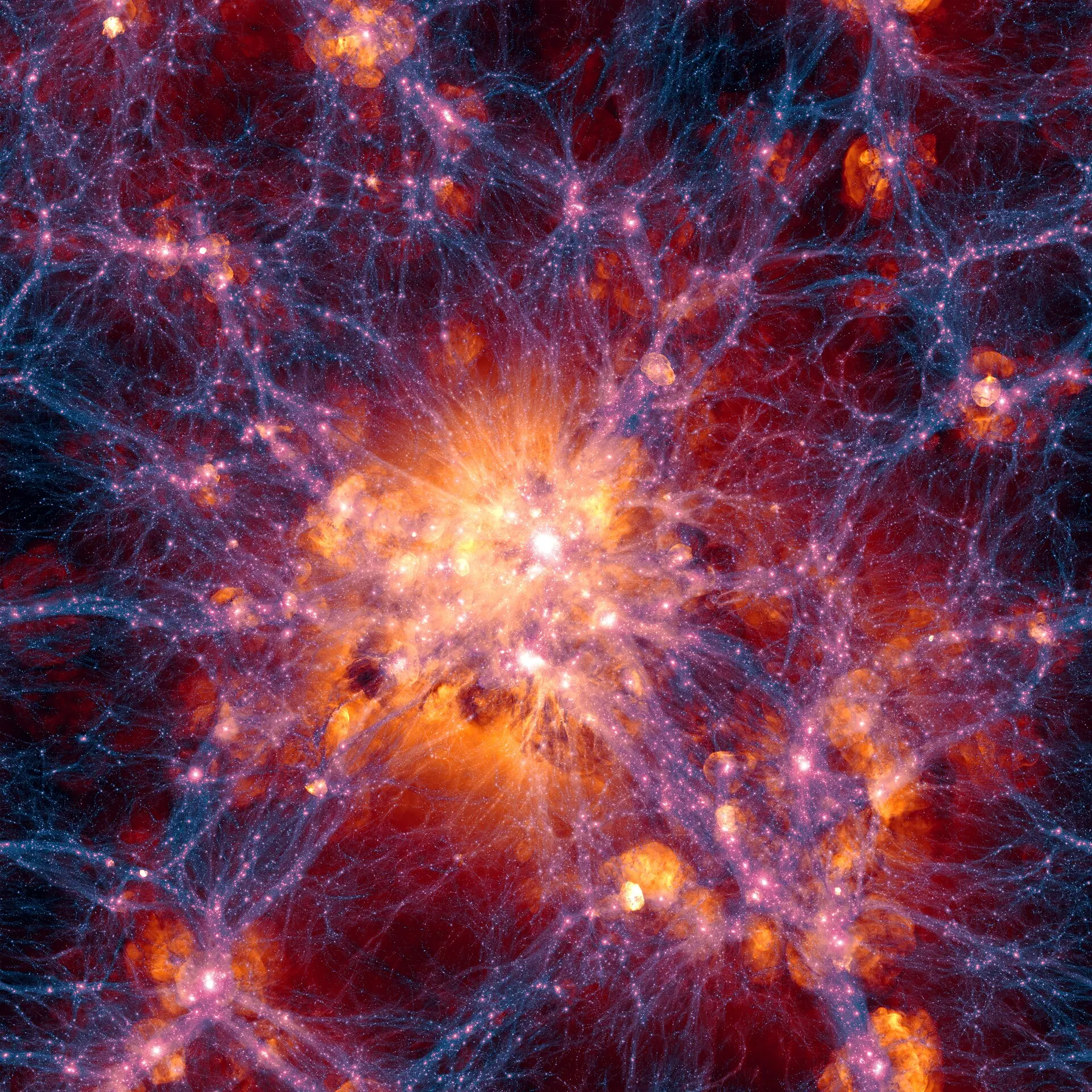
Picture a cube of space so large that a beam of light would need roughly 1.6 billion years to cross it. Now shrink that immensity onto silicon and let it run from the universe’s first tens of millions of years through its next two billion. That is the audacious premise of Lumina, a new cosmological simulation developed by researchers at MIT, Harvard University, and other institutions and reported via Monthly Notices of the Royal Astronomical Society.
Lumina starts its clock about 45 million years after the Big Bang and rolls forward for 2 billion years. Within that span, it aims squarely at a long‑standing target in cosmology: the era when the first sources of light fundamentally changed the state of the universe’s gas. Crucially, the team says Lumina is the first to capture hydrogen reionization and helium reionization together, in one consistent computational universe.
A volume big enough to be fair—and fine enough to be useful
The simulated region measures 500 megaparsecs on a side—about 1.6 billion light‑years. That sheer size matters for a basic reason: a bigger patch of universe better represents the average cosmos. At the same time, Lumina carves that volume into approximately half a trillion individual elements, pushing detail to a level that the team reports is roughly 30 times the resolution of IllustrisTNG.
Mark Vogelsberger of MIT underscores the leap in scale, describing Lumina’s domain as “100 times larger than previous best simulations.” It is rare for a project to expand both volume and resolution at once; usually one gives. Here, both move dramatically in the same direction.
From first light to a transparent cosmos
Reionization is cosmology’s great phase change. Hydrogen reionization and helium reionization each mark the moment when once‑neutral atoms had their electrons stripped away by radiation. According to the researchers, Lumina is the first simulation to capture both of these processes together, letting them play out across a single, self‑consistent early universe.
That matters because reionization is not simply a local story. It links the small—the birth of galaxies—to the vast—the changing state of intergalactic gas across hundreds of millions of light‑years. Lumina’s design is built around that link: big enough to follow the global transformation, detailed enough to resolve where the radiation came from.
What changed under the hood: power and parallelism
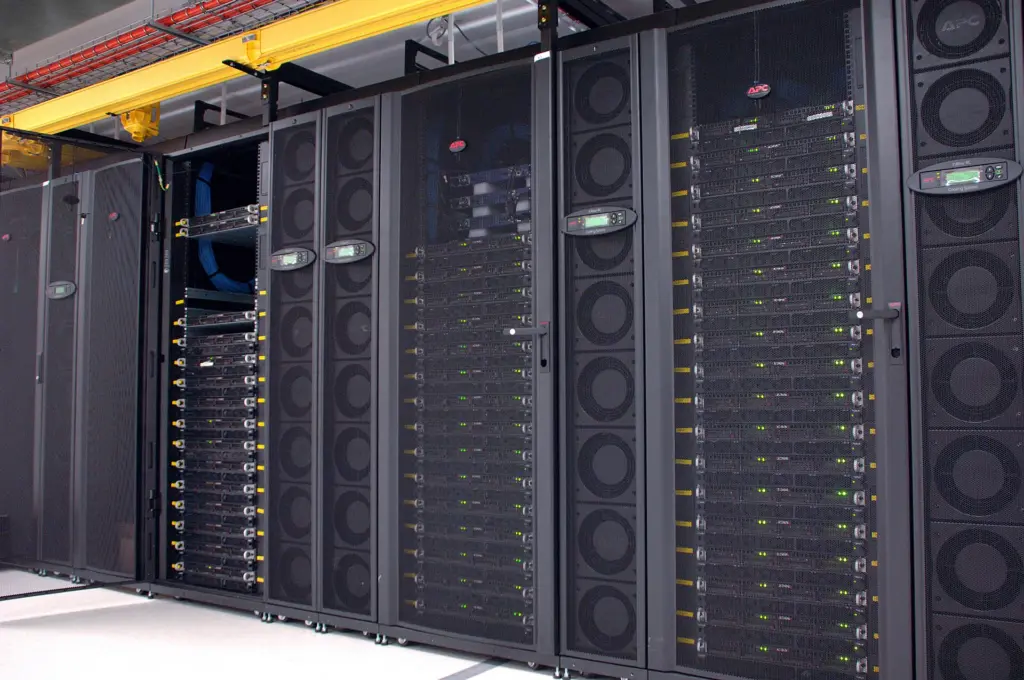
Recreating billions of years of interactions across so many elements demands enormous computing power. “At peak scale, the calculation brings together the equivalent of more than 100,000 CPU cores and around 15,000 GPUs,” says Xuejian (Jacob) Shen of MIT. The practical challenge isn’t only raw speed; it’s forcing all those processors to communicate fast enough to evolve a single, coherent universe.
That parallelism is what turns “half a trillion elements” from a brag into a tool. With enough synchronized hardware, the simulation can advance matter and radiation together, step by step, rather than treating one as an afterthought bolted onto the other.
Why coupling hydrogen and helium reionization in one box matters
Treating hydrogen and helium reionization in a single framework closes a gap that has long complicated comparisons and cross‑checks. If both phase changes unfold in the same synthetic cosmos, the knock‑on effects they have on one another—and on the growth of structure—can be tracked consistently rather than guessed at across separate runs.
The result is a sandbox where galaxy‑scale events and cosmic‑scale consequences coexist. That coexistence is the point: the same run that resolves the birthplaces of light can also track the reach of that light across a 500‑megaparsec canvas.
The deeper cut
How big is 500 megaparsecs, dynamically?
Five hundred megaparsecs is about 1.6 billion light‑years—large enough to include many independent patches of the early cosmic web. In practice, that reduces sample variance when you measure a spatially patchy process like reionization: ionized “bubbles” percolate over tens to hundreds of megaparsecs, so a box only a few hundred megaparsecs across risks mistaking a local fluctuation for the global average. Pushing to 500 Mpc brings multiple such percolation patches into one domain. The tradeoff has always been resolution: you need to resolve the sources that drive the phase change while not under‑resolving the intergalactic medium those photons traverse. Reporting roughly 30× the resolution of IllustrisTNG within this 500‑Mpc volume implies far more elements per linear dimension. With approximately half a trillion elements, the Nyquist limit for structures you can meaningfully follow drops correspondingly, making it feasible to address both galaxy assembly and the topology of reionization in a single, statistically fair volume.
The piece we still don’t have
Two things are established here: the scale—500 megaparsecs, about 1.6 billion light‑years—and the scope—2 billion years from roughly 45 million years after the Big Bang, with both hydrogen and helium reionization modeled together. What is not detailed here are the specific modeling choices that set the exact timing and geography of those phase changes, or how sensitive those outcomes are to assumptions within the code.
That is not a knock on the result; it simply marks the open ground. The claim that both reionization processes appear together in one run is the headline achievement. The fine print—what shifts if you tweak inputs—is where future scrutiny will do its work.
A platform built to be tested
Scale and scope invite confrontation with reality. By reaching a volume that is, as Vogelsberger puts it, 100 times larger than previous best simulations, and by driving resolution far beyond a widely used predecessor, Lumina puts many predictions on the table at once. That is exactly what a field needs when it wants to stress‑test a story about how the early universe changed state.
For now, the takeaway is straightforward. Lumina begins at about 45 million years, runs for 2 billion years, spans 500 megaparsecs (about 1.6 billion light‑years), and packs in around half a trillion elements. It is, the researchers say, the first to let hydrogen and helium reionization unfold together—on hardware muscle that, at peak, rallied more than 100,000 CPU cores alongside about 15,000 GPUs.
Related research: Introducing the
<scp>lumina</scp>
project: large-volume radiation-hydrodynamic simulations of the epochs of hydrogen and helium reionization (Monthly Notices of the Royal Astronomical Society, 2026)
Sources: A massive new simulation reveals how the universe emerged from darkness (www.sciencedaily.com)
Images: Cover: Illustris Collaboration / Wikimedia Commons (CC BY 4.0); Figure 1: NASA's Scientific Visualization Studio – NASA/ESA/CSA/Bezanson et al. 2024 and W / Wikimedia Commons; Figure 2: division, CSIRO / Wikimedia Commons (CC BY 3.0)
How this article was made: Everyman Science uses AI tools to structure, format and optimise its articles, and occasionally to produce illustrations where no free photograph exists. The reporting these articles are based on is human-produced and cited above. Spotted an error? Write to [email protected] and we will correct it. — The editors How we work.





Science desk team of Everyman Science, curating and reporting on the day’s most significant developments in research, space exploration, and technology.