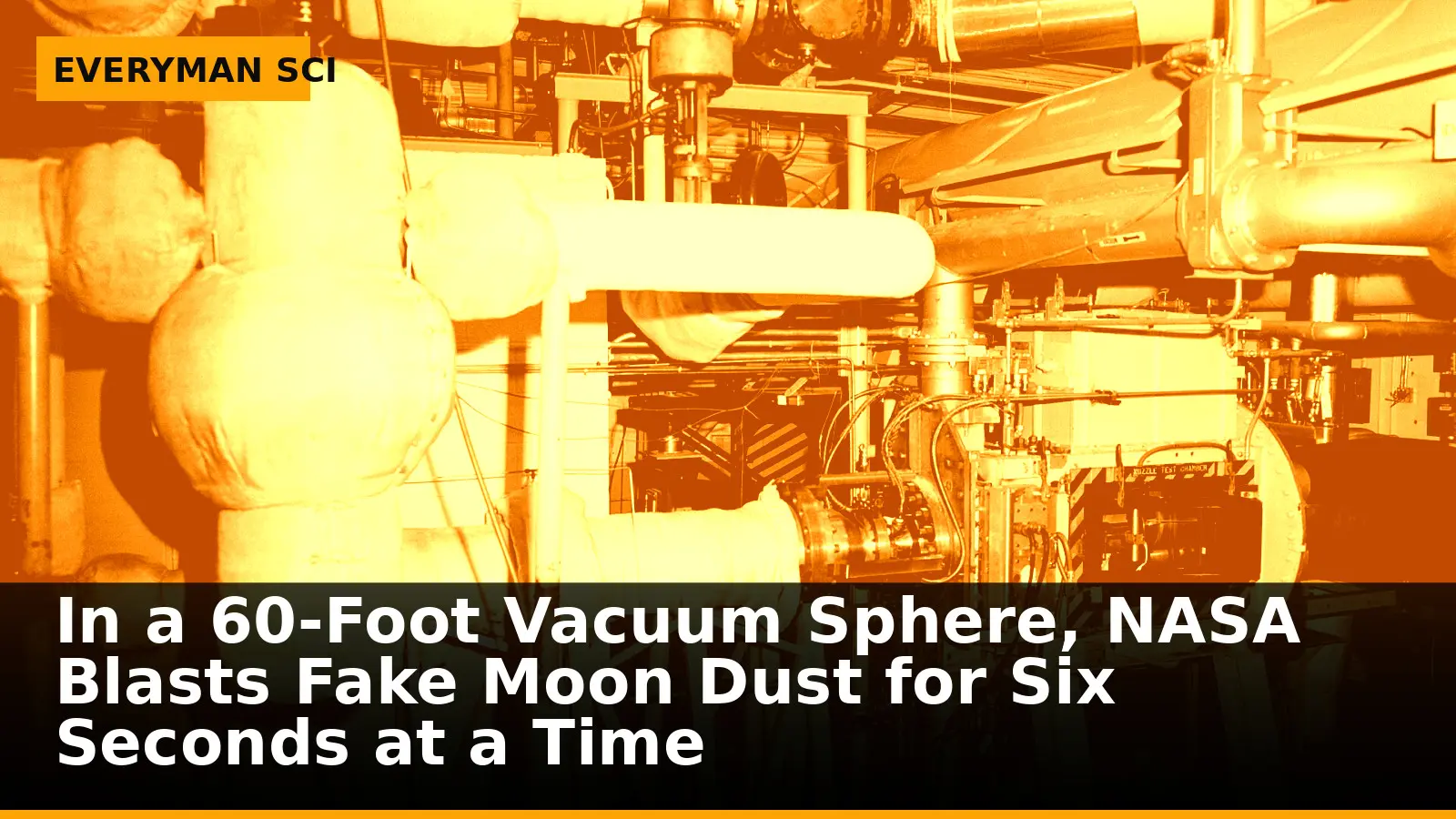
In a 60‑Foot Vacuum Sphere, NASA Blasts Fake Moon Dust for Six Seconds at a Time
Picture a house-sized steel globe gone silent. Inside, a bin of razor-edged lunar look‑alike dust waits under vacuum. A test team counts down, a valve snaps open, and for six seconds a rocket‑sized blast slams into the soil. Grains erupt, carve a crater, and streak outward—a miniature dress rehearsal for the real thing: engines meeting the Moon.
NASA has begun running these plume–surface interaction tests in a 60‑foot spherical vacuum chamber at its Langley Research Center. The timing isn’t decorative. NASA plans to start sending crews back to the Moon with Artemis IV in 2028, and knowing exactly how landing plumes move dust and rocks is part of making those touchdowns routine rather than risky.
Why talk about this now?
The space agency has kicked off a new test campaign to pin down what rocket exhaust does to dusty, airless ground. That’s not a trivia question; it’s a design input. “This test campaign is one of the most flight‑relevant and highly instrumented plume‑surface interaction test series NASA has ever conducted,” said Daniel Stubbs of NASA’s Human Landing Systems plume and aero environments team. He added that data from Langley “will be critical in developing and validating models to predict the effects of plume‑surface interaction for landing on the Moon and even Mars, ensuring mission success for the human landing systems and the safety of our astronauts.”
Your mental model, upgraded: a leaf blower on the Moon
If you’ve ever watched a leaf blower carve a trench in a sandbox, you have the right intuition: fast gas pushes grains, grains push other grains, and a crater grows while debris fans outward. That analogy breaks in two important ways on the Moon. First, there’s no air to buffer or slow anything, so exhaust jets stay tightly focused and particles don’t drift—they’re flung on ballistic arcs. Second, lunar soil is famously jagged and cohesive, so it can clump and resist motion differently from rounded beach sand.
How NASA is recreating a landing, safely small
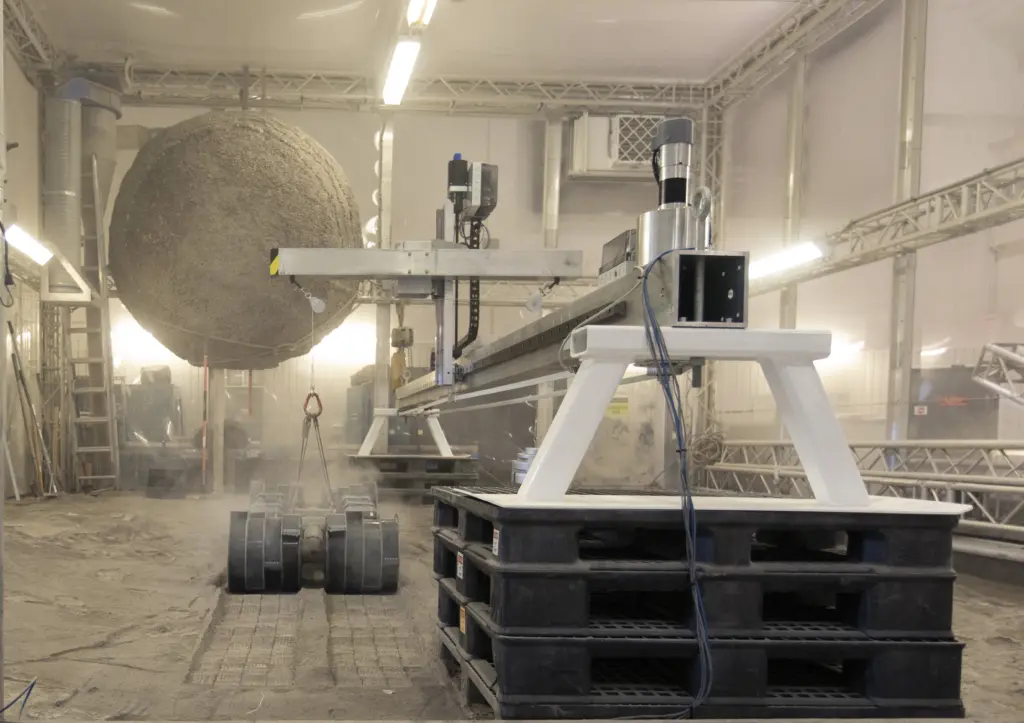
The Langley setup is deliberately subscale and controllable. One system—a compact ethane plume simulator—can deliver about 100 pounds of thrust, a convenient benchmark because it’s about the force needed to support a 100‑pound person. The team fires it into a bin roughly six‑and‑a‑half feet across and a foot deep filled with lunar regolith simulant. Each run lasts about six seconds, long enough to start a crater and eject a measurable sheet of material without turning the testbed into confetti.
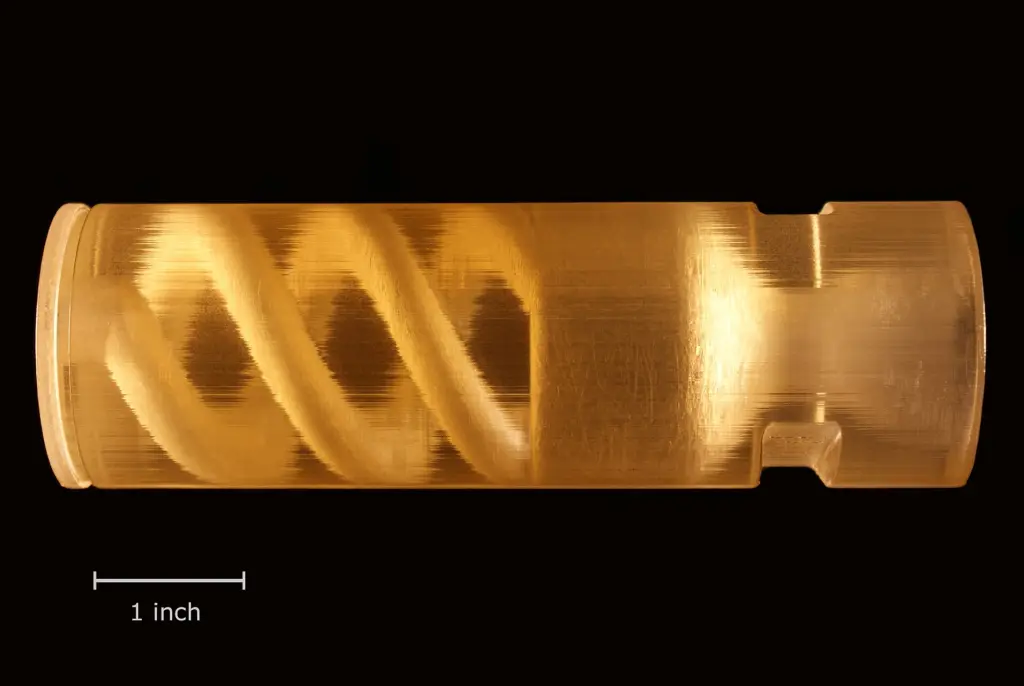
A second act comes later: a 14‑inch, 3D‑printed hybrid rocket motor that produces around 35 pounds of thrust. By varying the engine type and test height, engineers can sweep a range of jet temperatures, flow structures, and stand‑off distances that mimic different lander sizes and operating conditions—without ever leaving the chamber.
What, exactly, are they after?
Two things: trustworthy numbers and trustworthy models. Tests like these are built to be “highly instrumented,” as Stubbs put it, because the raw data—how quickly a crater grows, how far ejecta travels, what fraction of grains go high versus hug the surface—are the yardsticks that simulation codes must hit. Once a model can reproduce the chamber, that same model can be run for a full‑size lander and a real landing site.
Why two different thrusters instead of one big one?
Because plume physics depends on more than thrust alone. A cold, inert plume that mainly shoves grains tests momentum transfer; a hot, reactive plume adds effects like grain heating and different shock structures. Using both lets NASA probe the corners of the problem space while keeping forces small and durations short enough for repeatable, safe runs. The modular rig also matters beyond the Moon: NASA notes the setup can be reconfigured for Mars by swapping the soil simulant and adjusting chamber pressure.
The deeper cut
Scaling from a six‑second blast to a real landing
Predicting full‑scale outcomes from subscale tests leans on nondimensional groups. At the grain scale, the Shields parameter compares shear stress from the impinging jet to the weight and cohesion of particles; on the Moon, cohesion and particle angularity can keep Shields critical higher than on Earth sand, delaying motion until stress spikes under the jet core. Gas dynamics straddle regimes: lunar landings operate at high Mach and, near the surface, can approach transitional Knudsen numbers as exhaust expands into near‑vacuum. That changes how shocks reflect off the ground and how momentum diffuses into the top millimeters of soil. Crater growth often follows self‑similar laws—radius ∝ t^n—until the jet lifts off its own crater lip and the flow reattaches. Matching this demands similarity in jet stand‑off height, momentum flux q = ρV^2, and particle Froude number Fr_p = U/√(gd) to keep ejecta arcs scalable. Using two thrusters with different plume temperatures and compositions helps bound uncertainties in regimes where continuum assumptions start to fray and cohesion dominates. Instrumentation that resolves ejecta angle distributions and transient crater profiles is the check: if CFD plus DEM reproduces those, confidence in extrapolation goes up.
What happens if engineers get this wrong?
Plume–surface interaction isn’t a side issue; it is part of landing system design. Misjudge it and you can misplace a lander’s margins and operations plan. NASA’s approach—short, repeatable runs across a range of conditions in a vacuum sphere—puts numbers behind those judgments before crews and hardware have to trust them.
One box we can’t tick yet
These are subscale, six‑second experiments, by design. The point is to feed and check predictive models that will describe full‑scale touchdowns. Until those models are validated against the complete set of test conditions NASA is now gathering at Langley, the precise, landing‑specific answers people want—how deep, how far, how fast—remain in the “to be computed” column.
Beyond the Moon, by design
NASA describes the entire operation as modular, so the same rig can be tuned for Mars. Swap in a Mars‑like soil simulant, rebolt instruments and hardware, and set the chamber to a Mars‑equivalent pressure; the result is a Mars landing problem studied with the same discipline. That continuity is the point of a facility investment: learn once, apply twice.
Sources: NASA Begins Moon Mission Plume-Surface Interaction Tests (www.nasa.gov)
Images: Cover: Everyman Science (illustration); Figure 1: Matt Steiner and Kees08 / Wikimedia Commons (CC BY-SA 4.0); Figure 2: NASA/Kim Shiflett
How this article was made: Everyman Science uses AI tools to structure, format and optimise its articles, and occasionally to produce illustrations where no free photograph exists. The reporting these articles are based on is human-produced and cited above. Spotted an error? Write to [email protected] and we will correct it. — The editors How we work.





Science desk team of Everyman Science, curating and reporting on the day’s most significant developments in research, space exploration, and technology.