At 7:26 a.m., Roman lifted off—30 days to L2 and a survey 1,000 times faster than Hubble
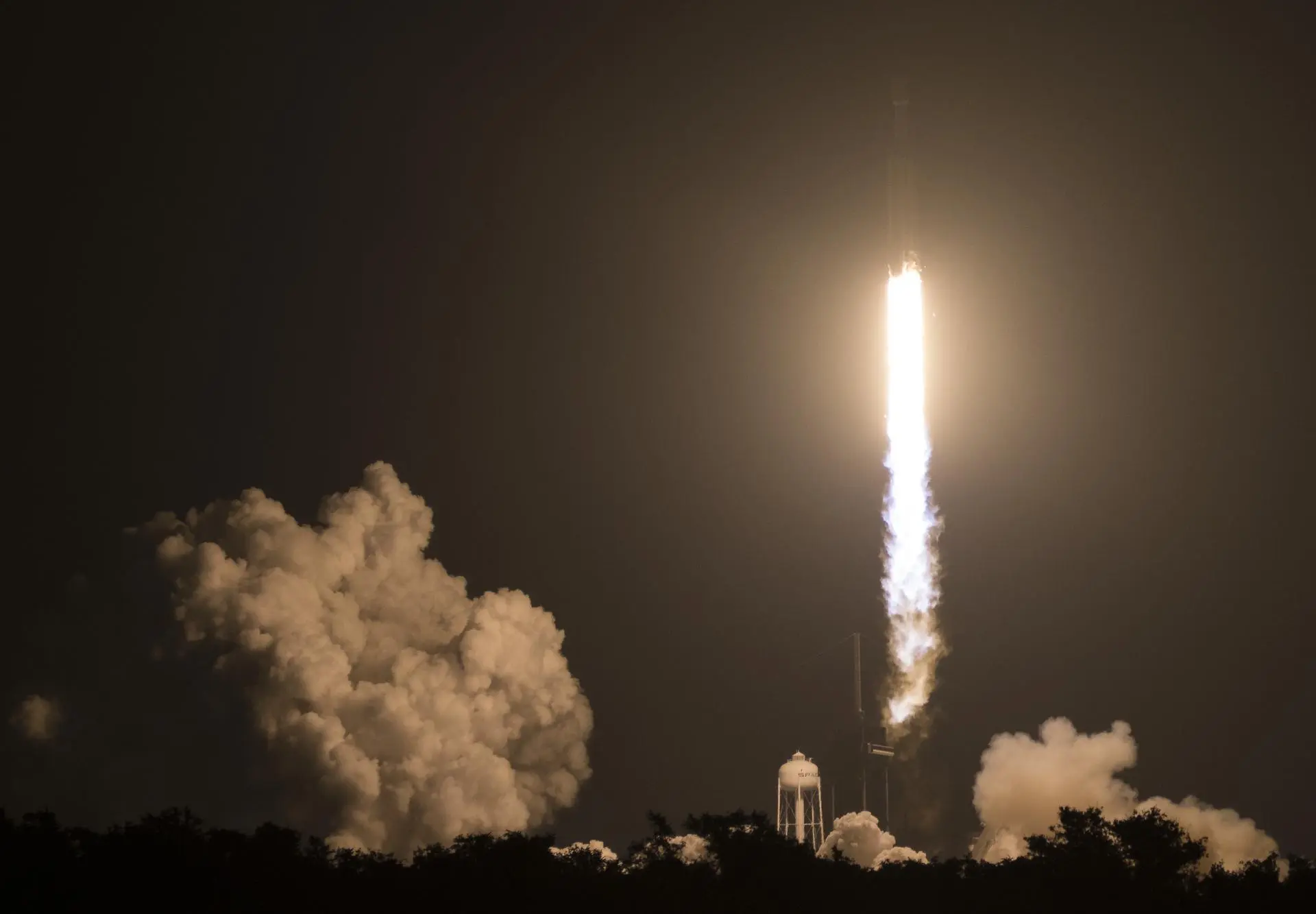
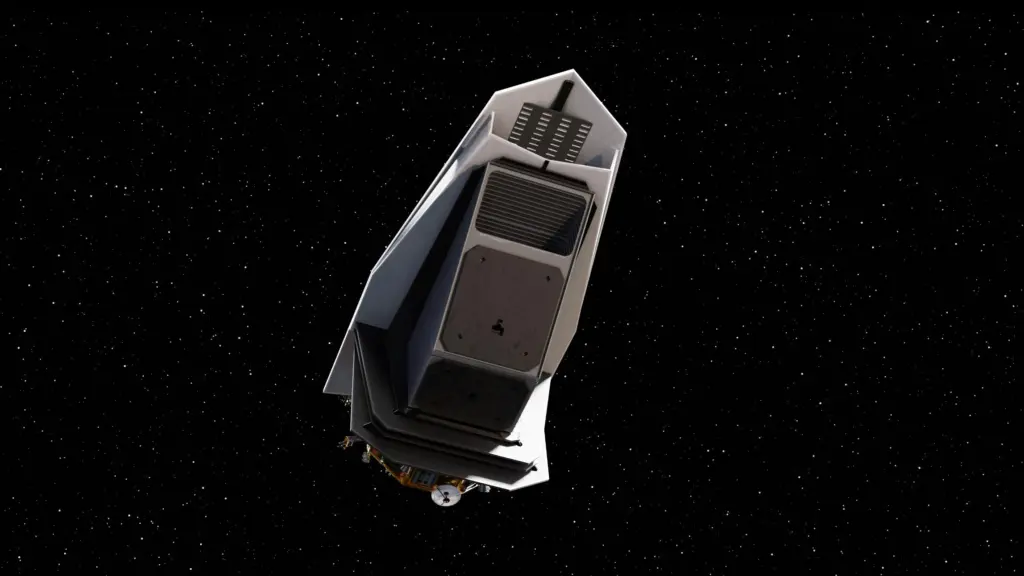
At 7:26 a.m. EDT on a late-August morning, a SpaceX Falcon Heavy rose from Florida carrying a telescope built to change the pace of astronomy. NASA’s Nancy Grace Roman Space Telescope cleared the pad on Aug. 30, 2026, beginning a mission designed to map the universe far faster than any of its predecessors.
Its destination is not a quick loop around Earth. NASA says Roman has begun a roughly three‑month journey covering about a million miles, the long road to settle into the quiet of deep space before science can begin.
A long cruise to a precise perch
The first milestone is distance. According to NASA, reported via Space.com, Roman will take about 30 days to fly out to the Sun–Earth L2 region and enter its looping orbit there. That is the first third of a commissioning phase that will stretch to roughly three months as teams switch on, check and calibrate the observatory.
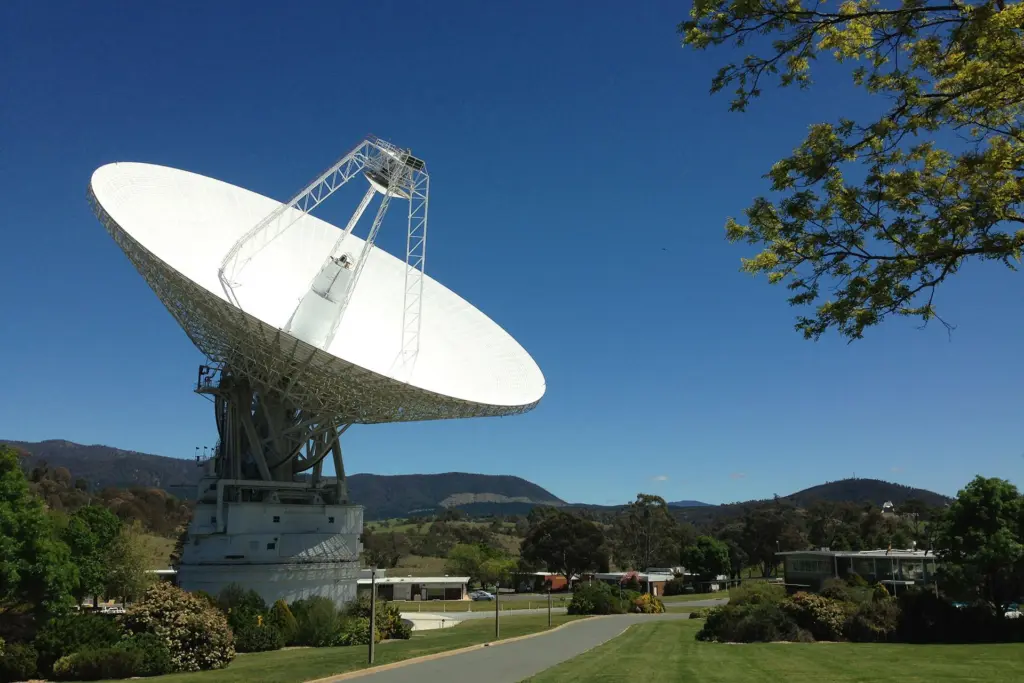
Even the handshakes are choreographed. NASA says the spacecraft’s first contact passes through the Canberra Deep Space Communication Complex in Australia, the first hop on a deep-space relay that will keep Roman talking to Earth as it settles in.
Built for speed, not just sharpness
Roman’s promise is volume. NASA describes it as a surveyor of billions of stars and galaxies, designed to sweep huge slices of sky. The agency also says the telescope is built to survey the universe about 1,000 times faster than the Hubble Space Telescope.
That speed is not an abstraction. In practice, it means questions that once took years of pointed observations can be turned into statistical studies across vast populations—raw material for testing ideas about dark energy and finding distant worlds orbiting other stars.
Commissioning is where the tension lives
The romance of launch fades quickly into procedure. Over weeks, Roman’s systems must demonstrate that they can point, hold steady, and hand back clean data. NASA has set that commissioning span at about three months as the observatory cruises roughly a million miles outward.
Nothing about that calendar is guaranteed. Commissioning is where tiny misalignments and subtle temperature swings reveal themselves; it is also where they are corrected, methodically, before the first science images are taken.
Billions of targets, terabytes a day
If Roman delivers on its design, the firehose will open wide. NASA says the telescope will transmit about 1.4 terabytes of data to Earth every day—an unprecedented daily haul for a NASA astrophysics mission.
That volume, coupled with a survey built to include billions of stars and galaxies, sets expectations for discovery and the workload to get there. Catalogs will swell; pipelines must keep up. The payoff, if the planning holds, is breadth and depth at once.
The deeper cut
Downlink reality: staging a 1.4‑TB/day sky
A sustained 1.4 terabytes per day is not just a headline number; it is an operations problem with physics attached. The link budget has to close across a changing geometry as Roman arcs outward, and the ground segment has to be in the right place at the right time. NASA notes the first communications route runs through the Canberra Deep Space Communication Complex, a practical choice for initial passes given the launch geometry and Earth’s rotation. Handovers among Deep Space Network sites are choreographed so the spacecraft is in view when it has something to say. Onboard, storage smooths over gaps; on the ground, ingest and checksum verification have to keep tempo so that the next pass is free to carry new bits rather than retries. At 1.4 TB/day sustained, a single missed contact can push hundreds of gigabytes into a backlog that competes with fresh data for downlink time. That is why commissioning matters as much to the network as to the optics: antenna pointing, high‑gain system checkout, and pass planning all mature here, or else the science timeline slips before the first dataset hits an archive.
A five-year plan, with room to hope
Roman’s formal science life is slated at five years, according to the Planetary Society as reported via Space.com. That is the commitment planners build around: five years to execute wide surveys, revisit key fields, and fold in follow-ups.
Astronomers will inevitably hope the mission outlasts its warranty. But the only promise on the table today is five years—long enough to change what population studies of galaxies and exoplanets look like if the hardware performs as designed.
Rocket milestones matter, too
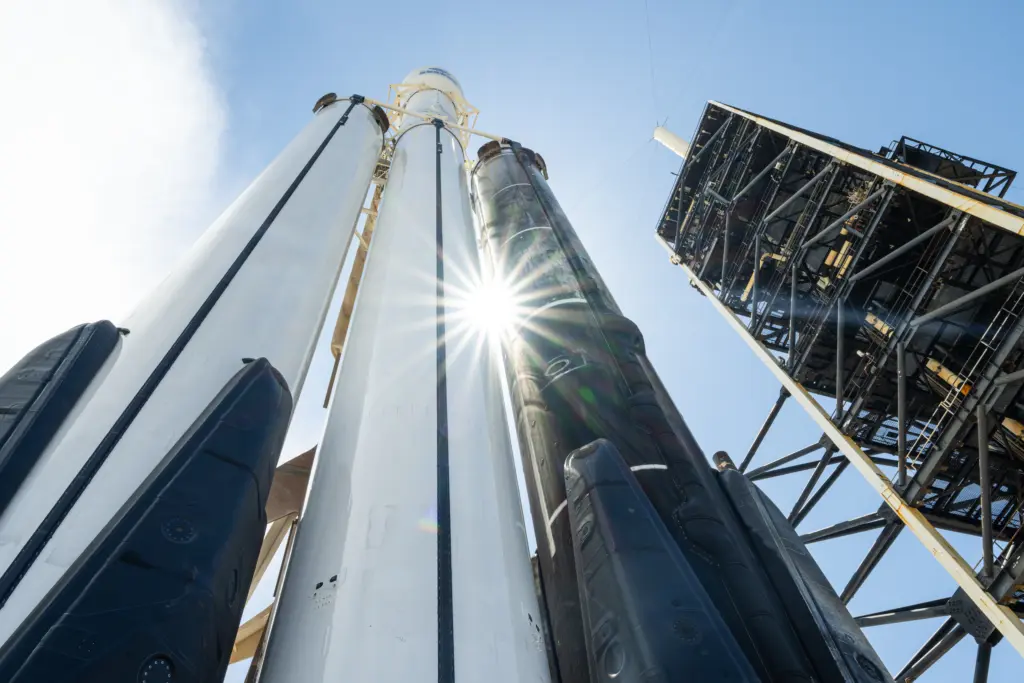
Launches write their own footnotes in rocket history. NASA notes Roman is the fourth primary NASA mission to ride a Falcon Heavy, a marker of how the heavy-lift vehicle has moved from debut to dependable option for flagship science payloads.
For Roman’s team, that reliability paid off at the very first step. A clean ascent at 7:26 a.m. EDT cleared the way for a mission whose biggest milestones now sit far from Earth.
What we don’t know yet (and that’s fine)
Roman’s science headlines are still ahead. NASA has said the mission will survey billions of stars and galaxies and is designed for a survey speed roughly 1,000 times that of Hubble, but which specific fields get observed when, and what the first images will show, are decisions and discoveries that come only after commissioning. For now, the calendar is the story: about 30 days to reach L2, about three months to check out, and five years to put those capabilities to work.
Sources: NASA’s Nancy Grace Roman Space Telescope Launches (www.nasa.gov); NASA’s Roman Space Telescope launches to reveal the Universe’s darkest secrets (www.sciencedaily.com); What's next for Roman Space Telescope? Here's how NASA's flagship observatory will open up the universe (www.space.com)
Images: Cover: NASA/Joel Kowsky; Figure 1: NASA/John Kraus; Figure 2: NASA/JPL; Figure 3: NASA/JPL
How this article was made: Everyman Science uses AI tools to structure, format and optimise its articles, and occasionally to produce illustrations where no free photograph exists. The reporting these articles are based on is human-produced and cited above. Spotted an error? Write to [email protected] and we will correct it. — The editors How we work.





Science desk team of Everyman Science, curating and reporting on the day’s most significant developments in research, space exploration, and technology.