A California hot-spring amoeba keeps dividing at 145°F
How hot can complex cells stay alive and still go about their business—eating, moving, dividing? The researchers behind today’s study asked exactly that, in the only way that really counts: by finding a eukaryote that does it.
They went looking in scalding water and came back with Incendiamoeba cascadensis, a single-celled eukaryote that holds together where biology was expected to fall apart.
What the team set out to test
NASA-supported scientists wanted to know whether any eukaryote—organisms with a nucleus and membrane-bound organelles—could truly live at temperatures long assumed to shred their delicate parts. Past work had suggested eukaryotic membranes wouldn’t stay stable above 144°F (62°C), and the record for actual replication by complex cells sat at 140°F (60°C). The new study shows both lines in the sand were too conservative.
The research, led by graduate student Beryl Rappaport, appears in Cell, with the findings published on a Tuesday. The authors argue the discovery pushes back the assumed limits for eukaryotes and hints that complex cells may be more durable than we gave them credit for.
How they did it: from hot creek to genes
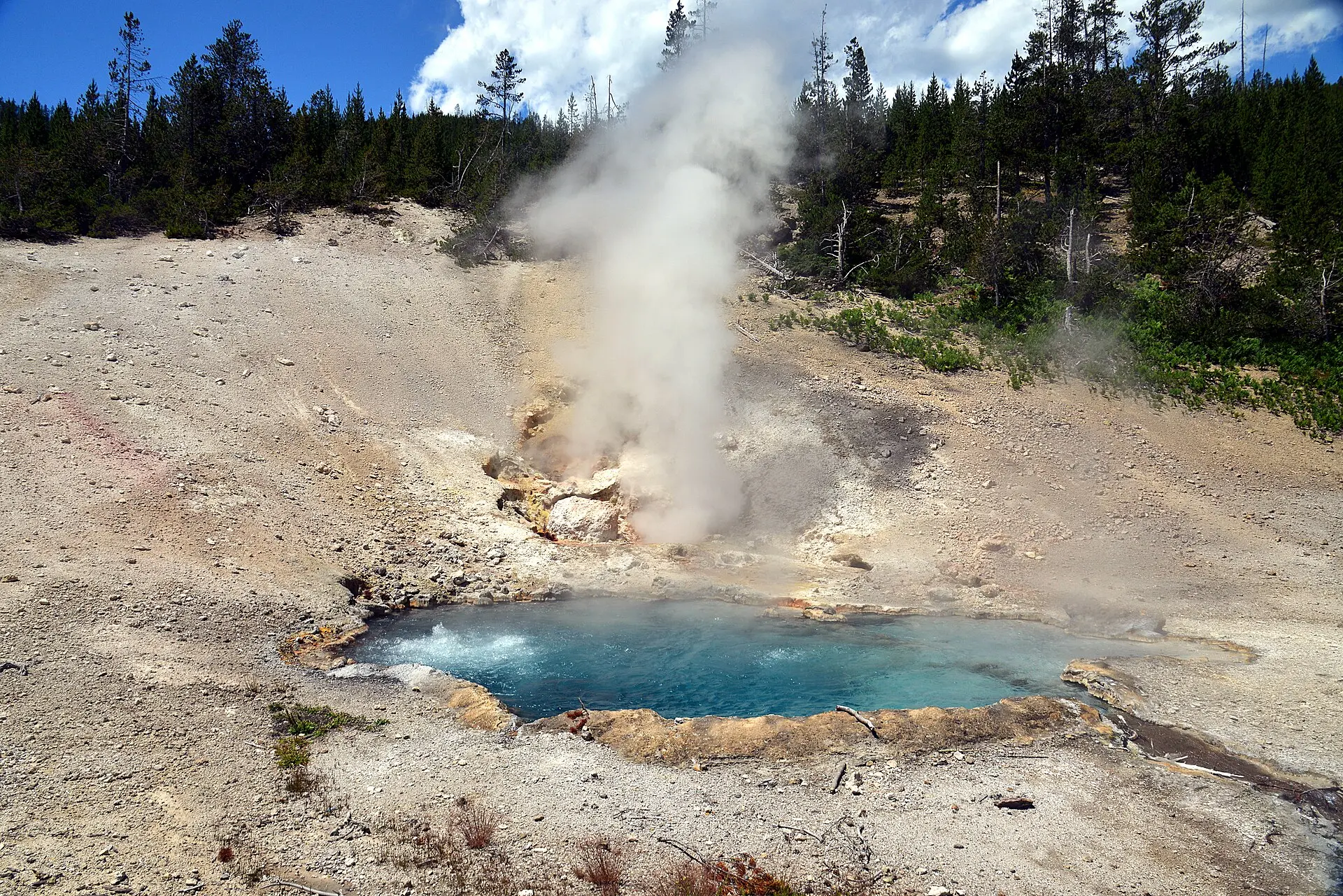
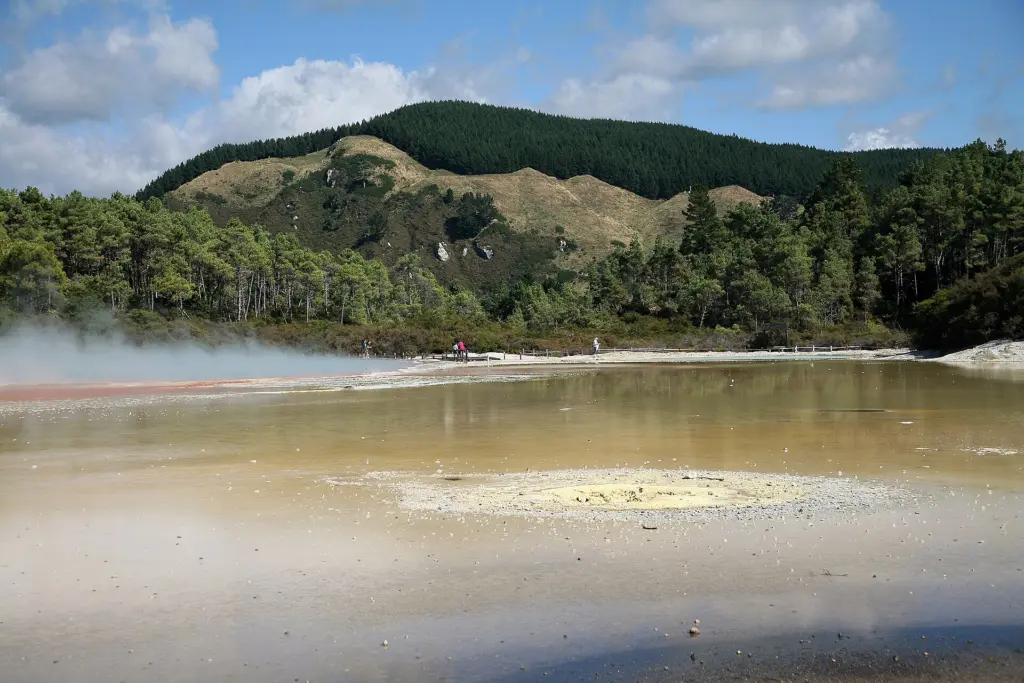
The team discovered I. cascadensis in samples collected along a tributary of Hot Springs Creek inside California’s Lassen Volcanic National Park. That is classic extremophile country: to count as truly heat-loving, an organism needs to replicate, move, eat, and survive above 113°F (45°C).
Back in the lab, the researchers sequenced the amoeba’s genome and measured which genes switched on at different temperatures. They report genes that stabilize and protect DNA and genes that sense the outside environment, with the expression of certain genes rising at higher temperatures—especially those tied to keeping proteins correctly folded. They also probed for biochemical adaptations and noted that some of the amoeba’s proteins carry a high positive surface charge.
What they found, by the numbers
I. cascadensis reproduces by division at 145°F (63°C)—a new upper temperature limit for all known eukaryotes. Above that, division stops, but the amoeba remains active: it still moves around to search for food at up to 147°F (64°C). For short spells, it tolerates even hotter: the cells recovered after being held at 158°F (70°C) and then cooled. Push to 176°F (80°C), and they did not survive.
That performance beats the previous eukaryote ceiling of 140°F (60°C) set by a few fungi and red algae. It also contradicts the suggestion that eukaryotic organelle membranes can’t remain stable above 144°F (62°C). In the authors’ words, discovering I. cascadensis proves that assumption wrong.
| Observation | Temperature (°F / °C) |
|---|---|
| True thermophile benchmark for life’s functions | 113 / 45 |
| Previous eukaryote replication limit (fungi, red algae) | 140 / 60 |
| I. cascadensis: replication (division) observed | 145 / 63 |
| I. cascadensis: active movement/searching for food | 147 / 64 |
| I. cascadensis: brief survival, then recovery on cooling | 158 / 70 |
| I. cascadensis: did not survive | 176 / 80 |
| Suggested eukaryote membrane instability threshold (disproven here) | 144 / 62 |
The genetic and protein-level clues line up with the physiology. At higher temperatures, genes involved in protein folding increased their activity, and some proteins exhibit a high positive surface charge—features Rappaport points out are also seen in thermophilic bacteria and archaea. And when the team searched global datasets, they found similar DNA fragments in geothermal samples from places like New Zealand and Yellowstone National Park, a hint that close relatives may be widespread.
Why this matters beyond one hot spring
Extremophiles—organisms that push the edges of habitability—are a reality check on our assumptions. This amoeba extends the known terrain where eukaryotes can function, suggesting complex cells might endure harsher thermal environments than we thought. NASA notes that studying such limits helps frame the search for life on other worlds, by expanding the range of conditions we consider plausible for biology.
It also has practical implications. Extremophiles are known sources of unusually robust proteins that can be useful in biotechnology and medicine. The study doesn’t claim specific applications, but the catalog of heat-stable strategies in I. cascadensis is the kind of parts list enzyme engineers read closely.
What the study can’t tell us (yet)
Two caveats come straight from the researchers. First, the field has likely overlooked hot-running eukaryotes because it assumed their membranes would fall apart; expanding searches may turn up more diversity, but until then, we have a single flagship species. Second, temperature alone is not destiny. For I. cascadensis—or anything like it—to thrive elsewhere, the environment needs the right acidity, oxygen levels, pressure, water, and food sources. As Rappaport puts it, the amoeba “could not survive on its own.”
Keep the cosmic context in view: Earth remains the only planet we know to host life. So while it could be possible for complex life like I. cascadensis to survive on another planet, any such claim will have to pass the same test this amoeba did—demonstration in place, with numbers attached.
The deeper cut
Why 62°C used to look like a wall
The oft-cited 62°C line for eukaryotes came from the expectation that their membrane systems—plasma membranes plus organelles like mitochondria and endoplasmic reticulum—would lose integrity as lipid bilayers transitioned and proteins denatured. In this study’s framing, the assumption was a shorthand for multiple coupled failures: misfolded proteins overwhelm chaperone capacity; DNA suffers heat-induced lesions; and membranes become too permeable to maintain gradients. I. cascadensis pushes through by turning up expression of protein-folding genes at high temperature and, crucially, carrying proteins with high positive surface charge. Rappaport notes similar charge-biased surfaces in thermophilic bacteria and archaea; the electrostatics reduce aggregation and can stabilize interactions at elevated kinetic energy.
The practical upshot is not that eukaryotic membranes magically stopped melting, but that the whole cellular system found a way to keep its parts within operating tolerances at 63–64°C for core functions like division and motility. The breakpoints still show up: at 70°C, only brief survival is reported—consistent with stress responses buying time rather than enabling steady-state growth—and by 80°C the system fails outright. Those turning points, bracketed by observed behavior rather than conjecture, now anchor models of eukaryotic thermotolerance.
Who did the work, and where it stands
This is NASA-supported research led by Beryl Rappaport and colleagues, reported in Cell on a Tuesday. The core claim is straightforward: the discovery of I. cascadensis sets a new upper temperature limit for eukaryotes and shows that prior membrane-stability assumptions do not universally hold.
The authors also emphasize that complex cells may be more durable than previously thought. They underscore this with both physiology (replication at 145°F, activity at 147°F, brief survival at 158°F, death at 176°F) and molecular correlates (heat-upregulated folding genes, positively charged protein surfaces). And the discovery site—a tributary of Hot Springs Creek—grounds the story in a real place any field biologist would recognize on a map.

Where to look next
The global DNA breadcrumbs matter. Finding similar pieces of DNA in geothermal samples from New Zealand and Yellowstone suggests I. cascadensis has relatives, perhaps with overlapping or even higher heat tolerances. Systematic sampling at hot springs worldwide, paired with genome sequencing and gene-expression assays, is the obvious next step.
For astrobiology, the updated heat line expands the envelope of conditions worth testing in mission designs and lab simulations. It won’t move mountains: any habitable niche still needs water, energy sources, and a supporting ecosystem. But the line now sits a few crucial degrees higher—and it was set not by speculation, but by a living eukaryote doing the things life must do.
The paper: A geothermal amoeba sets a new upper temperature limit for eukaryotes (Cell, 2026)
Related research: Cell proliferation at 122°C and isotopically heavy CH
<sub>4</sub>
production by a hyperthermophilic methanogen under high-pressure cultivation (Proceedings of the National Academy of Sciences, 2008); Cultivation and properties of Echinamoeba thermarum n. sp., an extremely thermophilic amoeba thriving in hot springs (Extremophiles, 2003)
Sources: NASA-Funded Research Finds Complex Life Defying Record Heat (www.nasa.gov); Newfound 'fire amoeba from the Cascades' sets record for the hottest temperature complex life can survive at (www.livescience.com)
Images: Cover: G. Edward Johnson / Wikimedia Commons (CC BY 3.0); Figure 1: Tobias Haase from Hanover, Germany / Wikimedia Commons (CC BY 2.0); Figure 2: Sebastien Colin, Luis Pedro Coelho, Shinichi Sunagawa, Chris Bowler, Eric Karsen / Wikimedia Commons (CC BY 4.0); Figure 3: W. Bulach / Wikimedia Commons (CC BY-SA 4.0)
How this article was made: Everyman Science uses AI tools to structure, format and optimise its articles, and occasionally to produce illustrations where no free photograph exists. The reporting these articles are based on is human-produced and cited above. Spotted an error? Write to [email protected] and we will correct it. — The editors How we work.





Science desk team of Everyman Science, curating and reporting on the day’s most significant developments in research, space exploration, and technology.