Europe’s long hot summer packed four top-10 heat waves, 41 stress days, and rivers at 1992 lows
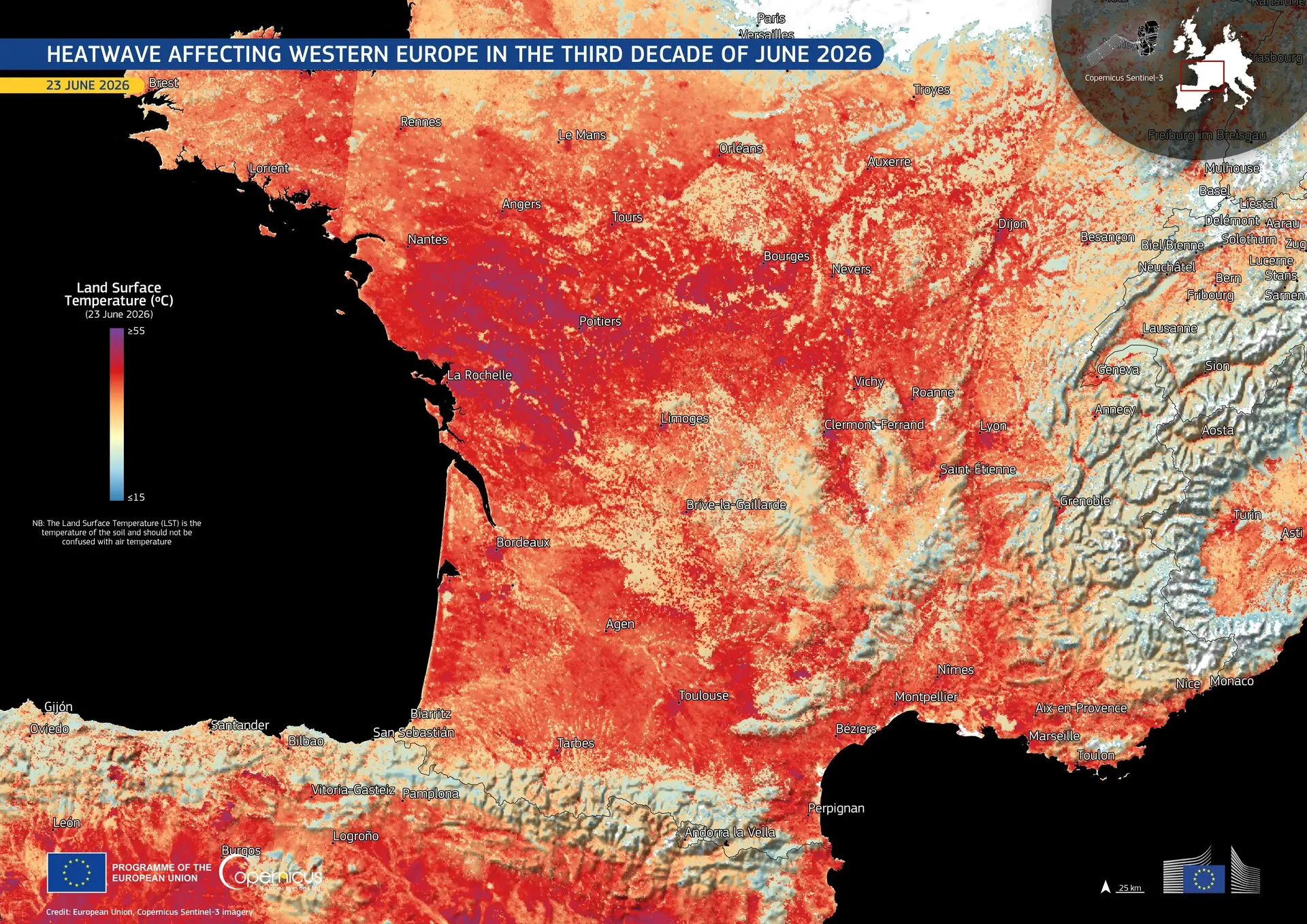
On more than half the map of Europe this summer, simply stepping outside felt like walking into a heated, wet room that never let you cool off. The EU’s climate monitor reports that 52% of Europe was exposed to “very strong” heat stress—conditions when temperatures feel hotter than 38°C (100°F). Around four in five people’s home regions faced at least “strong” heat stress—more than 32°C (90°F) on the feels-like scale—on a record 41 days by the end of the season.
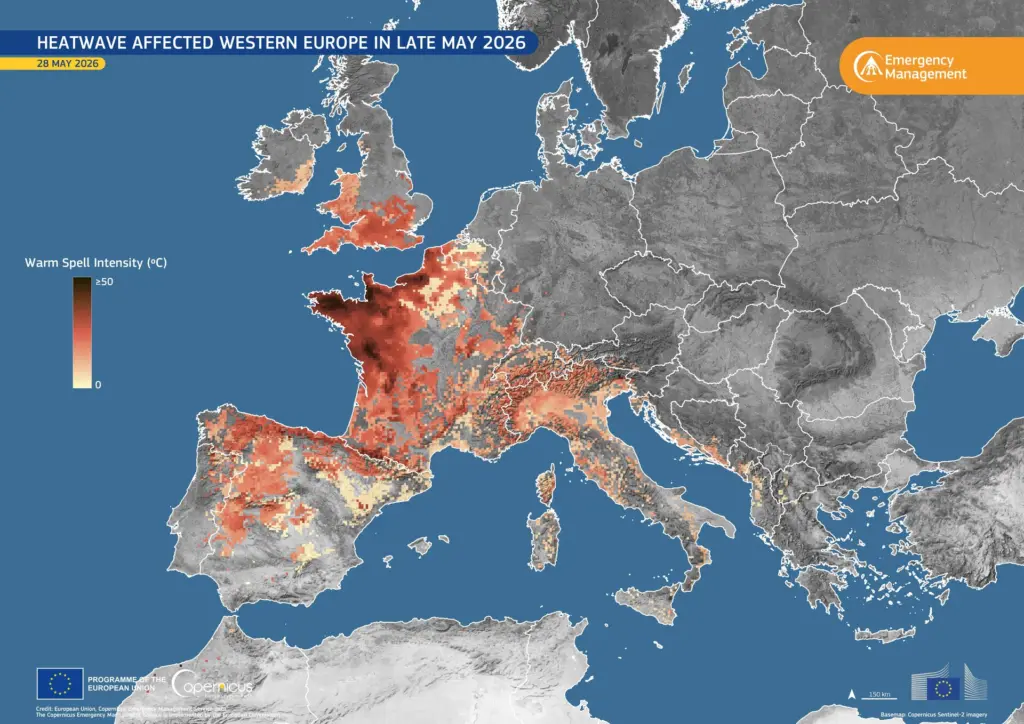
It was not one freak week. The world’s fastest-warming continent endured heat waves that began unusually early in the spring and kept coming. By summer’s end it ranked as Europe’s third-warmest on record, and the hottest for western Europe, according to the EU’s climate monitor.
What “heat stress” measures, and why it matters
Heat stress is what happens when the body’s built-in cooling—sweating and blood flow to the skin—can’t shed heat fast enough. Copernicus describes “very strong” heat stress as conditions where temperatures feel hotter than 38°C (100°F), and “strong” heat stress above 32°C (90°F). Those thresholds align with a growing public-health reality: heat is the leading cause of weather-related mortality globally, Samantha Burgess of the European Centre for Medium-Range Weather Forecasts (ECMWF) noted.
The striking part this year was scale. Burgess highlighted that in 2026, heat was remarkable not just for its intensity, but its geographical extent. Four of Europe’s top 10 heat waves on record happened in this one summer, even as August 2003 still stands as the most severe ever recorded.
A continent-wide pattern, not scattered hotspots
Records fell in clusters. The EU’s climate monitor counts this as the third-warmest summer Europe has recorded, and the hottest for western Europe. That regional superlative matters: western Europe includes some of the most densely interconnected transport and energy corridors on the continent, where heat can ripple through power demand, rail operations, and river shipping.
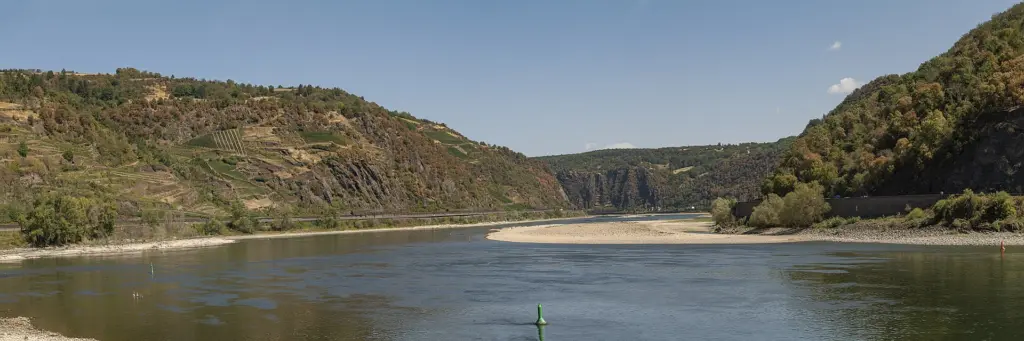
By late August, drought had spread alongside the heat. Burgess said almost half of Europe was affected by drought by month’s end, and Copernicus reported the lowest river flows since records began in 1992—conditions that strained irrigation, nuclear reactor cooling, hydropower, and freight on inland waterways.
Persistence: the number that changes planning, not just comfort
Forty-one days with widespread strong heat stress is not a nuisance; it is a planning horizon. At that cadence, outdoor work schedules, hospital staffing, and grid operators’ contingency plans face a season-long stress test. And the underlying dryness is no blip: Copernicus reports drought conditions have been increasing over the last 45 years in Europe.
Stacked together—earlier onset, broader reach, and longer duration—2026’s summer is a composite event. Burgess called out this compounding as a defining characteristic: multiple records appearing together across the climate system.
What these numbers settle—and what they don’t
The figures here pin down scale and persistence: 52% of Europe under very strong heat stress, roughly 80% under strong stress, and 41 such days this season; third-warmest summer continent-wide; hottest for western Europe; drought touching almost half the continent; and river flows at their lowest since 1992. They also document trend, with drought conditions increasing over 45 years.
They do not specify which countries or cities were hit hardest, which heat-stress index was used to compute “feels-like” conditions, or how many lives or euros were lost. Those details will come from national statistics and sector reports; the continental picture already shows the baseline is shifting.
The deeper cut
Inside the “feels-like” number
Heat-stress metrics fold air temperature together with humidity, wind speed, and radiant load from the Sun and surrounding surfaces. Holding air temperature fixed, higher humidity slows evaporative cooling from sweat because the gradient of water vapour pressure between skin and air shrinks; the same 34°C can push core temperature far faster at 60% relative humidity than at 20%. Wind and radiation tug the other way: stronger wind strips the saturated boundary layer at the skin, and lower net radiation reduces the mean radiant temperature—in both cases, raising the allowable metabolic rate before core body temperature climbs. That’s why a breezy 34°C in the shade can be tolerable for light activity, while 34°C in still, direct sun with humid air tips many indices into “strong” or “very strong” stress even at rest. Indices used operationally typically compute an equivalent temperature—what a human would report as the thermal sensation—and bin conditions into categories aligned with health guidance. The categories cited this season—above 32°C for “strong” and above 38°C for “very strong”—correspond to steps where recommended work-rest cycles tighten sharply and unacclimatised individuals can overheat in minutes under exertion.
Why August 2003 still looms large
Burgess underscored that August 2003 remains the most severe European heat wave on record. That benchmark still matters because it shows how an extreme can dominate despite many hot summers since. The 2026 season adds a different kind of alarm: not a single peak, but many high ridges in succession, four of the continent’s top 10 heat waves compressed into one summer.
In public health and infrastructure terms, 2003 is a spike; 2026 is a plateau. Different numbers, different risks.
Drying rivers, tightening margins
Copernicus reports the lowest river flows since 1992. Barges scrape bottom sooner; hydropower output sags as reservoirs and run-of-river plants lose head; thermal power stations face cooling-water limits. These are not distant hypotheticals—they are the physics of less water depth and warmer intake pipes.
As drought conditions have increased over 45 years, those margins thin. By the end of August this year, drought had affected almost half of Europe, Burgess said. In a networked economy, that is a lot of knock-on effects riding on a lot of very shallow water.
A new baseline for summer on the world’s fastest-warming continent
Europe is warming faster than any other continent, and 2026 showed what that means in practice: earlier, broader, and longer heat stress, compounded by drought and record-low river flows. The numbers do not predict next summer, but they redraw the baseline to plan against.
To halve the risk implied by 41 days of strong heat stress, you would need to remove weeks of sustained heat from the season. That is not a matter of rearranging weekends. It is the kind of change that only a cooler climate—and better-prepared systems—can deliver.
Sources: Europe's hottest summer caused record heat stress: Monitor (phys.org)
Images: Cover: EK – GD DEFIS, EC – DG DEFIS, SPACETEC PARTNERS, Copernicus Sentinel-3 imagery, / Wikimedia Commons (CC BY 4.0); Figure 1: EK – GD DEFIS, EC – DG DEFIS, SPACETEC PARTNERS, Copernicus Emergency Management / Wikimedia Commons (CC BY 4.0); Figure 2: Rolf Kranz / Wikimedia Commons (CC BY-SA 4.0)
How this article was made: Everyman Science uses AI tools to structure, format and optimise its articles, and occasionally to produce illustrations where no free photograph exists. The reporting these articles are based on is human-produced and cited above. Spotted an error? Write to [email protected] and we will correct it. — The editors How we work.





Science desk team of Everyman Science, curating and reporting on the day’s most significant developments in research, space exploration, and technology.