NASA’s shoebox inspector will come within hundreds of yards of up to four derelicts in 2027
Picture a shoebox-sized inspector easing into view of a silent satellite, Earth streaking blue beneath. It’s not there to rescue anything yet. Its job is simpler and more radical: get close, look carefully, and leave.
On Oct. 1, NASA says the Small Spacecraft Propulsion and Inspection Capability—mercifully shortened to SSPICY—launched from Vandenberg Space Force Base in California. In early 2027, the mission’s Otter spacecraft will begin navigating to within hundreds of yards of up to four inoperable U.S. objects in low Earth orbit. The point is to prove that the pieces needed for in‑space inspection can work together in the real world.
Why this, and why now
Space near Earth is getting crowded. NASA notes that thousands of satellites are launched each year for communications, weather, navigation and other services most of us use daily. When old satellites and rocket bodies break apart or collide, they shed debris from fist‑sized fragments to dust, each piece a bullet at orbital speeds.
Keeping that environment safe is increasingly critical. Before you can repair ailing spacecraft or steer dead ones toward disposal, you have to know exactly what you’re dealing with. SSPICY’s premise is that close-up inspections are the missing first step.
How do you fly ‘hundreds of yards’ from a dead satellite?
In orbit, “close” is a tricky word. Two objects in nearly the same path can drift relative to each other in slow, looping arcs. The Otter will use that physics to approach, then hold position at stand‑off distances measured in hundreds of yards, NASA says. That gap is deliberate: it’s far enough to avoid risk from any unexpected motion, close enough for a useful look.
Think of it like pulling alongside a drifting boat without tying up. The image works only so far: boats push water to brake; spacecraft can’t. Every tiny nudge in orbit keeps echoing unless another nudge cancels it, so proximity operations are a sequence of precise, planned taps rather than a smooth coast.
Electric propulsion: the slow, efficient way to get around
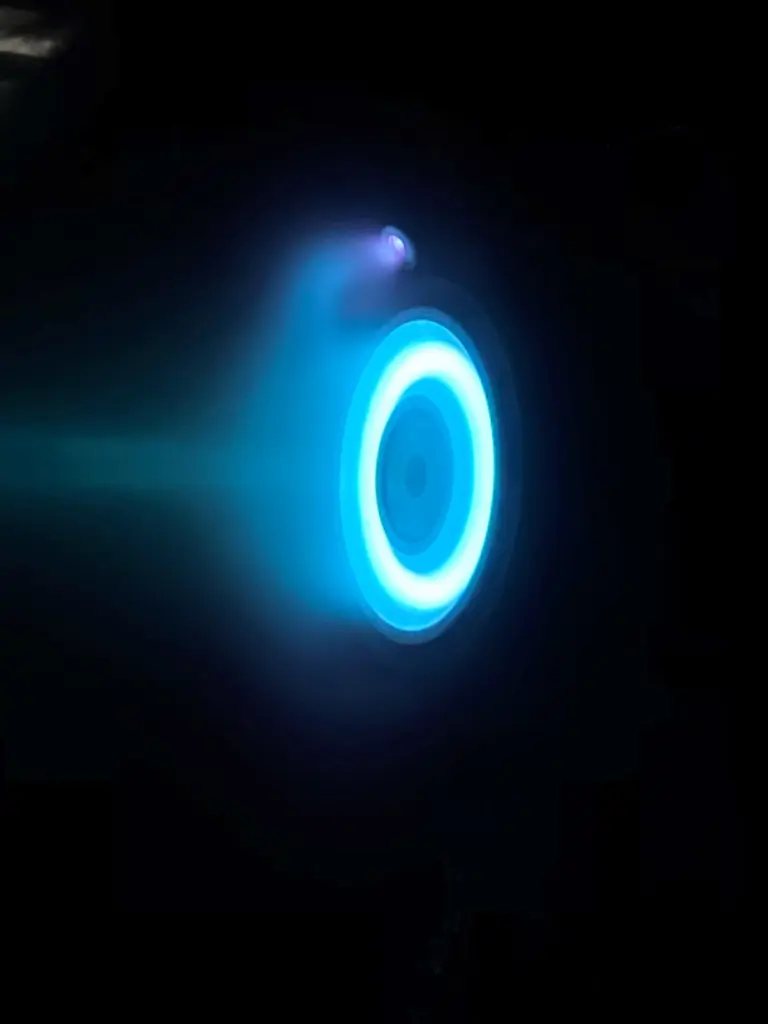
SSPICY will hop from target to target using an electric propulsion system, according to NASA. Electric thrusters trade brute force for efficiency. Instead of a short, hot push from chemical combustion, they expend propellant sparingly, metering out low but steady thrust for long periods.
Why choose the slow option? Because in low Earth orbit, most of the job is not big burns—it’s trimming. Changing a spacecraft’s path by tens of meters per second over hours or days is cheaper in propellant with electric propulsion. That thrift is what lets a small vehicle visit multiple objects on one tank.
What an inspection actually buys you
Repairs and removals sound heroic, but they’re logistics problems first. Before any mission can grapple a satellite or shepherd a rocket body into Earth’s atmosphere for disposal, operators need a recent, close‑range understanding of the target and its neighborhood. A dedicated inspection pass provides that without committing to contact.
NASA characterizes SSPICY as a technology demonstration that will, for the first time, test its chosen set of capabilities together as an integrated system. If that system proves it can repeatedly approach different derelicts safely and depart on schedule, future teams will be able to plan servicing with fewer unknowns and lower risk.
Who’s backing the experiment
NASA says its Small Spacecraft and Distributed Systems program, within the agency’s Research and Technology Mission Directorate, funds and manages the demonstration. Early development of key technologies for the Otter spacecraft also received support through NASA’s Small Business Innovation Research/Small Business Technology Transfer program, which made awards to Starfish Space.
That combination—program‑level management with targeted small‑business grants—is how a lot of space logistics hardware gets out of PowerPoint and into orbit.
When the hard parts show up
Approaching any inert object in orbit is deceptively hard. Distances shrink, error bars don’t. Small navigation mistakes compound; timing matters because the objects are perpetually moving over Earth’s surface. Safety margins at hundreds of yards are forgiving compared with docking ranges, but they still demand careful planning and reliable propulsion.
There’s also the tempo question. Visiting several targets means repeating the whole dance—transfer, approach, observe, depart—without running out of propellant or time. That repeatability is the quiet benchmark that will separate one‑off stunts from useful services.
The deeper cut
Sidebar for the orbital mechanics‑inclined
Proximity operations in LEO live in the Hill/Clohessy–Wiltshire (HCW) frame, where relative motion between a chaser and a target on a circular reference orbit decomposes into coupled harmonic oscillators. Without control, a chaser displaced in the radial direction will naturally drift along‑track; burns in the along‑track (tangential) direction induce changes in mean radius that secularly alter relative phase. The sweet spot for inspection is a bounded relative orbit (a “V-bar” or “R-bar” hold), where continuous station‑keeping cancels the HCW dynamics that would otherwise drive drift. Electric propulsion’s low thrust maps to continuous or high‑duty‑cycle impulses in this frame, which is ideal for trimming out the linearized terms without wasting propellant on impulsive burns. The trade is time: low thrust means finite slew rates for reconfiguration between inspection boxes and for phasing to the next target’s RAAN/argument of latitude. Budgeting delta‑v across multiple targets becomes a graph problem over J2‑perturbed nodes; you leverage nodal precession when it helps and fight it when it doesn’t. The demonstration value here is not a single hold but closing the loop—guidance, estimation, and control—reliably across several distinct relative geometries.
What we won’t know until it flies
This is a technology demo by design. The key unknowns are how reliably the integrated system performs its close approaches at the advertised stand‑off distances, how efficiently the electric propulsion budgets its hops between objects, and how smoothly operations repeat across several targets. Those are exactly the questions SSPICY is built to answer in space, not on paper.
If it works, what changes
NASA frames SSPICY as groundwork for autonomous servicing and debris inspection. Concretely, a proven ability to approach multiple derelicts within hundreds of yards and then move on would let mission designers plan repairs or removals with fresher, target‑specific information and lower propellant margins. It’s the difference between sending a mechanic blind and sending one who’s already walked the job site.

Sources: NASA’s SSPICY Mission to Demonstrate In-Space Inspection Technologies (www.nasa.gov)
Images: Cover: Everyman Science (illustration); Figure 1: NASA/JPL; Figure 2: https://dart.jhuapl.edu/Gallery/ / Wikimedia Commons
How this article was made: Everyman Science uses AI tools to structure, format and optimise its articles, and occasionally to produce illustrations where no free photograph exists. The reporting these articles are based on is human-produced and cited above. Spotted an error? Write to [email protected] and we will correct it. — The editors How we work.





Science desk team of Everyman Science, curating and reporting on the day’s most significant developments in research, space exploration, and technology.