1,645 Martian days in, Perseverance finds ultrafine Mars dust on suit swatches
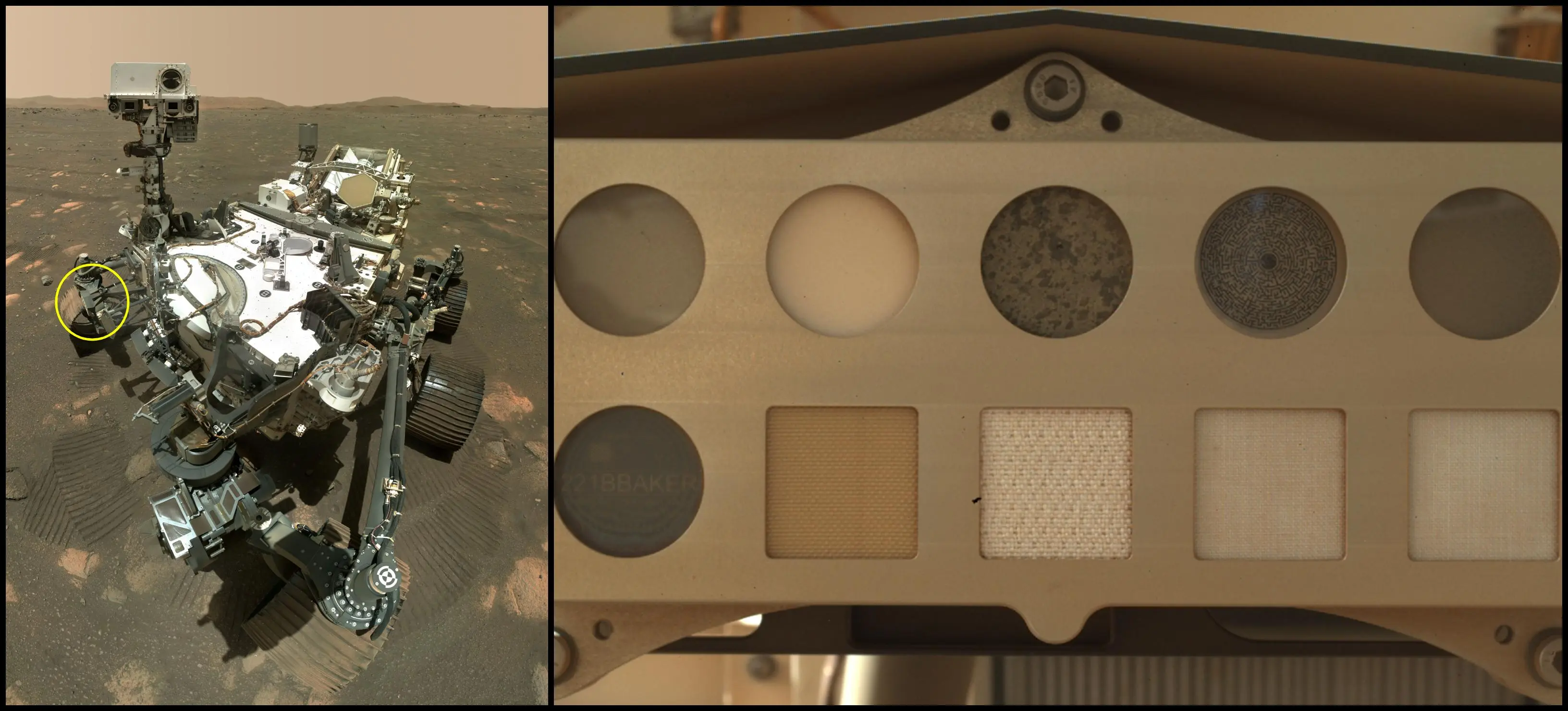
How small are the dust grains that actually cling to spacesuit materials on Mars, and which sizes should mission planners worry about? NASA set out to answer that with data from Perseverance, using the rover’s own onboard swatches as a years‑long dust collector.
Over 1,645 Martian days, the rover watched which particles stick, how small they run, and how they differ by surface. The core finding: fine and ultrafine grains—not just the larger, easier‑to‑see stuff—are part of the picture.
Who did this and when we hear more
NASA reports that its Perseverance rover on Mars measured dust on spacesuit material samples carried aboard the vehicle. NASA says the findings will be published Tuesday, Oct. 27. The agency also states these are the first on‑site measurements of fine and ultrafine dust on Mars.
How a rover turned suit swatches into dust monitors
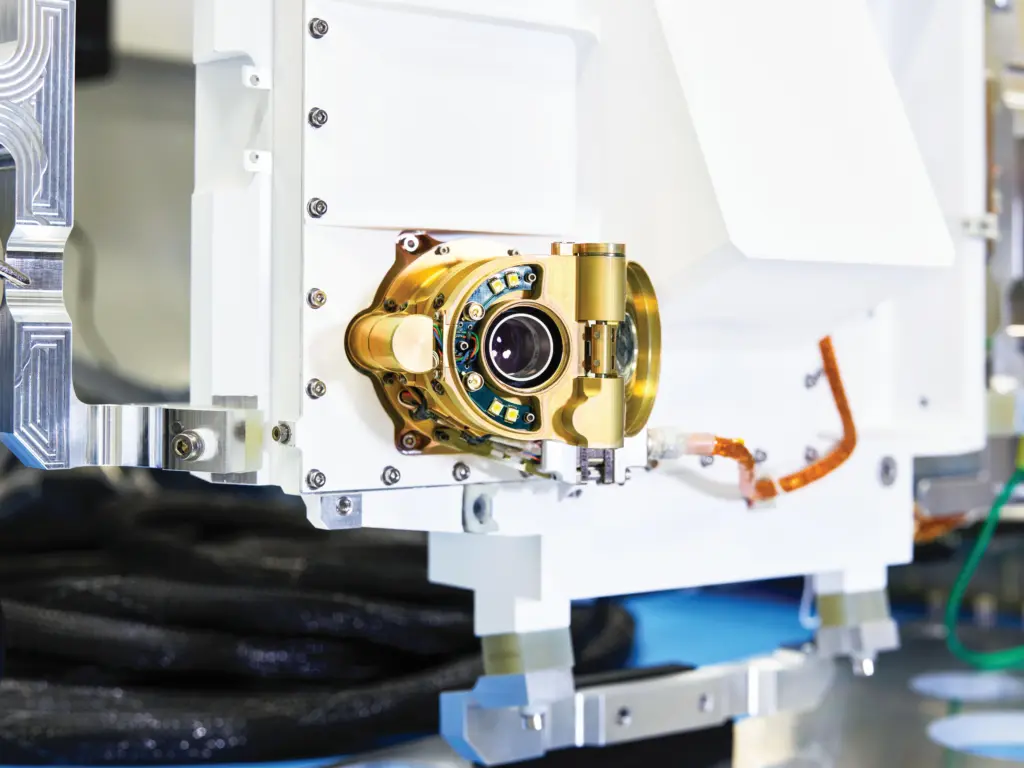
Perseverance carries a small set of five samples of spacesuit material, each a 20‑millimeter (three‑quarters‑inch) square, as part of the calibration target for the SHERLOC instrument. A separate calibration target for the PIXL instrument includes Teflon and basaltic glass. Across 1,645 Martian days, NASA used those surfaces to see what clung and how big it was.
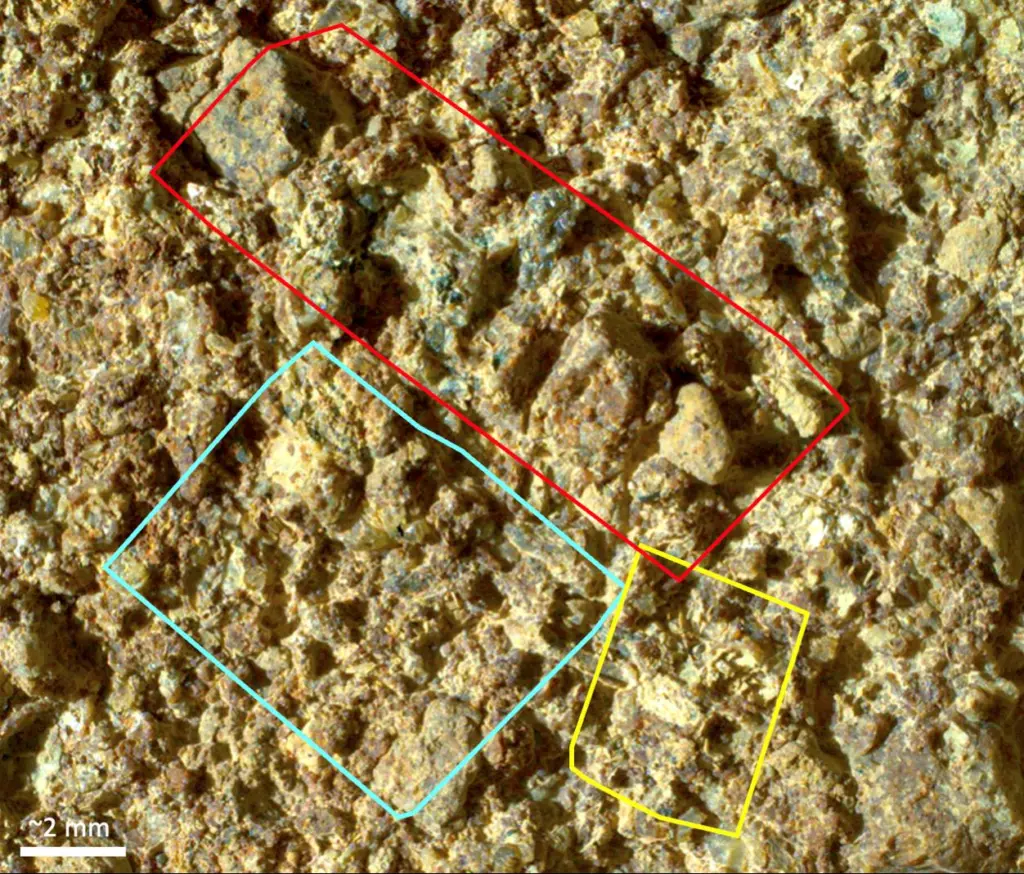
Earlier measurements on Mars could only resolve dust down to about 3 micrometers across. By contrast, NASA reports that PIXL identified two smaller categories: fine particles less than 2.5 micrometers and ultrafine particles around 100 nanometers. For scale, a human hair is about 70 micrometers wide.
What Perseverance actually measured, in numbers
On PIXL’s Teflon target and SHERLOC’s Vectran swatch, particles averaged about 2 micrometers. On PIXL’s basaltic glass and SHERLOC’s Teflon swatch, sizes ranged down to roughly 100 to 300 nanometers. NASA says these results constitute the first on‑site measurement of Martian fine and ultrafine dust. Scott VanBommel, a Perseverance scientist, notes that the existence of ultrafine Mars dust at these sizes had been predicted for a long time; now there are direct measurements to support it.
| Item/measure | Figure or finding | Attribution |
|---|---|---|
| Observation span | 1,645 Martian days (sols) | NASA |
| Previous size limit on Mars | ~3 micrometers | NASA |
| Categories detected by PIXL | <2.5 micrometers (fine); ~100 nanometers (ultrafine) | NASA |
| Average on Teflon (PIXL) & Vectran (SHERLOC) | ~2 micrometers | NASA |
| Smallest ranges seen on basaltic glass (PIXL) & Teflon (SHERLOC) | ~100–300 nanometers | NASA |
| Human hair width (for scale) | ~70 micrometers | NASA |
| Status of these measurements | First on‑site fine/ultrafine dust sizes on Mars | NASA |
| Comment on ultrafines’ existence | Predicted for a long time | Scott VanBommel, via NASA |
Beyond size, NASA adds that some materials hold less dust than others—useful information for picking suit fabrics and coatings. Designs such as suitports, which let astronauts enter a suit attached to the outside of a habitat, could reduce how much dust makes it indoors.
Why size matters for astronaut health, in plain terms
NASA states that the health risks of Mars dust depend on how much dust people encounter and for how long. That makes knowing which sizes persist on suit materials important: fine and ultrafine grains are part of what astronauts will bring back to airlocks and living spaces unless designs and procedures prevent it.
The newly resolved sizes are also a reality check for filters, seals, and cleaning tools. Components that work well against micron‑scale grains may need to contend with particles a few hundred nanometers across.
Design implications NASA is already acting on
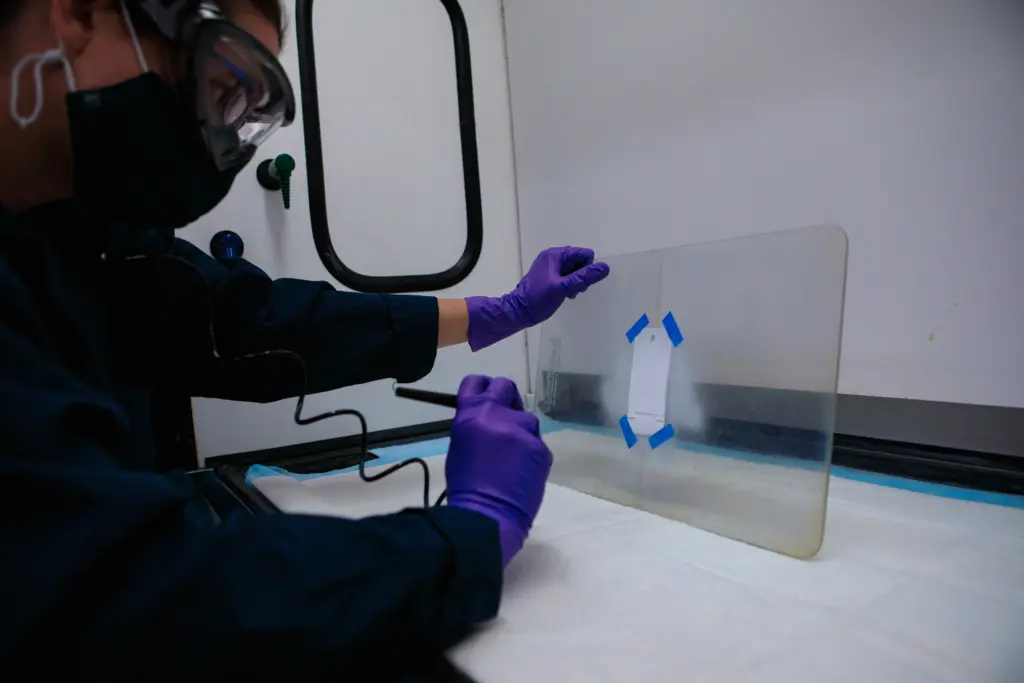
NASA says it is already working on solutions to extraterrestrial dust hazards. In March 2025, the agency tested an Electrodynamic Dust Shield that used electric fields to clear lunar regolith. The demonstration targeted glass and thermal radiator surfaces on the Moon as a proving ground for future Mars systems.
Procedural defenses matter too. NASA points to options like suitports and dual‑chamber airlocks to keep abrasive or reactive material from entering pressurized spaces. And with Perseverance showing that some materials retain less dust than others, material choice becomes a frontline control.
The deeper cut
Orders of magnitude: making the sizes intuitive
A human hair is about 70 micrometers across. The “fine” particles NASA reports on Perseverance’s targets are smaller than 2.5 micrometers—roughly 30 times thinner than a hair. The “ultrafine” particles cluster near 100 nanometers (0.1 micrometer), about 700 times thinner than a hair. That means a 2‑micrometer grain is around 20 times larger in diameter than a 0.1‑micrometer grain, and roughly 8,000 times larger in volume if you treat them as spheres (volume scales with the cube of diameter). Those volume ratios help explain why number counts and mass can tell very different stories: a dust film dominated by a few larger grains could still contain vast numbers of ultrafines.
Resolution matters too. Earlier Mars observations bottomed out near ~3 micrometers. Detecting down into the 100–300 nanometer range is not just a small step; it’s a one‑order‑of‑magnitude reach into a regime where Brownian motion and surface forces dominate behavior. For engineering, that shift is critical: seals, filters, and electrodynamic cleaners designed for micron‑scale particles encounter different sticking and transport physics when grains are an order of magnitude smaller.
What we still don’t know from these measurements
The rover data show which particle sizes adhere to specific materials on Perseverance, not how much dust an astronaut would inhale over a shift nor how exposure would accumulate over a mission. NASA underscores that health risks hinge on the quantity of dust and the length of exposure; those two numbers will depend on operations, habitats, and cleaning systems that are not part of these observations.
The measurements come from swatches and calibration targets mounted on a single rover. They don’t, by themselves, map how sizes vary across sites, seasons, or storm conditions. Turning these findings into exposure limits and procedures will take additional measurements and design testing.
The bottom line for Mars missions
NASA reports that Perseverance has now confirmed fine and ultrafine Martian dust on suit‑relevant materials, with sizes averaging around 2 micrometers on some swatches and reaching down to ~100–300 nanometers on others. That’s smaller than earlier Mars measurements could resolve, and it’s a regime engineers and flight surgeons pay attention to when they set requirements.
With some materials holding less dust, and hardware like electrodynamic shields and suitports under development, the path forward is clearer: pick fabrics and coatings with low dust retention, keep dust outside wherever possible, and design systems with nanometer‑scale grains in mind. NASA says more details land Tuesday, Oct. 27.
Sources: NASA’s Perseverance Offers Clues to Protect Crews From Mars Dust (www.nasa.gov)
Images: Cover: NASA/JPL; Figure 1: NASA/JPL; Figure 2: NASA/JPL; Figure 3: NASA/Isaac Watson
How this article was made: Everyman Science uses AI tools to structure, format and optimise its articles, and occasionally to produce illustrations where no free photograph exists. The reporting these articles are based on is human-produced and cited above. Spotted an error? Write to [email protected] and we will correct it. — The editors How we work.





Science desk team of Everyman Science, curating and reporting on the day’s most significant developments in research, space exploration, and technology.