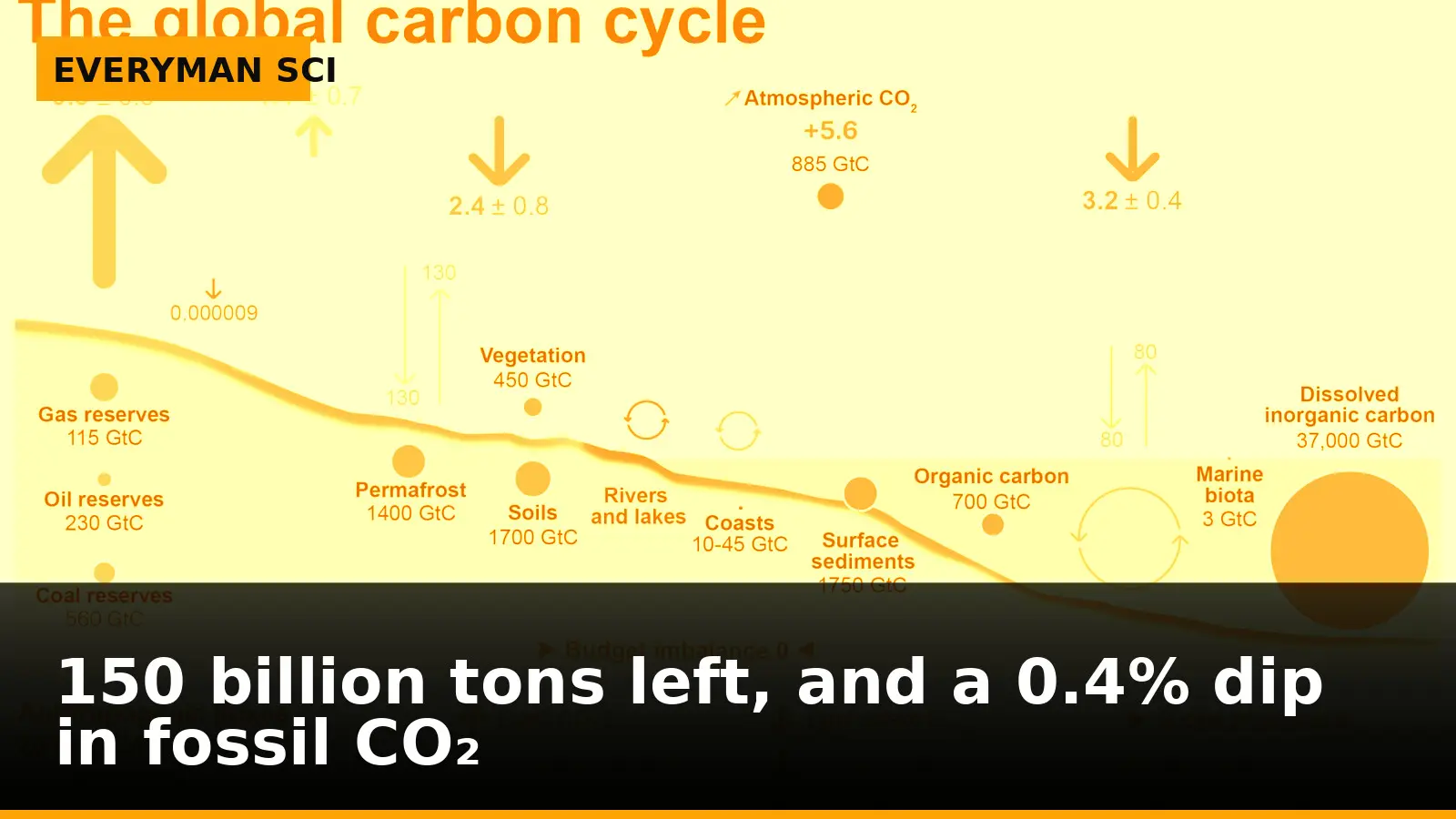
150 billion tons left, and a 0.4% dip in fossil CO₂
Imagine a countdown clock that doesn’t tick in seconds but in billions of tons. This year’s Global Carbon Budget puts 150 billion metric tons of carbon dioxide left in the tank before 1.5°C of warming is reached—and the world is burning through it fast.
Against that backdrop comes a sliver of relief: fossil CO₂ emissions are projected to dip in 2026. The study behind that projection—the 21st annual Global Carbon Budget, published in Earth System Science Data—says the fall is small, and the forces behind it are mixed.
The headline number, and why it matters
Global emissions from fossil fuels are expected to decrease by 0.4% in 2026, according to the Global Carbon Project’s assessment. In a system as massive as the world’s energy economy, a move of tenths of a percent is not noise; it’s a sign of pressure from real-world changes in technology, markets and geopolitics.
In absolute terms, the study projects 38.2 billion metric tons of fossil CO₂ this year. For scale, preventing just 1% of that would mean not emitting roughly three hundred million tons—more than the annual emissions of many countries.
What’s pushing emissions down
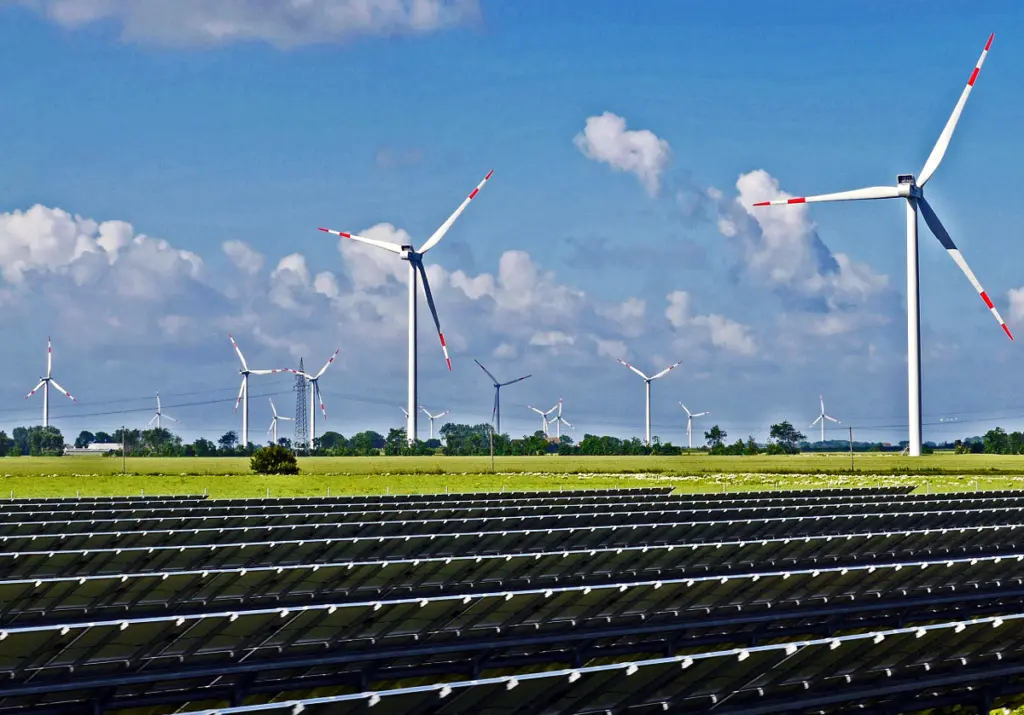
Two drivers stand out in the study’s framing. First, clean technologies: solar and wind power, batteries and electric vehicles are described by multiple authors as making a measurable dent in global emissions. Second, the Iran conflict has delivered an energy shock that, for now, trims oil demand in a way no climate policy could plan for.
The oil signal is visible in the data: emissions from oil are projected to decline by 1.9% in 2026. Researchers caution that a fall rooted in disruption is unlikely to last without deeper, structural change in how energy is produced and used.
Total CO₂ still climbs when land is included
Zooming out beyond fossil fuels, total CO₂ emissions—counting land-use change alongside fossil sources—are projected at 43.3 billion metric tons in 2026. That headline keeps two truths in the same frame: a marginal dip in fossil CO₂ can coexist with a high overall total when other sources remain stubborn.
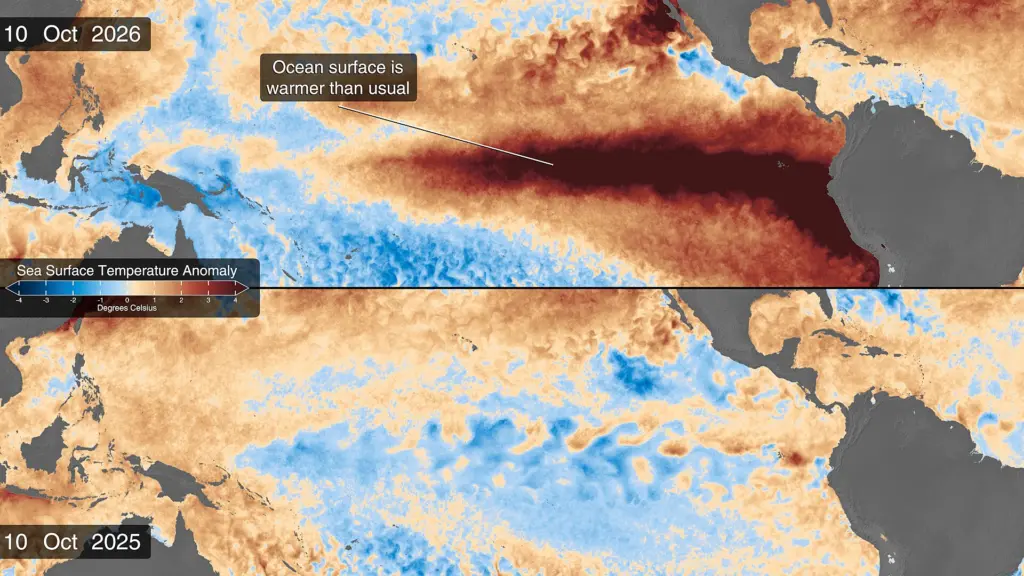
The study also flags El Niño as a near-term wild card. A powerful 2026 event is expected to have a significant impact in the coming year, after earlier episodes weakened natural land sinks that usually absorb a large share of human emissions.
Not a victory lap, say the authors
The team behind the budget is explicit: a decline that owes something to geopolitical shocks is not a sustainable climate solution. The durable path, they argue, is rapid deployment of clean energy technologies, at a pace fast enough to outweigh growth in energy demand.
Multiple contributors emphasise that clean tech is already moving the needle. They point to accelerated rollouts of solar, wind, batteries and electric vehicles pushing emissions down in dozens of countries, and slowing growth in many more.
How much room is left at 1.5°C
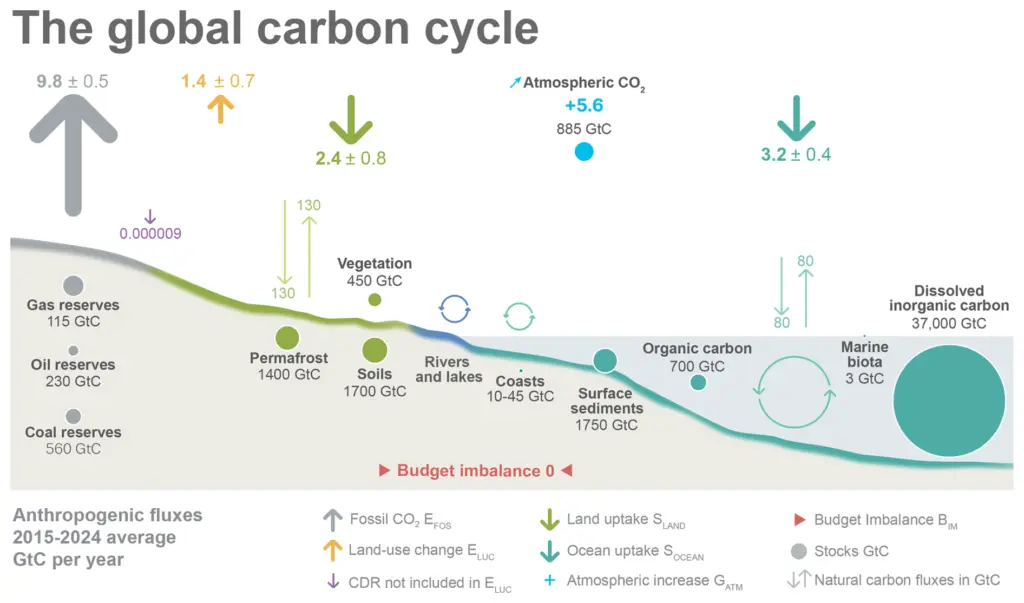
The remaining carbon budget is now 150 billion metric tons, which the study equates to less than four years of emissions at today’s rate. That framing turns an abstract target into a calendar: unless emissions fall faster and stay down, the window to limit warming to 1.5°C narrows quickly.
Alongside cutting emissions, land-based removals matter. Afforestation and reforestation already take up substantial amounts of CO₂, though other land-use emissions still outweigh those gains.
The deeper cut
Budget arithmetic, without the romance
Carbon budgets formalise a near-linear link between cumulative CO₂ and peak warming for policy-relevant ranges, letting scientists translate climate goals into tonnage. The 2026 budget cites 150 Gt CO₂ remaining for a 1.5°C threshold. Interpreting “less than four years” at the current rate hinges on the study’s total-CO₂ framing: projected 2026 emissions are 43.3 Gt when fossil and land-use sources are combined. That pairing—cumulative cap versus all-source flow—sets the cadence for mitigation: every gigaton not emitted extends the runway by about a gigaton-year, absent large feedback shifts. El Niño complicates the near term by modulating terrestrial sinks via heat and drought, altering net land–atmosphere fluxes. While the budget communicates headline numbers, practitioners worry about structural uncertainties: fossil-fuel statistics are revised as national inventories update; land-use change estimates rely on bookkeeping models with differing baselines; and airborne fraction variability can blur attribution on year-to-year horizons. None of these caveats negates the budget approach, but they remind us that policy should be robust to plausible ±Gt uncertainties rather than tuned to a single-point estimate.
What we don’t know yet
Two uncertainties loom. First, whether the 2026 dip marks a lasting peak in fossil CO₂ depends on structural shifts, not one-off shocks; the study does not claim that a peak is secured. Second, the exact magnitude of the 2026 El Niño’s impact on sinks and sources is not yet quantified in the findings reported here.
Policy sense-check: speed and breadth
If a 0.4% decline is the nudge, policy has to deliver the shove. The authors’ through-line is consistent: accelerate the deployment of clean power, storage and electric transport fast enough to overcome demand growth, while expanding land-based removals without letting deforestation erase the gains.
That means treating single-year dips as signals to amplify, not milestones to celebrate. The difference between a blip and a bend in the curve is whether this year’s drivers become next year’s default.
The paper: Global Carbon Budget 2026 (2026)
Sources: Fossil CO₂ emissions projected to decrease in 2026 amid clean energy growth and Iran conflict (phys.org); Global carbon emissions set to fall in 2026 due to Iran energy shock (www.newscientist.com)
Images: Cover: Everyman Science (illustration); Figure 1: Nigel Hawtin / Wikimedia Commons (CC BY-SA 4.0); Figure 2: hpgruesen / Wikimedia Commons; Figure 3: NASA's Scientific Visualization Studio – Science and Technology Corporation/Kel / Wikimedia Commons
How this article was made: Everyman Science uses AI tools to structure, format and optimise its articles, and occasionally to produce illustrations where no free photograph exists. The reporting these articles are based on is human-produced and cited above. Spotted an error? Write to [email protected] and we will correct it. — The editors How we work.





Science desk team of Everyman Science, curating and reporting on the day’s most significant developments in research, space exploration, and technology.