When the heat stays all night, bread gets harder to afford
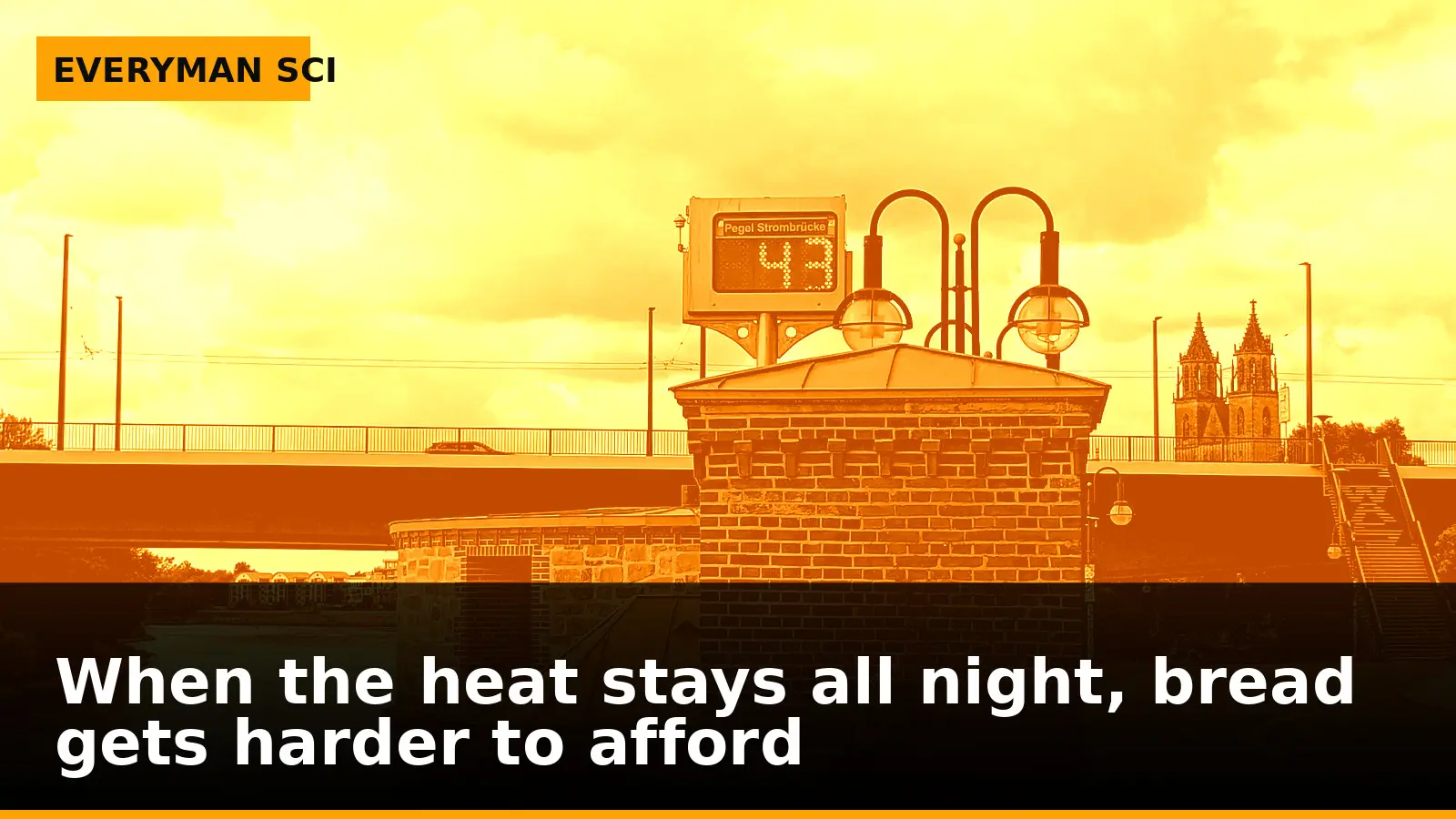
By mid-August, Western Europe was deep into its fifth heat wave of 2026. Daytime highs cleared 40°C across a broad swath; in Bordeaux, the mercury hit 42.5°C on June 24, after setting new records on the two days before. Nights offered little mercy. In August, Slovakia set new national records for both daytime and nighttime heat.
That kind of heat doesn’t just send rail tracks warping and emergency rooms filling. It also squeezes crops that feed half the planet. Wheat is resilient compared with some staples, but sustained heat during flowering and grain filling shrinks yields. When multiple breadbaskets stress at once, prices jump—and the poorest households feel it first. The catch? For 2026 Europe we have crisp numbers for heat, exposure, and vulnerability; we do not, from this dossier, have quantified wheat price projections. So the table below anchors what we can say securely about the pressures that drive those prices.
What’s measured here, and why it matters for wheat
NASA’s Earth Observatory pulled together a stark ledger of Europe’s roasting summer using satellite-informed models and national weather records. These figures tell you how hot, how long, and how unrelenting the season was, and who had tools to cope. Agriculture notices all three. Persistent daytime extremes desiccate soils and push crops past physiological thresholds. High nighttime temperatures, which slow a plant’s recovery, are especially damaging during grain filling. Drought and wildfire disruptions compound the stress.
In 2026, Western Europe saw repeated, widespread heat waves, with coupled drought and record-low river levels disrupting agriculture and transport. Even without a price chart in hand, the indicators line up with the conditions that have, again and again, preceded wheat yield losses and supply squeezes. The numbers below are not wheat prices—but they are the inputs that price models lean on.
| Metric | Figure |
|---|---|
| Number of heat waves in Western Europe by mid-August 2026 | 5 |
| Western Europe daily maximum surface air temperature peaks | ≥40°C across broad areas |
| London (May 26, 2026) maximum temperature and anomaly | 35.1°C; 2.3°C above previous May record |
| Bordeaux (June 24, 2026) maximum temperature | 42.5°C |
| Slovakia national heat records (August 2026) | Daytime and nighttime highs set |
| June–July 2026 combined temperatures in Western Europe | Highest on record |
| Preliminary heat-associated excess deaths in Europe (2026) | ~10,000 |
| Share of homes with air conditioning: Europe vs United States | Europe 23%; United States 90% |
| Global annual heat-related deaths (WHO estimate) and regional shares | ~489,000; 45% Asia, 36% Europe |
| Nighttime danger threshold cited for older adults | 26.7°C (80°F) |
Nothing in that table is a hypothetical. It is the ambient reality farmers and grain traders faced. Prices ultimately reflect expectations about tomorrow’s bushels given today’s weather. In years when Europe’s fields run hot and dry while other exporters dodge the worst, markets can smooth the blow. When the heat turns systemic—across regions and across day and night—the cushion thins.
A summer of records, and the agricultural pinch
The 2026 heat broke records “at a furious pace,” NASA’s summary notes, sometimes by wide margins. London’s May record fell by 2.3°C. Bordeaux set and reset its maximum three days in a row, topping at 42.5°C. In Slovakia, both daytime and nighttime extremes made history in August. Copernicus reported that Western Europe’s June and July combined were the hottest on record.
Agriculture feels extremes in sequences, not single spikes. A first heat wave can stress plants; a second and third can hit during flowering and filling; a fifth can close irrigation canals when rivers run low. NASA reports severe drought compounding the heat in 2026, contributing to record-low river levels and disrupting water and power supplies, transport routes, and agriculture. That is a whole supply chain—field to mill to bakery—running with sand in its gears.
Heat after dark is an economic story too
Nighttime heat matters for people and for crops. For older adults, Boston University’s Deborah Carr flags 26.7°C (80°F) as a danger point. For wheat, hot nights accelerate respiration—the plant burns more of the sugars it made in daylight—leaving less energy for grain. NASA’s article highlights new nighttime records in Slovakia and persistent overnight warmth across the region.
Human exposure is an economic variable. Europe’s homes are far less air-conditioned than America’s—23% versus 90%, according to the International Energy Agency. When households and farmworkers can’t cool down at night, productivity drops, harvest labor windows shrink, and health risks rise. The World Health Organization ties roughly 489,000 deaths globally each year to heat, 36% in Europe. Those are costs that ripple into supply and price.
What the models saw, and what they leave out
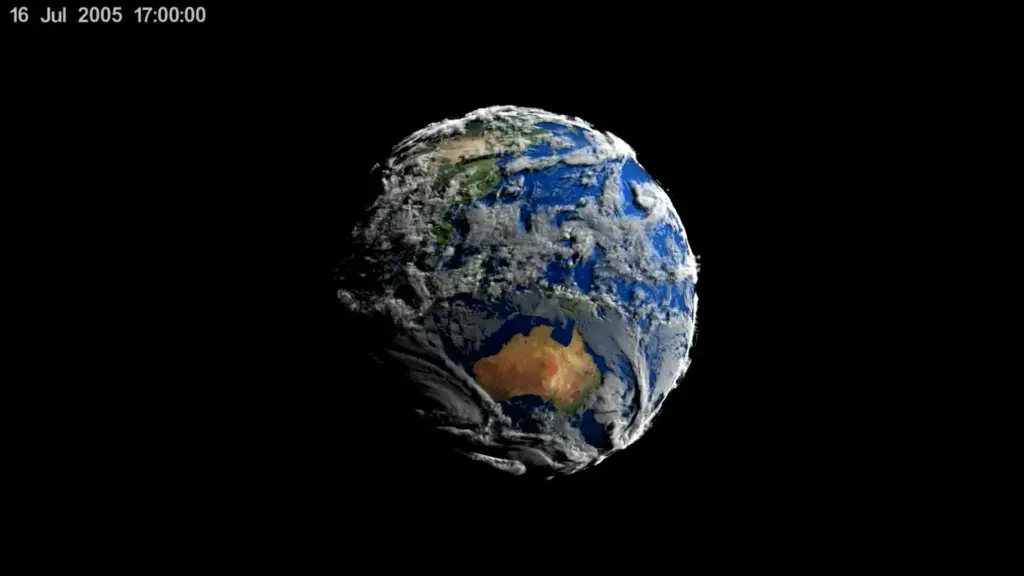
NASA’s animation blended satellite observations with the GEOS (Goddard Earth Observing System) model to map daily maximum surface air temperature. The darkest reds on the map flag where 40°C and above were reached or exceeded. Weather services in the UK, France, and Slovakia documented when records fell. In other words: the monitoring systems agreed on the scale of the heat.
But the dossier stops short of translating temperatures into tonnage or euros per tonne. That is not a flaw in the climate data—it’s a reminder that prices sit at the end of a long causal chain: weather to yield to exports to stocks to policy to markets. Scenario studies estimate how climate change will push that chain in coming decades, including for wheat, but those projections are not among the figures provided here.
The deeper cut
Why hot nights punch above their weight
Yield penalties from heat aren’t linear with daytime maxima alone. Grain filling in wheat is governed by the balance of photosynthesis (source) and sink capacity in the developing kernels. Dark respiration follows an exponential Q10 relationship with temperature—roughly doubling for each 10°C rise within the physiological range—so a 4–6°C elevation in night temperature can materially increase carbon loss. If minimum temperatures breach ~20–25°C during key post‑anthesis stages, higher maintenance costs and protein remobilization reduce carbohydrate deposition, cutting thousand‑kernel weight even when daytime temperatures are only moderately elevated. Soil moisture interacts: under drought, stomatal closure in the day depresses assimilation while warmer nights keep respiration high, a one‑two that sharply lowers net assimilation. This is why agronomists pay attention to degree‑night accumulation and warm night anomalies, not just heat‑day counts. In multi‑week European events like 2026, the persistence of elevated minima, reported here through record night highs in Slovakia and widespread overnight warmth, is a physiologically specific alarm bell that economic models should treat as a separate driver from heat‑day totals.
What the numbers do—and do not—settle about prices
From this dossier, we can say Europe endured at least five heat waves by mid‑August, that 40°C readings became common, that night heat broke records, and that drought and low rivers disrupted agriculture. We can also say Europe’s built‑in resilience to heat is comparatively low—only 23% of homes have air conditioning—so the human and labor impacts were high.
We cannot, from these sources, specify a percentage change in European wheat yields or a euro-per-tonne jump in prices in 2026 or beyond. Any figure you see elsewhere would come from crop and economic models not cited here. That is exactly why a “by the numbers” treatment matters: it keeps the causal scaffolding visible, so when you do see a price curve, you can judge whether the inputs match seasons like this one.
A scale to keep in your head
Two numbers are worth committing to memory. First, 40°C is not a fringe reading anymore; NASA’s analysis shows it blanketing large areas of Western Europe in 2026. Second, 26.7°C at night is not simply “warm”—it’s a danger threshold for older adults, and it flags nights hot enough to chew into plant reserves. If you see multi‑day forecasts with both those numbers in the same week, expect stress on people and on harvests.
Another pair provides the human context: in Europe, just 23% of homes have air conditioning, compared with 90% in the United States. In practice, that means the same thermal event produces different labor capacity and health outcomes across regions. Markets notice that, even if the effect is hard to pin to a single line on a chart.
What to watch for next harvest
If you’re tracking wheat prices, watch river levels alongside thermometers. NASA’s write‑up links the 2026 heat to record‑low rivers, which snarl barge traffic for grain and fertilizer. That logistical choke can push prices even when fields are holding on. Keep an eye, too, on nighttime lows during the two to three weeks after flowering; they are not headline‑grabbers, but they do show up in yields.
Finally, note who is getting hot, not just how hot. The World Health Organization attributes roughly 36% of global heat‑related deaths to Europe, and the continent’s aging demographics amplify vulnerability. When workdays shorten and medical systems strain, the supply side tightens at the margins. Prices are made at those margins.
Sources: Europe’s Scorching Summer (www.nasa.gov)
Images: Cover: Everyman Science (illustration); Figure 1: NASA/GSFC
How this article was made: Everyman Science uses AI tools to structure, format and optimise its articles, and occasionally to produce illustrations where no free photograph exists. The reporting these articles are based on is human-produced and cited above. Spotted an error? Write to [email protected] and we will correct it. — The editors How we work.





Science desk team of Everyman Science, curating and reporting on the day’s most significant developments in research, space exploration, and technology.