Chloride chokes platinum; iodide frees it—17% AQY at 700 nm
How much does the “starter” you use to make a catalyst matter? This study asked a very specific version of that question: whether the halide bound to a platinum precursor changes how platinum lands on organic photocatalyst nanoparticles—and, in turn, how fast they split water into hydrogen under sunlight.
The team wanted to know which precursor chemistry helps platinum do its job, and which leaves the metal’s surface gummed up and slow. They explored that with hexahaloplatinate(IV) salts—the same platinum in three outfits: chloride, bromide and iodide.
Who did this, and where it landed
Researchers from the LIMNO laboratory at EPFL led the work. The study, by Arnau Bertran and colleagues, appears in ACS Energy Letters (2026) under the title “Halide Effects on Platinum Co-Catalysts Govern Photocatalytic Hydrogen Evolution in Organic Semiconductor Nanoparticles.” It is available at DOI: 10.1021/acsenergylett.6c01928.
Why poke at platinum at all?
Solar-driven hydrogen production from water is one of the cleaner ways to store energy, but the technology is still costly. Organic semiconductor nanoparticles are a promising route because they work under visible light and can be made from earth-abundant elements. In these systems, adding small amounts of platinum is essential—the metal acts as a co-catalyst that speeds up the last step: pairing up electrons and protons to make H2. Yet the surface chemistry of this photodeposited platinum has remained poorly understood.
What they actually did
The team photodeposited platinum onto organic semiconductor nanoparticles starting from three hexahaloplatinate(IV) precursors: K2PtX6 with X = Cl, Br, or I. They compared how the halide ligand affected two things that matter in practice: the kinetics of platinum photodeposition (how readily the precursor reduces and platinum forms on the surface) and the hydrogen evolution performance that results under light.
They then examined the platinum surface after deposition. With chloroplatinate precursors, they found partially reduced Pt–Cl species lingering on the platinum surface. Those species poison active sites—the very places where hydrogen should form—and severely suppress H2 evolution in organic semiconductor systems that generate low photopotential. In contrast, bromo- and iodoplatinate precursors reduce more readily and largely avoid this poisoning.
What changed—and by how much
By modifying the platinum surface with iodide ions, the researchers boosted the hydrogen evolution rate, reaching an apparent quantum yield (AQY) of 17% at 700 nm. That figure is among the highest reported for this class of organic nanoparticle photocatalyst. In plain terms: roughly one in six photons of red light led to the electron flow needed to produce hydrogen molecules under their test conditions.
The work underscores a simple but powerful point: the halide ligand in the starting platinum salt critically governs both how platinum gets onto the nanoparticle and how well the final photocatalyst runs. Co-catalyst surface chemistry, the authors argue, is a critical and often overlooked design parameter in photocatalytic systems.
What this means for solar hydrogen
The result tightens one of the loose screws in organic photocatalyst design. If the cheapest-to-buy or most convenient platinum precursor leaves the surface fouled with Pt–Cl, the system pays for it with sluggish hydrogen production—especially in materials that don’t generate much photovoltage. Choosing bromo- or iodoplatinate routes, or explicitly modifying with iodide, can sidestep that trap and lift performance without changing the light absorber itself.
That matters because pushing solar-driven hydrogen toward viable costs will come from many small, cumulative gains. A precursor swap that eliminates surface poisoning is the kind of controllable tweak engineers can adopt early in scale-up.
The deeper cut
AQY at 700 nm, and why that’s impressive
Apparent quantum yield (AQY) in photocatalysis counts output events (here, H2 formation) per input photons. The stoichiometry for H2 requires two electrons per molecule, so an AQY of 17% at a given wavelength implies that for every 100 incident photons at 700 nm, the system is harvesting enough charge to make on the order of one in six of the two-electron H2 events under the stated measurement conditions. Reporting AQY at 700 nm is a stress test: these are low-energy, red photons, where many organic semiconductors struggle to muster sufficient photopotential to drive multi-electron surface chemistry cleanly.
Halide control comes in at two linked levels: reduction kinetics and surface state density. More readily reduced bromo- and iodoplatinate precursors nucleate platinum without leaving a high coverage of partially reduced Pt–Cl surface moieties. Those residual species act as site blockers or alter the local work function enough to impede proton reduction at low overpotentials. Systems that already generate low photopotential are especially sensitive to any additional surface barrier. The upshot is that halide choice doesn’t just change deposition rate—it tunes the balance between active and poisoned sites, which shows up directly in the AQY.
What we still don’t know
The study pinpoints halide-driven trends but does not map, species by species, the full identity and coverage of the surface intermediates under operating light and bias. The surface chemistry of photodeposited platinum on these nanoparticles remains, by the authors’ own framing, poorly understood. Pinning down those structures—and how they evolve under illumination—would help generalize the rules beyond the tested materials and conditions.
Limits and next steps
The most striking suppression effect is reported for organic semiconductor systems that generate low photopotential; different absorber chemistries could behave differently. The reported 17% AQY at 700 nm is “among the highest” for this type of material, which is a comparative claim within the organic nanoparticle class, not a cross-technology benchmark.
Obvious follow-ons include testing whether the same halide rules apply across a broader set of organic absorbers and light intensities, and whether bromo/iodo routes carry any trade-offs in stability or cost at scale. But the design message is already actionable: treat the co-catalyst’s surface chemistry as a first-class variable, not an afterthought.
The bottom line
For solar hydrogen made with organic nanoparticles, platinum is indispensable—but only if its surface is clean. This study shows that the halide on a hexahaloplatinate(IV) precursor can make or break that cleanliness. Use chloride and you risk Pt–Cl residues that choke activity; use bromide or iodide and you largely avoid it. In their best case, an iodide-modified surface pushed the red-light AQY to 17% at 700 nm—near the front of the pack for these materials.
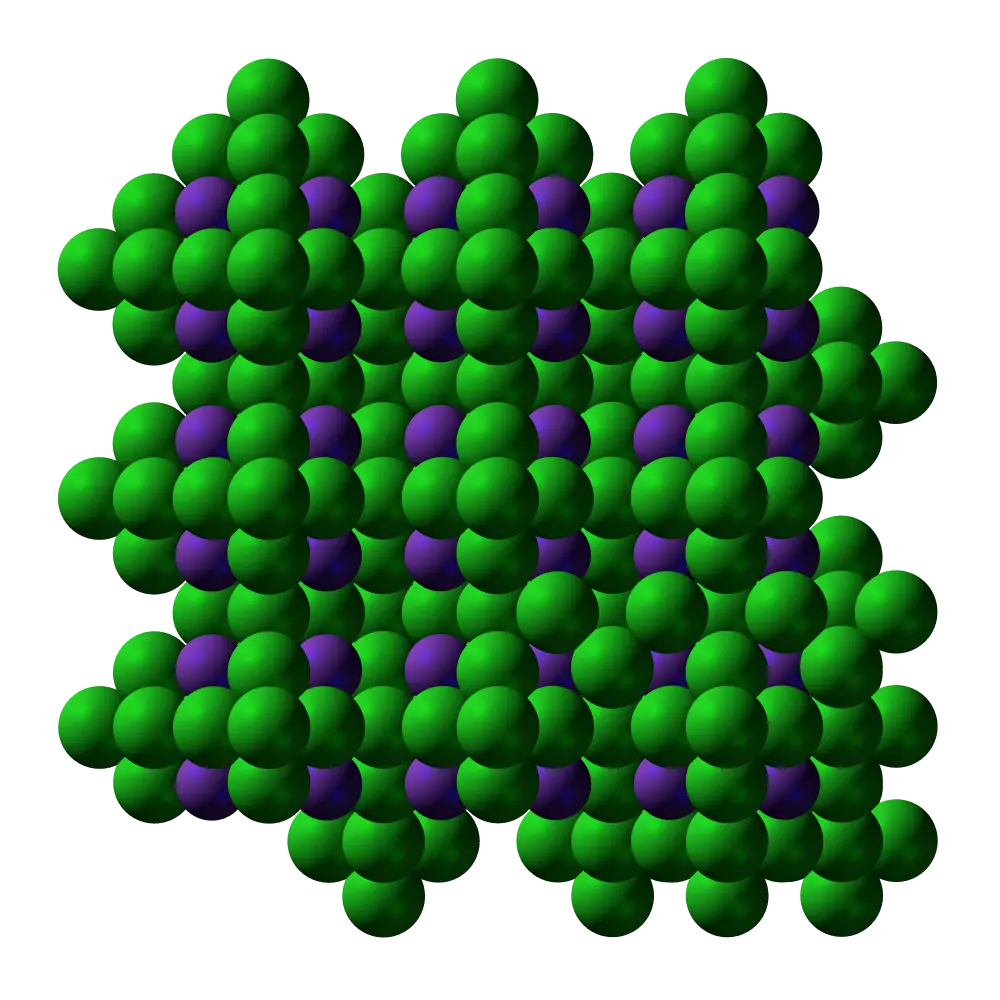
The paper: Halide Effects on Platinum Co-Catalysts Govern Photocatalytic Hydrogen Evolution in Organic Semiconductor Nanoparticles (ACS Energy Letters, 2026)
Sources: Changes to platinum surface chemistry boost solar hydrogen production in organic photocatalysts (phys.org)
Images: Cover: Vadim A. Volochaev, ResearcherID: N-3239-2014 / Wikimedia Commons (CC BY-SA 4.0); Figure 1: PieroSpeleo / Wikimedia Commons (CC BY-SA 4.0); Figure 2: CCoil (talk) / Wikimedia Commons (CC BY 3.0)
How this article was made: Everyman Science uses AI tools to structure, format and optimise its articles, and occasionally to produce illustrations where no free photograph exists. The reporting these articles are based on is human-produced and cited above. Spotted an error? Write to [email protected] and we will correct it. — The editors How we work.





Science desk team of Everyman Science, curating and reporting on the day’s most significant developments in research, space exploration, and technology.