
Worms lived longer with a magnet‑making microbe—only when its magnets were on
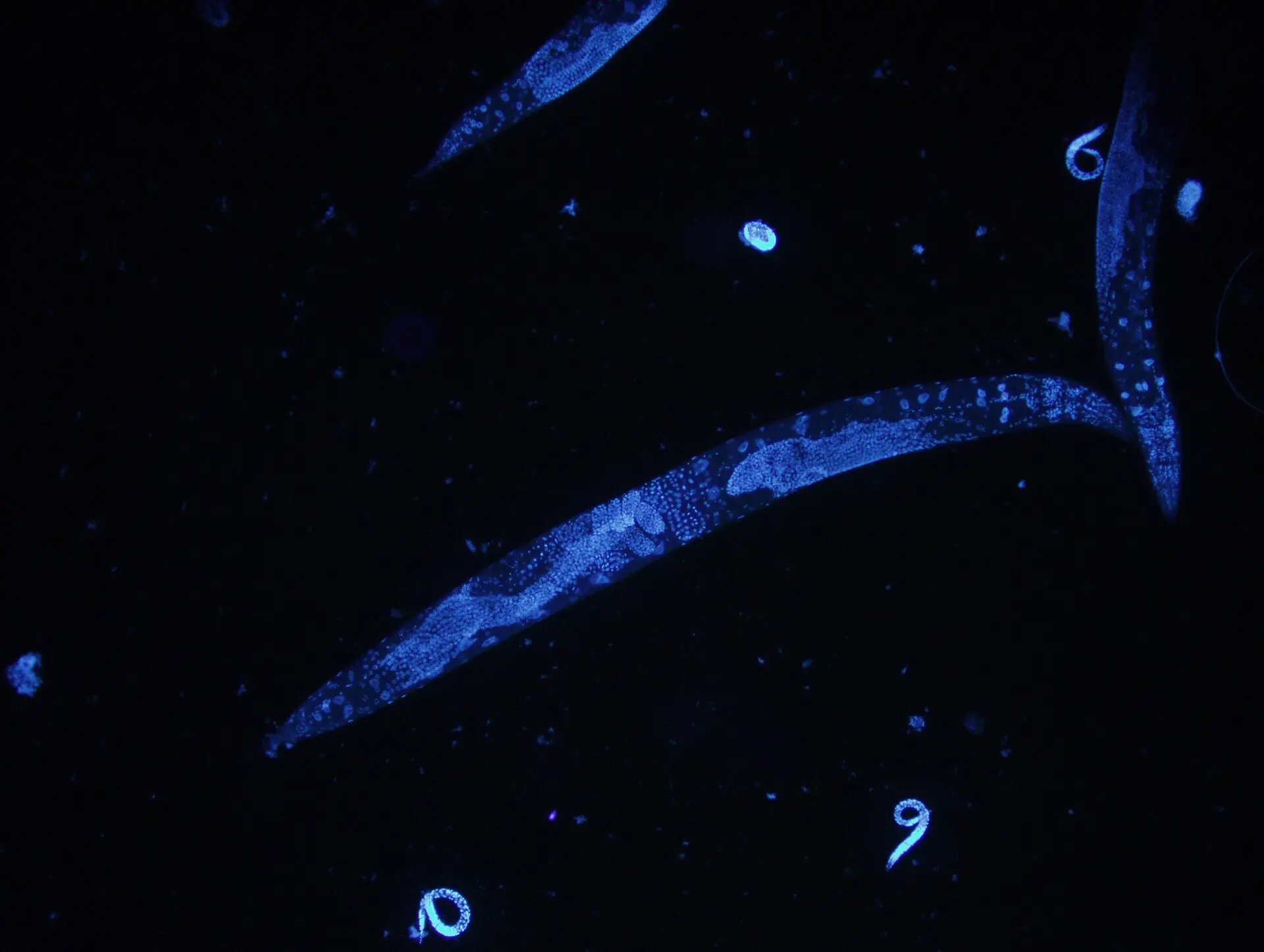
How much longer can a body live if you turn down one specific kind of cell death? And does a bacterium that builds tiny magnets have the switch?
That was the wager behind a new study asking whether Magnetospirillum magneticum AMB‑1 — a magnetotactic bacterium — could extend the healthy lifespan of Caenorhabditis elegans worms, and if so, how.
Who did this and where it landed
Researchers led by Prof. An Xu at the Hefei Institutes of Physical Science of the Chinese Academy of Sciences tested AMB‑1 in the C. elegans model. They report that worms treated with AMB‑1 lived substantially longer. The findings were published in Free Radical Biology and Medicine.
What they actually did: the method, not the hype
The team exposed C. elegans to different versions of the same bacterium to isolate what, exactly, produced the effect. They compared wild‑type AMB‑1 with two modified counterparts: a reversibly non‑magnetotactic strain (RNM‑AMB‑1) and a non‑magnetotactic strain (NM‑AMB‑1). Magnetotactic here means the bacteria normally grow intracellular chains of magnetic crystals called magnetosomes.
They then measured lifespan in the worms under each bacterial condition. To probe mechanism, they looked at two hallmarks tied to a specific form of cell death called ferroptosis: iron buildup and lipid peroxidation — the oxidative damage of fats. Finally, they ran genetic analyses to see whether ferroptosis‑related pathways were involved in any lifespan change they observed.
What changed inside the worms
Worms given AMB‑1 lived longer. When the bacterium’s ability to produce magnetosomes was intact, the longevity effect was stronger than when that ability was temporarily switched off. When magnetosome production was absent altogether, lifespan did not extend. In parallel, the bacteria reduced iron accumulation and lowered lipid peroxidation in the worms, and several ferroptosis‑related pathways were implicated by genetic analysis.
The numbers we have — and what they mean
This study reports a substantial lifespan extension in C. elegans with AMB‑1 treatment and attributes a major share of that effect to magnetosome production capacity. It also reports that non‑magnetotactic NM‑AMB‑1 failed to extend lifespan, while RNM‑AMB‑1 had a weaker effect than wild type. The mechanistic readouts were directional — reduced iron buildup and reduced lipid peroxidation — and the pathway analysis pointed to multiple ferroptosis‑related genes. Together, those results mean the effect is not just behavioral or nutritional; it tracks with biochemical markers and genetics tied to ferroptosis.
| Comparison or measure | Reported outcome |
|---|---|
| Wild‑type AMB‑1 vs. controls | Substantially longer lifespan in treated worms |
| RNM‑AMB‑1 (reversibly non‑magnetotactic) vs. wild‑type AMB‑1 | Weaker longevity effect than wild‑type |
| NM‑AMB‑1 (non‑magnetotactic) vs. controls | No lifespan extension observed |
| Iron buildup in worms with AMB‑1 | Reduced |
| Lipid peroxidation in worms with AMB‑1 | Reduced |
| Genetic readouts | Several ferroptosis‑related pathways involved |
Why a magnet‑making bacterium is even on the table
Magnetotactic bacteria (MTB) offer a very different approach to tinkering with physiology. They have already attracted attention for uses like drug delivery and cancer treatment, and they bring built‑in structures — magnetosomes — that can, in principle, be leveraged or modulated. Here, the same structures appear to matter for lifespan in worms: when magnetosome production faltered, so did the longevity boost.
The deeper cut
How the strain comparisons pin it on magnetosomes
Three head‑to‑head contrasts do the inferential heavy lifting. Start with the phenotype: wild‑type AMB‑1 extends lifespan. Make it reversibly non‑magnetotactic (RNM‑AMB‑1) and the effect weakens. Remove magnetotaxis altogether (NM‑AMB‑1) and the effect disappears. That monotonic pattern is what you look for when you suspect one capability — here, magnetosome production — is causally upstream. It’s a functional gradient: more magnetosome competence, more lifespan effect. The mechanistic assays run in parallel point in the same direction. Iron accumulation and lipid peroxidation move down with AMB‑1 treatment, and ferroptosis‑related pathways light up in genetic analysis. The conjunction matters: ferroptosis sits, by definition, at the intersection of iron handling and lipid peroxidation pathways, so seeing both biochemical readouts shift while a genetic screen flags the same process strengthens the causal story. You don’t need to know the full molecular choreography to accept the through‑line: magnetosome competence correlates with lifespan benefit; ferroptosis markers and pathways track with that benefit; removing magnetosome competence removes the benefit.
What this does not tell us (yet)
Aging is a many‑headed problem, and even in a simple model like C. elegans, suppressing one pathway is not the same as rewriting the whole program. The researchers themselves flag that questions about safety and practical clinical use remain. That caution applies twice over when thinking beyond worms to larger animals or people.
Why this matters, without the fairy dust
Aging gradually reduces normal physiological function and raises the risk of many chronic diseases. Drugs and genetic tricks have been the main anti‑aging playbook so far, but their safety and real‑world usability are perennial sticking points. The new result suggests a microbial strategy that shifts specific cell‑death biochemistry and, at least in worms, changes lifespan in the expected direction. It is not a therapy; it is a credible lead on where to look next.
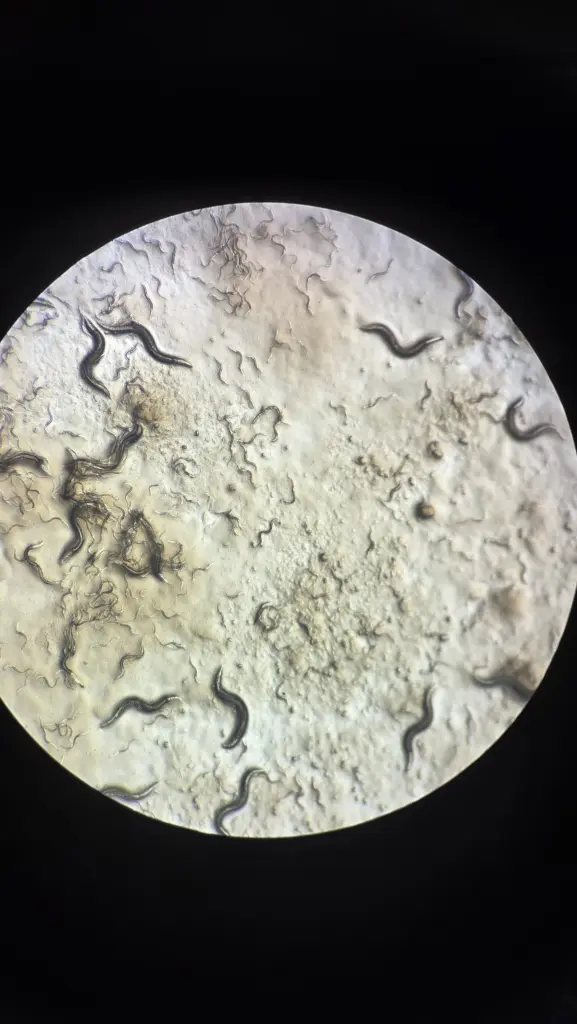
Where the field could push next
Two obvious next steps follow from the design here. First, the strain logic can be extended: vary magnetosome competence in finer gradations and see whether the lifespan effect scales. Second, broaden the readouts around ferroptosis to map which of the implicated pathways carry the biggest share of the effect in vivo. Both are tractable in worms.
If those hold up, the longer‑term question is how, or whether, MTB can be positioned as tools rather than therapies — adjuncts that steer biochemistry in a controlled way. That is where the safety and practicality questions will either be answered or bite back.
The paper: A novel role for magnetotactic bacterium: Magnetospirillum magneticum AMB-1 prolonged healthy lifespan of Caenorhabditis elegans via regulating ferroptosis (Free Radical Biology and Medicine, 2026)
Sources: Scientists gave worms magnetic bacteria. They lived 43% longer (www.sciencedaily.com)
Images: Cover: Jan Poledňák / Wikimedia Commons (CC BY-SA 3.0); Figure 1: Gannu03 / Wikimedia Commons (CC BY-SA 4.0)
How this article was made: Everyman Science uses AI tools to structure, format and optimise its articles, and occasionally to produce illustrations where no free photograph exists. The reporting these articles are based on is human-produced and cited above. Spotted an error? Write to [email protected] and we will correct it. — The editors How we work.





Science desk team of Everyman Science, curating and reporting on the day’s most significant developments in research, space exploration, and technology.