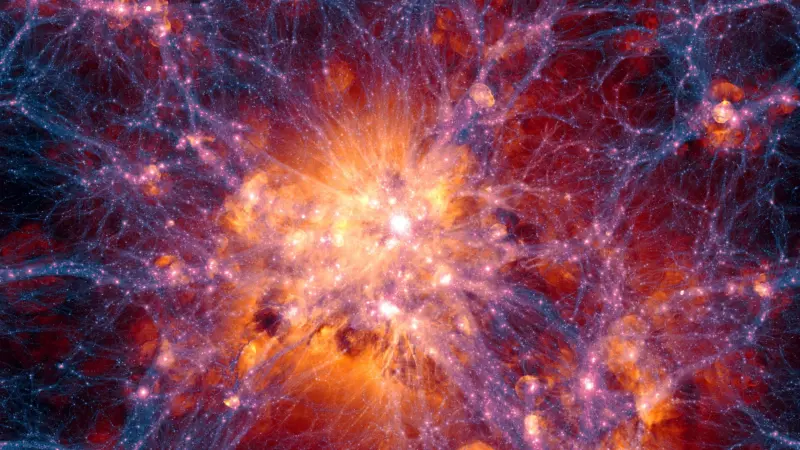
Five-minute trials pull a 261‑Hz pulsar from public Fermi data
Five minutes on a single computer core. That’s how long each trial run of a new pulsar‑search algorithm takes—work you could do on a standard laptop—according to the team behind it.
Set that against the old way: for some targets, the equivalent calculation would tie up a standard processor for 600 years. The gap is the story. An international team says their method can comb publicly available NASA data about a million times faster than before, and they have already used it to pull a fast‑spinning pulsar out of the noise.
The first catch: a lone spinner at 261 turns per second
Using NASA’s Fermi Gamma‑ray Space Telescope observations, the team found PSR J1622−7204, an isolated pulsar spinning 261 times per second. They did it with roughly 10 hours of computing time on a standard processor—time that fits between lunch and lights‑out, not across careers.
The previous best method missed this object altogether, despite throwing processing at the problem that, on a single ordinary core, adds up to centuries. The new approach, detailed in a Physical Review Letters study, demonstrates the kind of target that becomes reachable when the search itself runs orders of magnitude faster.
Why this works now: open data and a steady sky scan
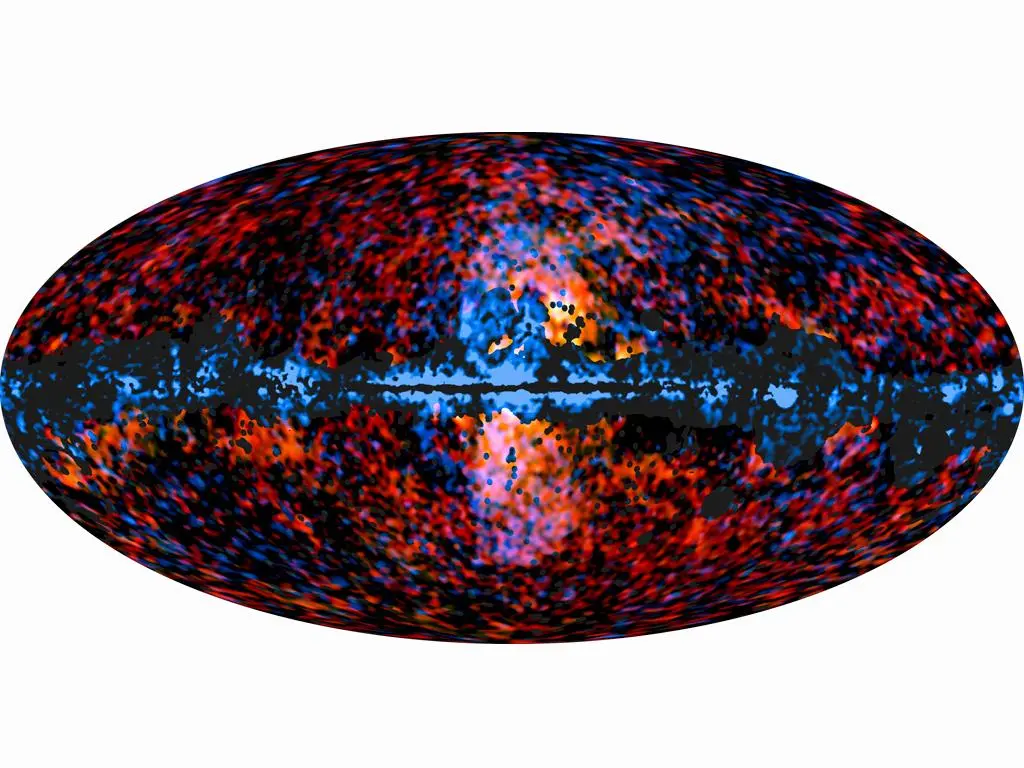
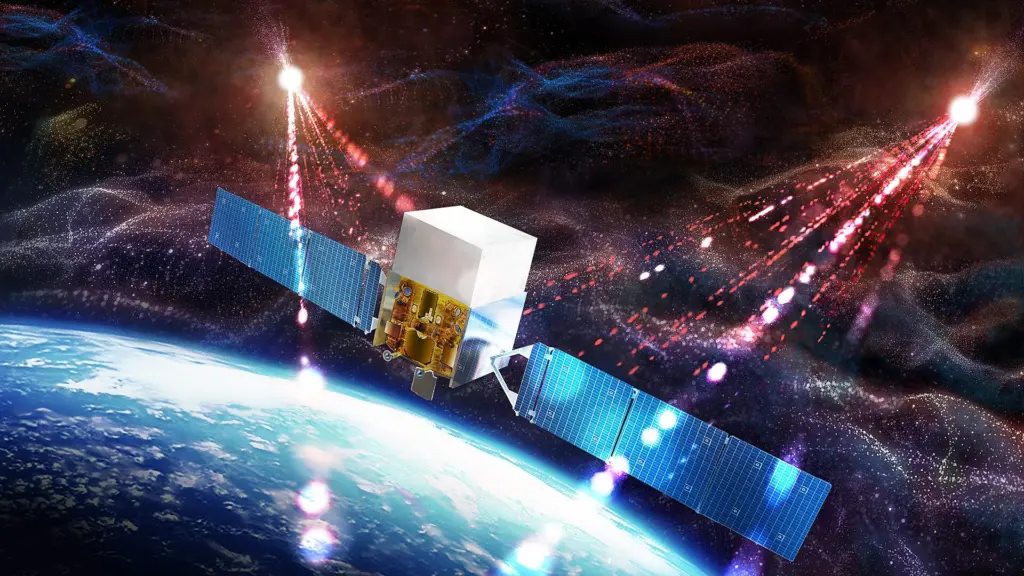
This leap rides on a policy choice as much as an algorithm. NASA points to a longstanding, Gold Standard Science policy: Fermi’s science data are freely available to anyone. Launched in 2008, the spacecraft surveys the entire sky every three hours, building a uniform, all‑sky record in the highest‑energy light.
That record is fully open. As one of the study’s co‑authors put it, all 18 years of Fermi data have been made public. When the data pipeline keeps flowing and the archive stays open, teams outside the mission can try something genuinely different on the same photons.
From a few hundred beacons to thousands—and counting faster
Fermi’s catalog has grown from a few hundred gamma‑ray sources to thousands. Some of that growth is time and sky coverage; some is new ideas applied to the same dataset. A method that runs about a million times faster pushes that curve again, changing which searches are computationally practical.
Traditionally, even with crowdsourced help, identifying a single pulsar in gamma‑ray data could cost the equivalent of hundreds of computer‑years. If the marginal cost of a candidate check falls to minutes per run, the scale of what you can attempt expands—how many sky positions, spin rates, or long data stretches you dare to fold into a search.
What the team wants next: widen the net with volunteers
The researchers don’t plan to keep this as a boutique effort. Colin Clark says the next goal is to extend their searches and combine the new algorithm with the crowdsourced computing power from volunteers in the Einstein@Home program to find many new pulsars they think are there.
That pairing matters. Volunteer computing spreads the workload; a faster algorithm shrinks each chunk. The hope is not just a longer list, but a more complete one drawn from the same public sky.
One big unknown, stated plainly
How many pulsars this will actually add is not settled. The team points to the likelihood of many more hiding in the Fermi archive, and they are setting up the infrastructure to look. But no one has yet made the count that only a full search can deliver.
The deeper cut
Why compute time was the wall
Searches for gamma‑ray pulsars are parameter sweeps: you fold sparse, time‑tagged photons through many trial models of a periodic signal and ask which model sharpens a pulse profile. The combinatorics bite. Even a modest grid over spin frequency and its derivative, evaluated at many sky positions and over long baselines, multiplies into billions of trials. Historically, that forced compromises—shorter coherence times, coarser grids, or heavy reliance on volunteer distributed computing. The reported benchmarks quantify what the field knew qualitatively: if one approach needs on the order of hundreds of computer‑years to net a single detection, while another can vet candidates in about five minutes per core and close a discovery in roughly 10 core‑hours, you flip the economics of exploration. The 600‑year figure for a standard processor underscores how much previous best‑in‑class methods depended on massive parallel resources to be tractable at all. A million‑fold speedup doesn’t just lower the bar; it lets you keep coherence over longer stretches of data and densify grids without blowing past practical limits, turning previously out‑of‑reach corners of parameter space into routine scans.
The culture shift underneath the code
Speed alone wouldn’t matter if the data were locked up. NASA underscores that Fermi’s open archive is central to this result, and that openness is not a one‑off release but a policy: the data are public as soon as processed. It means different groups can try competing methods on the same sky, and the best ideas win on evidence, not access.
For a mission that returns a full‑sky map every three hours, time is the raw material. Open pipelines turn that time into a public resource. The new study’s finding—snagging a 261‑Hz pulsar with roughly 10 hours of standard compute—shows what becomes possible when policy and method pull in the same direction.
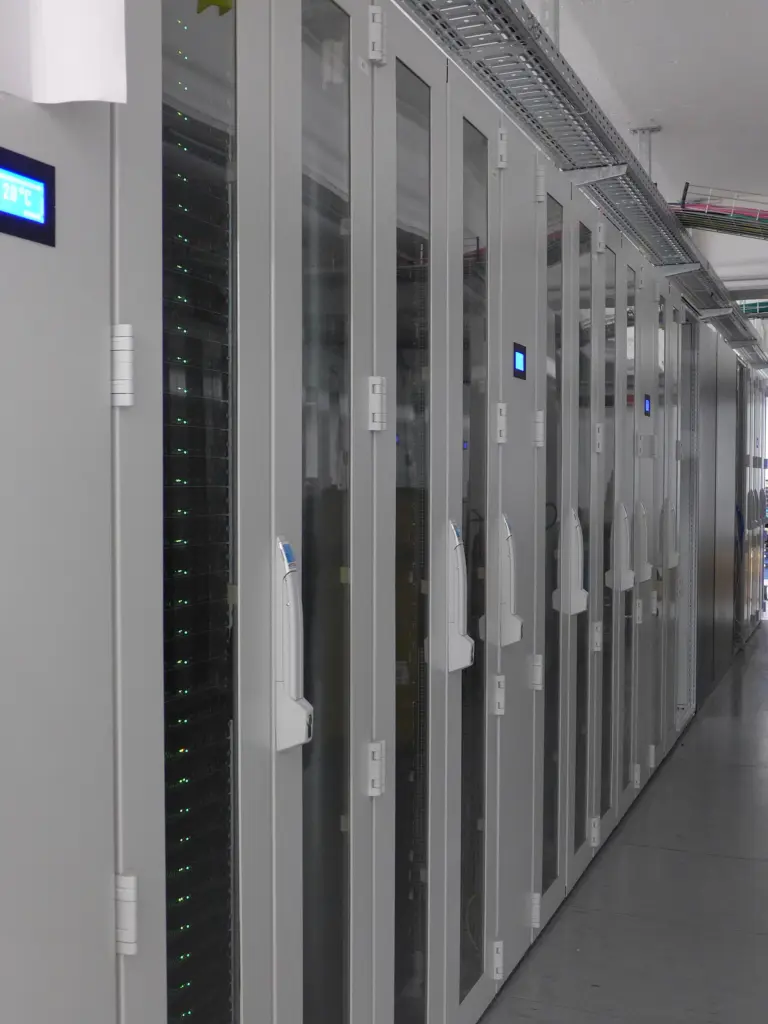
The paper: Gamma-Ray Pulsar Discovery Using a Lattice-Based Method (Physical Review Letters, 2026)
Sources: NASA Science Data Powers New Method to Discover Hard-to-Find Pulsars (www.nasa.gov)
Images: Cover: NASA/JPL; Figure 1: NASA/GSFC; Figure 2: NASA's Scientific Visualization Studio – University of Maryland College Park/Jea / Wikimedia Commons; Figure 3: Ehrobod01 / Wikimedia Commons (CC BY-SA 4.0)
How this article was made: Everyman Science uses AI tools to structure, format and optimise its articles, and occasionally to produce illustrations where no free photograph exists. The reporting these articles are based on is human-produced and cited above. Spotted an error? Write to [email protected] and we will correct it. — The editors How we work.





Science desk team of Everyman Science, curating and reporting on the day’s most significant developments in research, space exploration, and technology.