The Future of Space Travel: A Look at the Zhuque-3 Rocket’s Historic Landing
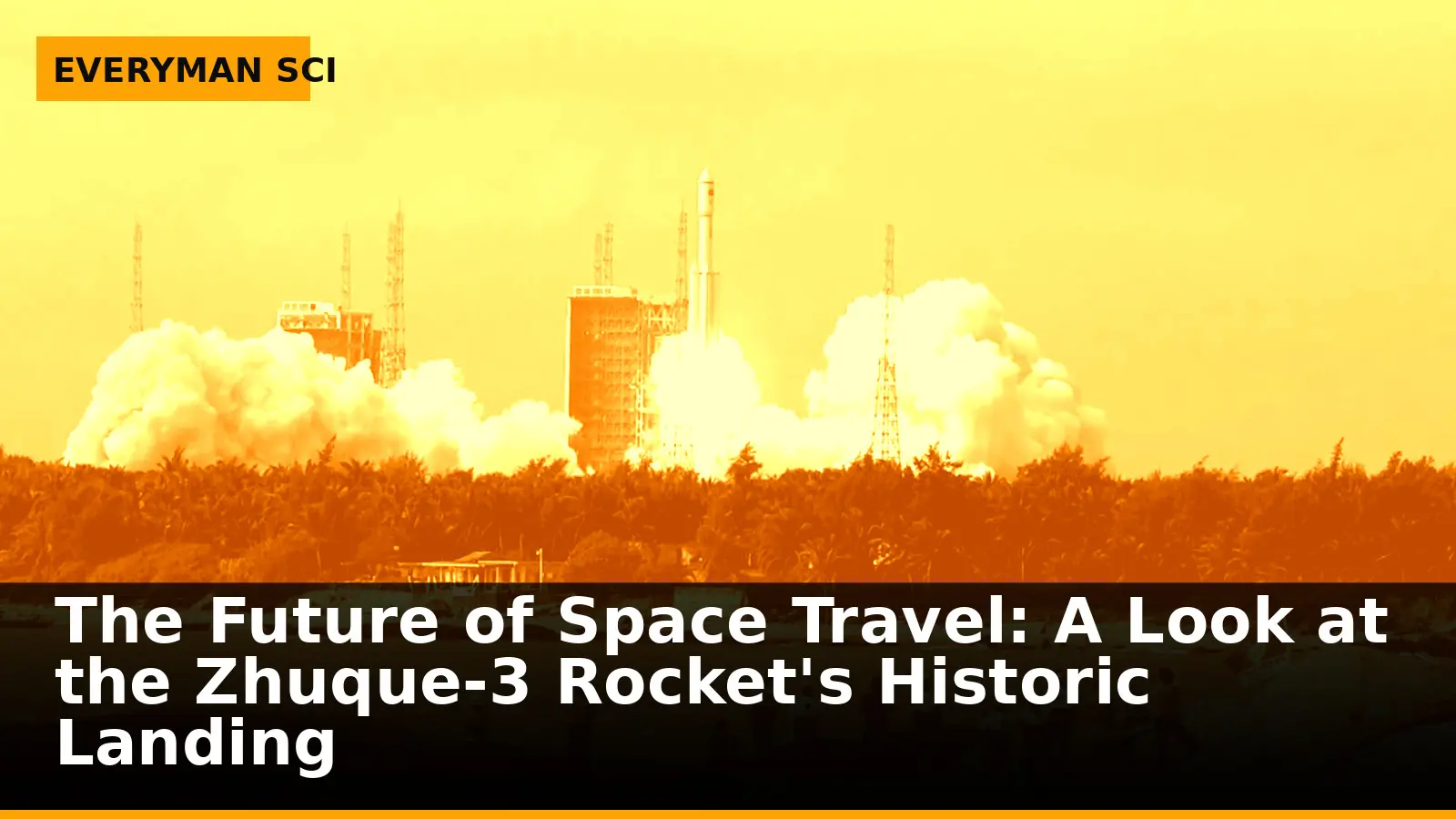
In the early evening of August 18, 2026, the Zhuque-3 rocket, developed by the Chinese startup LandSpace, touched down successfully on solid ground. This event marked a significant milestone in the realm of private space exploration, making LandSpace the first Chinese company to achieve a successful booster recovery during an orbital launch. As the rocket landed upright, it symbolized not only a triumph for the company but also a pivotal moment in China’s rapidly evolving space industry.
A Historic Achievement in Space Exploration
The Zhuque-3 rocket’s successful landing is a landmark achievement in space technology, comparable to SpaceX’s Falcon 9. The rocket’s first stage, equipped with landing legs, executed a flawless descent, showcasing advanced engineering and precision. This success underscores the growing capabilities of private companies in space, often seen as a domain dominated by government agencies.
LandSpace’s accomplishment reflects a broader trend in the global space industry, where private entities are increasingly taking on roles traditionally held by national space agencies. This shift not only accelerates innovation but also fosters competition, driving technological advancements that could benefit space exploration and commercial endeavors.
The Technical Marvel Behind Zhuque-3
The Zhuque-3 rocket is designed to deliver payloads into low Earth orbit, making it a versatile tool for various missions, including satellite deployment and scientific research. Its successful landing was made possible by a combination of advanced propulsion systems and sophisticated guidance technology. The rocket’s ability to return to Earth in one piece opens new avenues for reusability in space travel, potentially reducing costs and increasing mission frequency.
LandSpace’s engineering team drew inspiration from established models, including SpaceX’s Falcon 9, but tailored their approach to meet the unique challenges of the Chinese space environment. The rocket’s design incorporates innovative features aimed at optimizing performance and reliability, setting a new standard for future missions.
The Implications for China's Space Program
This achievement is not just a victory for LandSpace; it holds significant implications for China’s broader space ambitions. With the Chinese government expressing strong support for the commercialization of space, the success of the Zhuque-3 could pave the way for increased investment in private space initiatives. This could lead to a more robust ecosystem of space startups, enhancing China’s competitiveness in the global space arena.
Furthermore, as China continues to develop its space infrastructure, collaborations between governmental and private entities may become more common, fostering innovation and accelerating the pace of research and development in space technology.
Challenges Ahead for Private Space Ventures
Despite this success, challenges remain for private space companies in China and beyond. Regulatory hurdles, funding limitations, and the need for public trust are critical factors that can influence the trajectory of these ventures. Additionally, as the industry matures, companies must navigate the complexities of international competition and collaboration.
The success of the Zhuque-3 rocket may inspire other startups to pursue similar goals, but it also raises questions about sustainability and the long-term viability of private space exploration. Balancing commercial interests with safety and environmental considerations will be essential as the industry evolves.
Looking to the Future of Space Travel
The successful landing of the Zhuque-3 rocket signifies a monumental step forward in space exploration, showcasing the capabilities of private companies in a field once dominated by government agencies. As the landscape of space travel continues to evolve, the integration of advanced technologies and innovative approaches will likely play a crucial role in shaping the future.
Looking ahead, the lessons learned from the Zhuque-3 mission could inform future projects, not only in China but globally. As private companies push the boundaries of what is possible in space, the potential for new discoveries and advancements in space technology seems limitless. This historic achievement is just the beginning of an exciting new era in space exploration.
Sources: Space.com, NASA, LandSpace
Images: Cover: Everyman Science (illustration)





Science desk team of Everyman Science, curating and reporting on the day’s most significant developments in research, space exploration, and technology.