The Mysterious Black Hole Star: A New Astrophysical Phenomenon
In the vast expanse of the universe, where ordinary stars twinkle against the cosmic backdrop, a new and enigmatic phenomenon has emerged: the black hole star. This object, discovered by astronomers using NASA’s James Webb Space Telescope, resembles a massive star yet emits an astonishing amount of energy—about 100 billion times more than any known star. Such a discovery not only deepens our understanding of the universe but also raises intriguing questions about the nature of stellar formation and the lifecycle of cosmic entities.
A Cosmic Anomaly: What is a Black Hole Star?
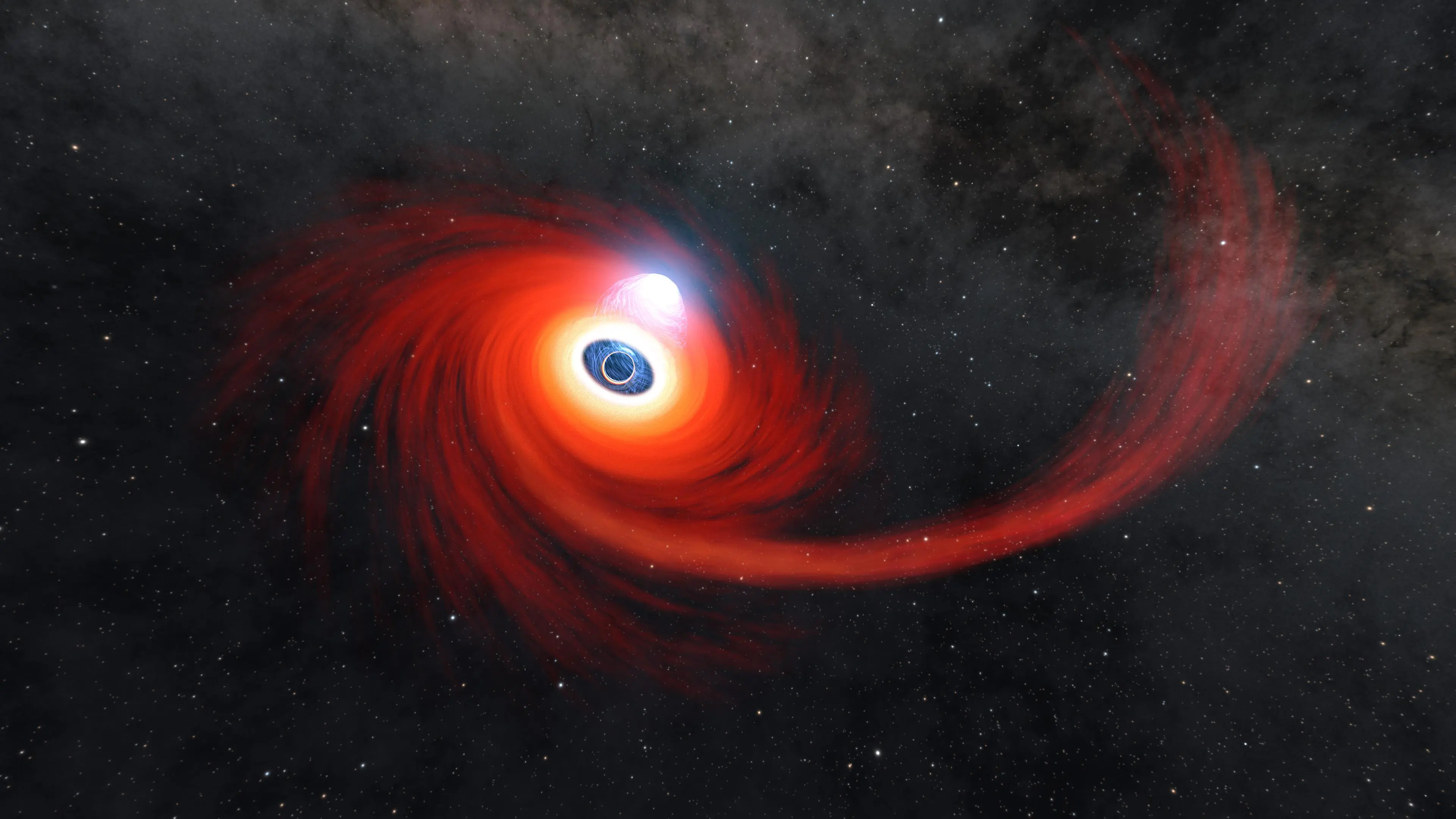
The term “black hole star” may sound like science fiction, but it describes an extraordinary cosmic object that combines characteristics of both stars and black holes. Found in a region of the early universe, this object appears to be a massive star wrapped in a cocoon of hydrogen, yet it radiates energy on a scale that defies our current understanding of stellar physics. The astronomers believe that this object may contain a black hole at its core, contributing to its immense luminosity.
The discovery challenges the traditional understanding of how stars form and evolve. Typically, stars are born from gas and dust, undergoing nuclear fusion to produce energy. However, the black hole star’s extraordinary brightness suggests a different mechanism may be at play, possibly involving the interactions between a black hole and surrounding material.
The Role of the James Webb Space Telescope
The James Webb Space Telescope (JWST), launched in late 2021, has been pivotal in uncovering new cosmic phenomena, including the black hole star. Equipped with cutting-edge infrared technology, JWST can peer through cosmic dust and gas to reveal hidden structures in the universe. Its ability to observe the early universe—just a few hundred million years after the Big Bang—has opened a new window into the life cycles of celestial bodies.
The black hole star was detected in a region of space that is crucial for understanding the formation of galaxies and stars. By studying such objects, astronomers can gain insights into the conditions that existed in the early universe and how they shaped the cosmos we see today.
Implications for Stellar Evolution and Cosmology
The existence of black hole stars forces scientists to reconsider existing models of stellar evolution. If black holes can form in this manner, it suggests that our understanding of how stars and black holes interact must evolve as well. This revelation could lead to new theories regarding the lifecycle of stars, including how they end their lives and the conditions that lead to black hole formation.
Moreover, this discovery may provide clues about the formation of supermassive black holes, which reside at the centers of most galaxies, including our Milky Way. Understanding how smaller black holes evolve into the supermassive giants we observe today is a significant question in astrophysics.
The Path Forward: Future Research and Observations
As astronomers continue to study the black hole star and similar phenomena, several questions remain unanswered. How common are these objects in the universe? What role do they play in the formation of galaxies? Future observations with the JWST and other observatories will be essential in addressing these questions.
Additionally, researchers will need to develop new theoretical models to explain the properties of black hole stars. This ongoing research will not only enhance our understanding of these mysterious cosmic entities but also provide a broader perspective on the evolution of the universe.
Conclusion: A New Chapter in Cosmic Discovery
The discovery of the black hole star marks a significant milestone in our quest to understand the universe. It exemplifies how advancements in technology, such as the JWST, can lead to groundbreaking findings that challenge our current knowledge. As we continue to explore the cosmos, we can only anticipate more revelations that will reshape our understanding of the universe and our place within it.
Sources: NASA, Nature
Images: Cover: NASA/JPL





Science desk team of Everyman Science, curating and reporting on the day’s most significant developments in research, space exploration, and technology.